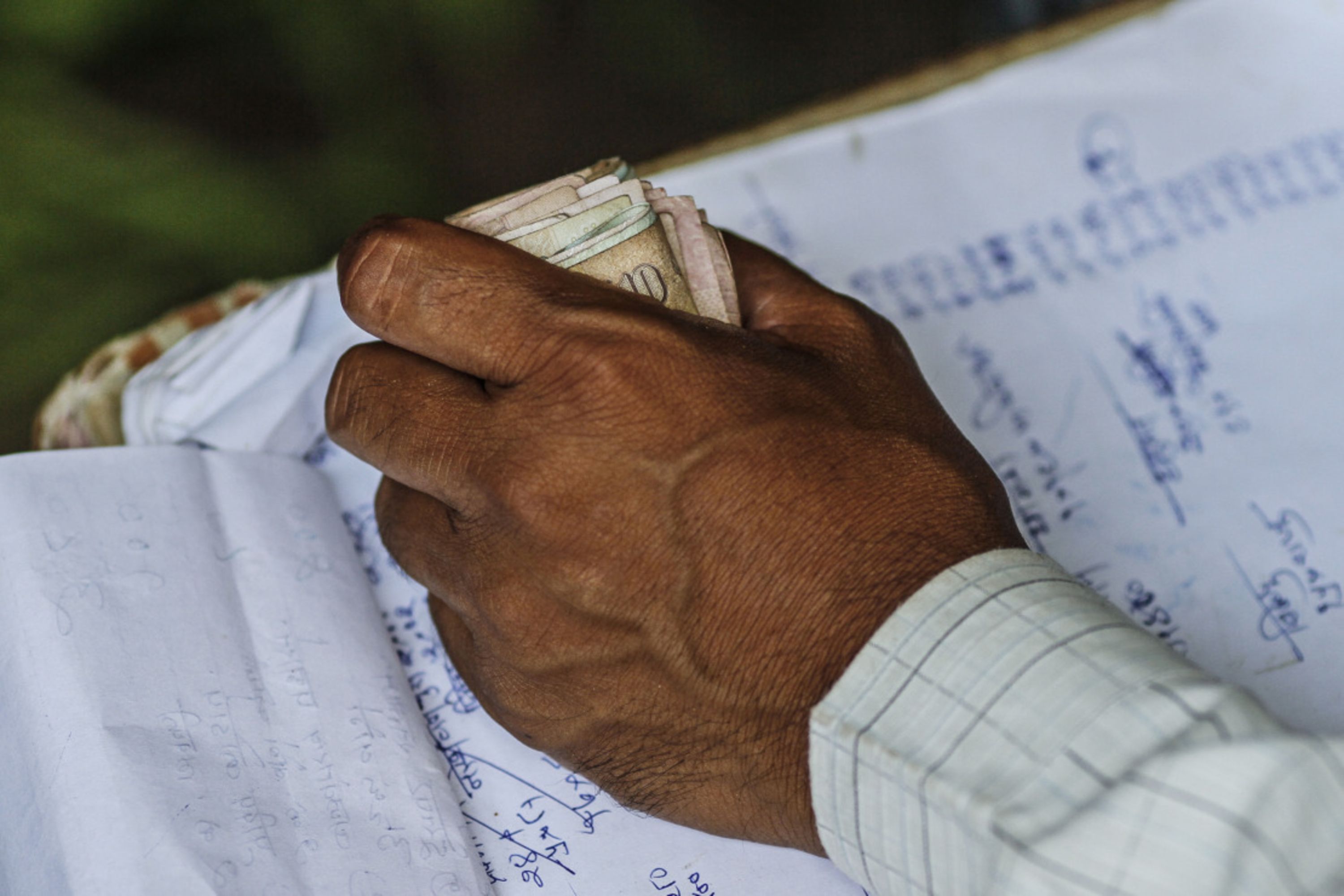
A profligate government is bad news. But a thrifty administration is not great news either. Particularly not for an economy that is still dealing with scars of a once-in-a-lifetime crisis.
All indicators suggest the government is keeping spending under tight control even though revenues have been strong. The nature of expenditure is also shifting. Capital expenditure is being prioritised above revenue spending, which is desirable. However, some revenue spending such as increased expenditure on the rural jobs guarantee scheme may be necessary for a little longer.
According to data available until July, the government's total expenditure is running 4.7% below last year. Capital expenditure is up 14.8% but revenue expenditure— the larger share of spending— is down 7%.
Non-interest revenue expenditure, according to Devendra Pant, chief economist at India Ratings & Research, is down by a sharper 12.6%. This compares to a budgeted increase of 13.4% for FY22, said Pant, calling the trend "perplexing".
Where Is Spending Being Cut Back
Details of spending by major ministries shows that the largest cut-backs in percentage terms are coming from two sources—Ministry of Rural Development and Ministry of Agriculture. The former may be on account of lower spending on MGNREGA, the flagship rural jobs guarantee scheme. In the case of the agriculture ministry, installments under the PM-Kisan scheme had been front-loaded last year and may explain the drop in that category.
In absolute terms, a 7% drop in spending from the Ministry of Finance is also a contributor to the lower spending.
This, according to Neelkanth Mishra, India equity strategist at Credit Suisse, may be on account of lower compensation cess payments to states.
Spending fell 23% year-on-year in July and at 5.2% of FY budget it was the weakest July in 24 years, Mishra said in a Sept. 1 note.
This implies that fiscal year-to-date spending as a percentage of budget estimates is at the lowest in a decade, he said.
The decline was mostly from rural development (likely MGNREGA), finance (less GST compensation) and defence, offsetting higher spending on roads, rail and food subsidy.Neelkanth Mishra, India Equity Strategist, Credit Suisse
Where Is Spending Rising?
Spending by the Ministry of Roads and Transport is nearly double of what it was last year. That is partly because of a low base as activity was hindered during the first wave of Covid infections last year more than it has been this year.
Ministry of Housing and Urban Affairs and Ministry of Railways are others that are leading spending. In the case of the Ministry of Consumer Affairs, it is the extended food subsidy scheme which is adding to expenditure.
Some of the increased capex spend by the centre and states may be starting to filter through the system.
According to a report from brokerage house Emkay, tendering activity for the months of July and August suggests a year-on-year improvement. "Tendering, which was down ~14% year-on-year in Q1 FY22, saw good growth (46% year-on-year) in July and August, leading to a year-to-date growth of ~10% year-on-year. An uptick in roads, railways and water supply has been visible in recent months."
Overall Fiscal Support Limited
While a shift in composition towards capital spending will lead to higher multipliers for the economy, overall economists fear that the economy will have lower support from government spending this year.
Already, the first-quarter GDP data shows that government consumption expenditure contracted sharply by 25% quarter-on-quarter, on a seasonally adjusted basis, said Nomura in a Sept. 1 report. This suggests pro-cyclical fiscal policy during the second wave, Nomura said.
"While government expenditure may pick up meaningfully in H2 FY22, and we hope it does, the fiscal impulse to growth will not be as strong as we had earlier anticipated," said Kaushik Das, chief India economist at Deutsche Bank.
For the full year, the government is targeting its fiscal deficit at 6.8% of GDP or about Rs 15 lakh crore. In the first five months of the year, the government has exhausted about a fifth of this with the fiscal deficit at Rs 3.2 lakh crore. This is the lowest in ten years, according to Pant of India Ratings & Research.
Essential Business Intelligence, Continuous LIVE TV, Sharp Market Insights, Practical Personal Finance Advice and Latest Stories — On NDTV Profit.















.jpeg?im=FeatureCrop,algorithm=dnn,width=350,height=197)