Centre Forms Panel To Assess Airline Losses from Pakistan Airspace Ban
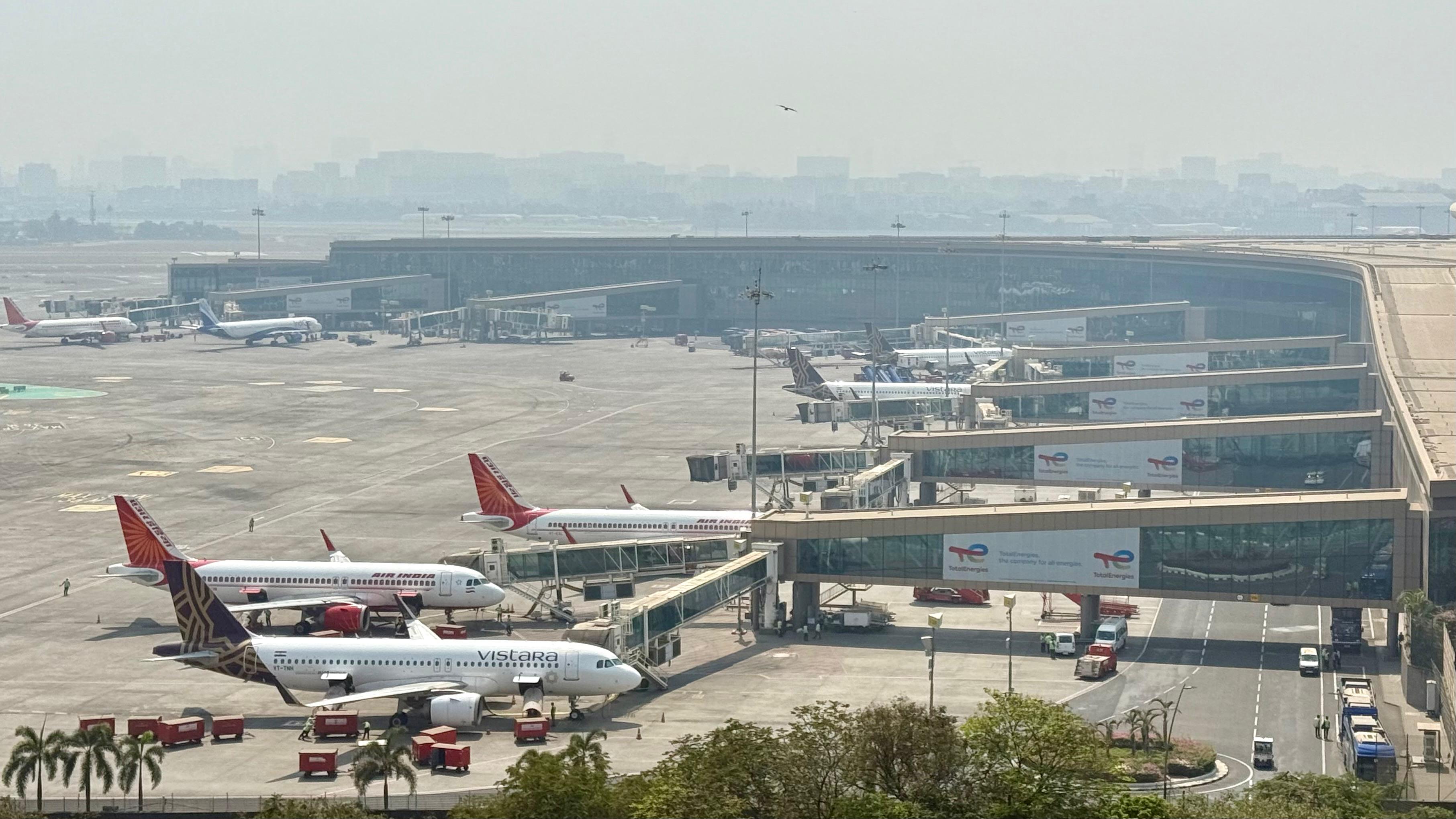
The Ministry of Civil Aviation has formed a committee to assess the financial impact on airlines resulting from the ban on Pakistani airspace, according to people in the know. The panel will suggest relief measures to mitigate the impact on the financially stressed airline sector.
"The feedback received from the industry is currently being studied in detail, and based on this, specific relief measures will be announced," sources told NDTV Profit. Various measures, including possible tax exemption and subsidies, have been proposed by airline representatives.
Pakistan airspace is crucial and is vastly used by the Indian airlines. After Pakistan shut its airspace to the country's carriers in a tit-for-tat retaliation following the Pahalgam terror attack, the carriers, including Air India and IndiGo, are facing higher fuel costs and longer journey times, especially for west-bound flights from northern regions like New Delhi.
The airspace restriction impacts Air India, IndiGo, Akasa Air and SpiceJet, which collectively operate a fleet of over 800 aircraft. However, Air India is the worst hit and faces costlier detours as it operates more long-haul widebody flights to the United States and Europe than peer IndiGo. Many of Air India's long-haul routes, including flights to New York, Chicago, San Francisco, and Newark, now require technical stops—typically in Vienna—for refuelling.
IndiGo had earlier said that it has been forced to take alternative extended routes for at least 50 international destinations and suspend its operations in part of Central Asia, such as Almaty and Tashkent, due to Pakistan's closure of its airspace to Indian carriers.
Last week, Civil Aviation Minister Ram Mohan Naidu had asked airlines to assess the financial impact. In response to that, Air India had said it expects to face about Rs 5,000 crore in additional costs if the ban lasts for a year. IndiGo projected additional expenses of Rs 1,300 crore, while other airlines, including SpiceJet, pegged increased costs of about Rs 700 crore.
Sources said that the government will thoroughly assess the impact based on airlines' additional fuel consumption before deciding on financial relief.
For now, the Directorate General of Civil Aviation has only extended support to Air India by granting a two-week exemption from flight rest and duty rules for ultra-long-haul flights to manage disruptions caused by the airspace ban.
Consequently, pilots flying to 28 destinations like Washington DC, New York, San Francisco, Newark, and Chicago will have to work longer. The duty period raised from 14 to 16 hours for a 12-hour flight and 22 to 24 hours for over 14 hours of flight. Pilots argue that longer flight times are causing increased workloads and fatigue. However, the airline said it is offering additional rest of four hours at layovers and 12 hours on return to address fatigue.

-
High US Salaries, No Green Card Certainty: The Financial Calculation Facing Indian H-1B Families

The suspension of PERM processing at eight technology employers does not cancel existing H-1B visas. What it does is force a question many Indian families have been avoiding: is the US salary worth tying your career and family plans to one employer?
-
Swiggy vs Eternal: Food Delivery's Two Rivals Are No Longer In The Same Race
Eternal is building a private AI assistant, dark.ai. Swiggy is still working out how to make Instamart pay, with an operating loss of Rs 895 crore in the July-September quarter while Blinkit stayed profitable.
-
Where You Live Shapes How You Get To Work | The Reason Why
Two-wheelers are the most popular way to get to work in India, accounting for nearly 43% of workplace commutes.
-
Unhedged Position: Can India See An Indonesia-Style Time Correction?
The Nifty is trading below levels it first clocked in 2024. Is there, then, as I have suggested in the headline, potential that the current time correction drags on painfully for the next three-five, even ten years?
-
Navigating Friction And Energy Realities: An Analysis Of Marco Rubio's October Visit To India
Occurring at a critical juncture marked by stalled trade negotiations and escalating geopolitical pressures over global energy supplies, the visit offers a profound window into modern US-India relations.
-
India Exports Capital. Why Not Export Trusteeship?
The big question, then, is whether India can build an institution that global borrowers, investors, banks, and lawyers can trust, even without an Indian connection.
-
France's Economy & Politics Are In Crisis | The Reason Why
Let's look at how the French economy and politics evolved under Nicolas Sarkozy, Franois Hollande and Emmanuel Macron.
-
You May Inherit The Business. You Must Earn Its Credibility.
Succession tests the founder's ability to share authority as much as it tests the next generation's readiness to assume it.
-
Signing Deals Is One Thing; Making Them Work Is Another | The Week In Whys
Sometimes, things don't turn out as planned. Indian companies have lost some bids to rivals, some projects won't produce until 2030.
-
FOMC Wall, PERM Suspension, Hospital Stocks | Talking Points This Week
A PERM suspension would directly affect green-card sponsorship rather than H-1B visas, so the near-term earnings impact could remain relatively limited. The key question is whether this marks a new phase in US scrutiny of Indian IT.









