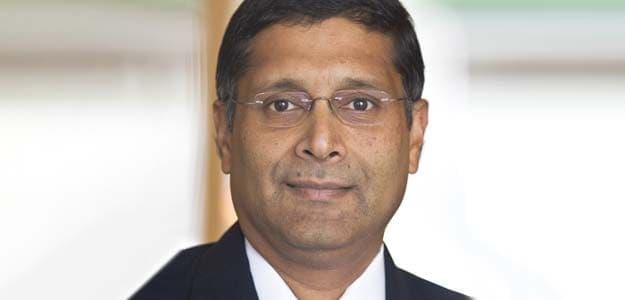
Washington: India is working towards policies and regulations that would encourage non-cash payments to effectively tackle the problem of black money, a top Indian economic adviser has said.
"India will be looking to encourage electronic payment as opposed to cash payment. Both because it is desirable, (and) also to tackle the problem of black money and things like that," Chief Economic Adviser Arvind Subramanian said.
"So that is very much on the agenda," he told a Washington audience at Peterson Institute for International Economics here early this week.
Mr Subramanian said he is surprised by the dynamics of e-commerce and that companies such as Flipkart are challenging global giants like Google.
"But one of the challenges for India is to improve the financial regulation. Because a lot of these companies find it is actually better to locate in Singapore, both for regulatory reasons and for tax reasons.
"So I think that's something that we are going to (address). The government is very aware of it. The financial sector reforms are kind of geared to actually addressing this problem," he said.
Responding to a question on subsidies, Mr Subramanian said that the Indian government has acted very aggressively in raising taxes, excise taxes on diesel and petrol.
"In fact, what we say is that we have gone effectively from a carbon subsidiary regime to a actually high-carbon taxation regime in petroleum," he said.
The chief economic adviser said the implicit carbon tax on petrol is about $160 per ton and on diesel is about $70.
"We could have said we just pass all these gains to the consumer. But we didn't do that. Even macro-economically, it made a lot of sense. I think we passed on about one-thirds of 40 per cent in the form to private consumption. And the rest was public savings, which we kept in the form of higher taxes," he said.
He said the structural shift in inflation in India has caught markets and policymaking institutions by surprise.
"One, of course, is the whole oil picture. If that's going to be maintained that's going to be a benefit going forward.
But that is a bit unpredictable. I think that is there. It's there going forward," he explained.
"The second is that the inflationary impulse coming from agriculture has changed quite dramatically," he said.
Mr Subramanian said the budget foresees a big increase in disinvestment revenues.
"And there is a clear policy statement in the budget that next year this investment is going to include strategic sales and sale of loss-making units. So that's the policy vision.
That's what underpins these more ambitious targets going forward," he said.
Essential Business Intelligence, Continuous LIVE TV, Sharp Market Insights, Practical Personal Finance Advice and Latest Stories — On NDTV Profit.