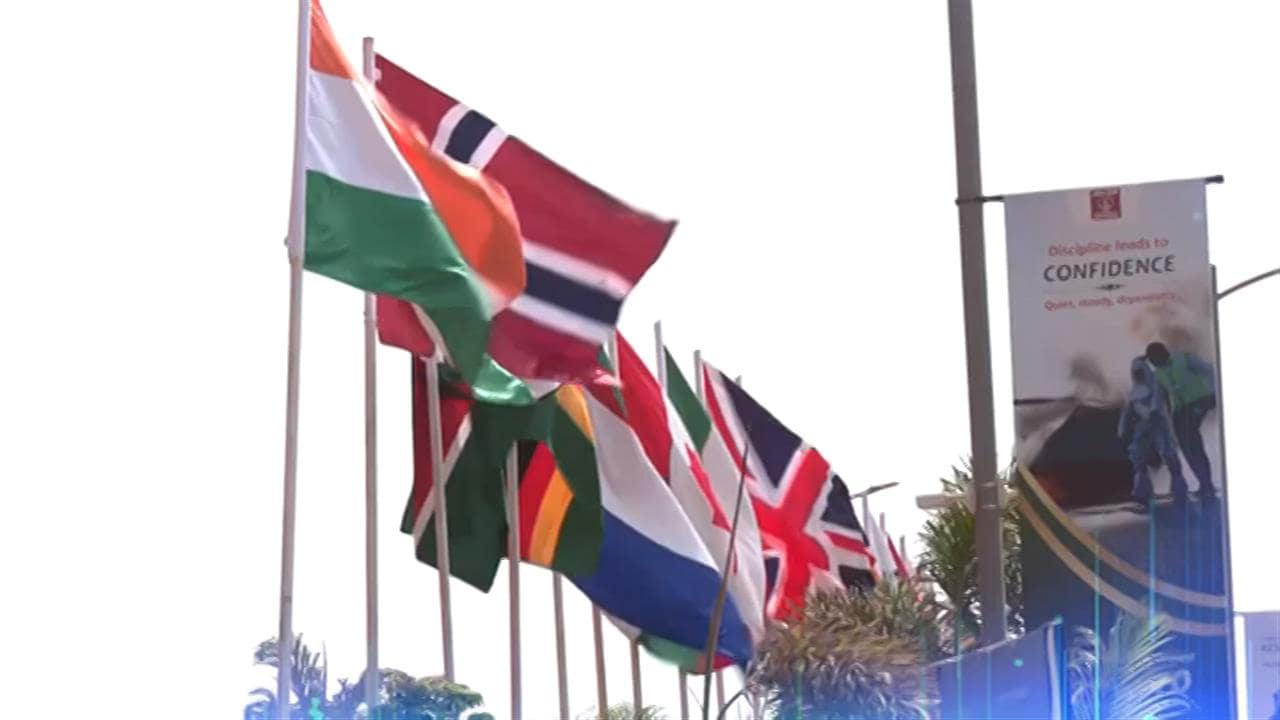
To the rest of the world, the scale of India's general election is pretty impressive. Less impressive is the respect not paid to what India's trade policy ought to be under a new government, be it led by current Prime Minister, Narendra Modi of the Bharatiya Janata Party, or opposition leader Rahul Gandhi of the Indian National Congress. Aside from what to do about Pakistan, foreign affairs matter not.

True, “all politics is local” in today's Indian federation, as in 1932 in the American republic when this proverb first appeared. True too, however, is the importance of revolutionising India's international trade policy to promote economic welfare and socio-religious stability.
Three dramatic changes are needed, corresponding to the levels at which international trade law is made and applied in synthesis with domestic policy goals.
From Multilateral To Plurilateral, Exile To Engagement
A GATT-WTO Level Revolution
The World Trade Organization is the pre-eminent forum in which to negotiate rules of cross-border trade in goods, services, and intellectual property. India was one of 23 founding contracting parties to its predecessor, the General Agreement on Tariffs and Trade, and stands among today's 164 WTO members. Since GATT's signing on October 30, 1947, and since the WTO's birth on January 1, 1995, India has never wavered in its commitment to multilateralism. India steadfastly adheres to single-undertaking, consensus-based decision making, whereby nothing is agreed until everything is agreed, and every member must agree to everything.
So, India exiles itself from proposed deals unless all members participate. India needs to reverse course and engage in plurilateralism.
The Doha Round of multilateral trade negotiations, launched in November 2001, died as early as December 2008—when the last major set of proposed texts were published—and no later than March 2018, when the U.S. announced it no longer would participate in those talks. In its place, a coalition of the willing, led by developed and emerging countries, are drafting cutting-edge deals on electronic commerce and the environment.
17th #ASEAN Economic Community (#AEC) Council Meeting: signing of ASEAN Agreement on Electronic Commerce, which will streamline e-commerce trading rules in the region and allow consumers to benefit from lower costs and more robust consumer protection. https://t.co/JFRf2OZVIB pic.twitter.com/XzURC2E0KK
November 13, 2018Their plurilateral E-Commerce Agreement would create free trade in digital products, and set balanced, 21st century standards on:
- Data localisation: the need for physical presence and storage of data in a WTO member,
- Privacy: especially on health care and financial matters, and census information, and
- Security: for example, against hacking and cyber attacks, and for law enforcement and anti-terrorism.
An ECA possibly could also cover digital trade in services.
Such an agreement would resolve an issue lingering since the end of the 1986-94 Uruguay Round and unresolved in the Doha Round, namely, whether to make permanent a moratorium on taxation of internet transactions. It might strike a balance between the free flow of information and reasonable controls against intentionally fake news that poses an imminent threat to public safety.
Yet, by casting itself outside ECA negotiations, India does a disservice to its domestic e-commerce sector, neither spotting opportunities nor mitigating risks for Indian players.
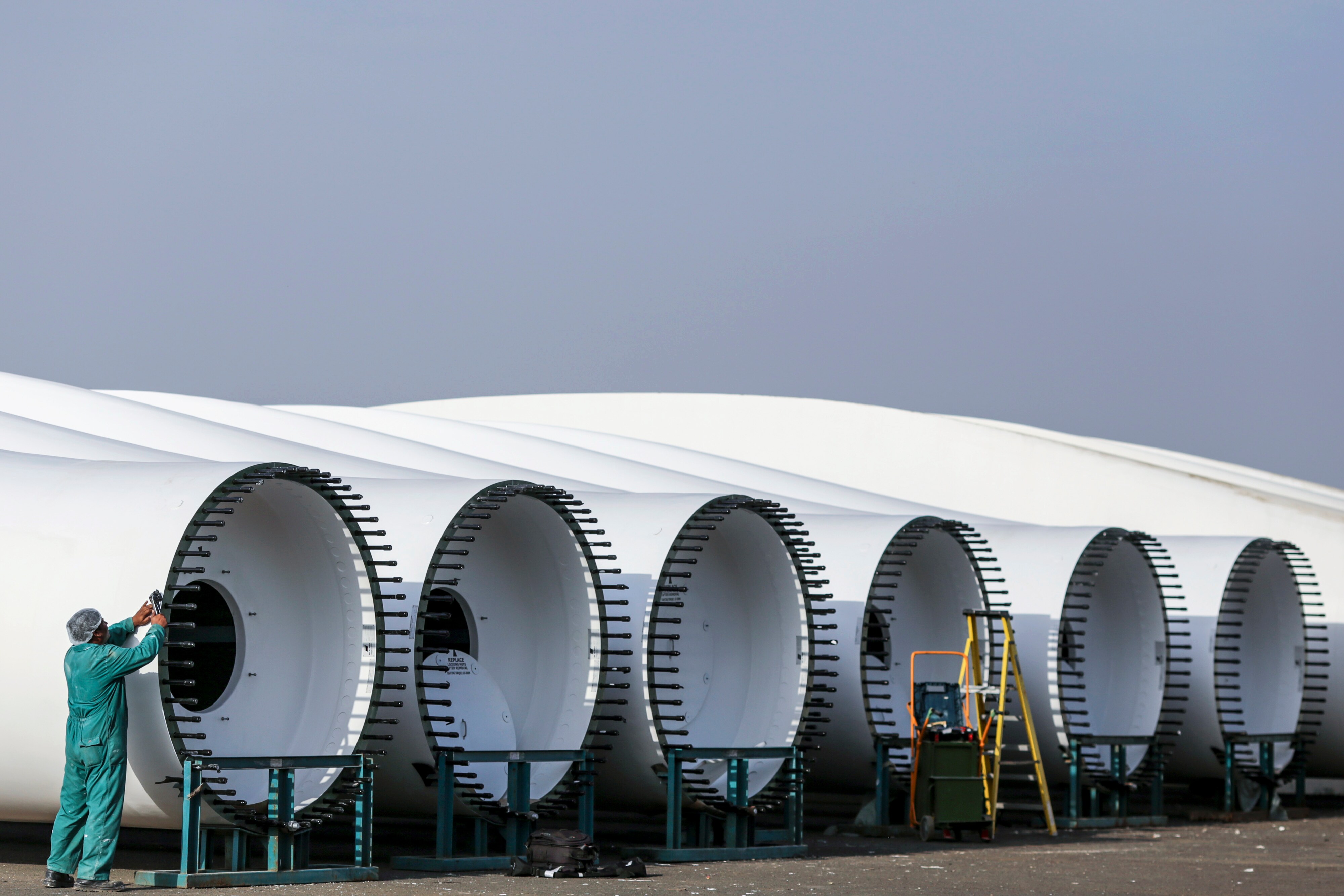
An Environmental Goods Agreement would liberalise trade in green-friendly products, such as air and water quality monitors, bamboo flooring, bicycles and bike parts, solar panels and wind turbines, water purifiers, and waste treatment equipment – all for which India has long been a manufacturing hub.China, the EU, U.S., and 11 other WTO members triggered plurilateral talks on this topic after the December 2013 WTO Ministerial Conference in Bali. America's June 2013 Climate Action Plan motivated them to move beyond the efforts of the Asia Pacific Economic Cooperation forum to cut tariffs to less than 5 percent on 54 products, and seek duty-free, quota-free treatment on 90 percent of global trade in over 400 environmental products.
Though the EGA participants have grown from 14 to 18 WTO members, India banishes itself from these talks.That's a disservice to Indian producers that could supply green goods at home and abroad, and to Indian consumers who suffer from the human rights deprivations of unclean air and impure water. It's also a disservice to the WTO. India withholds its expertise and good offices from efforts to resolve disagreements over what goods to include on the duty-free list, time periods for phasing out tariffs, and whether tariffs should snapback if the EGA fails to cover a critical mass of goods.
India polarises plurilateralism: it won't join an ECA or EGA unless America makes concessions on WTO Agreement on Agriculture “Green Box” reforms on public stockpiling for food security. If the new Indian government drops this multilateralist contingency, it would do more than mold plurilateral opportunities for its domestic high-tech and green-friendly sectors.
India's active engagement would ensure the ECA and EGA contain special and differential treatment for developing and least developed countries.Without such preferences, monopolistic or oligopolistic positions of Big Tech and first-mover companies may be reified, to the detriment of Indian businesses and consumers.
And, India's engagement would mitigate the free-ridership problem that plagues “open” plurilateral deals: with India in the ECA and EGA, other WTO members would be less worried about major emerging countries enjoying the benefit of these deals without also assuming their obligations.
From Insularity To Regionalism, Frenemy To Friend
An FTA Level Revolution
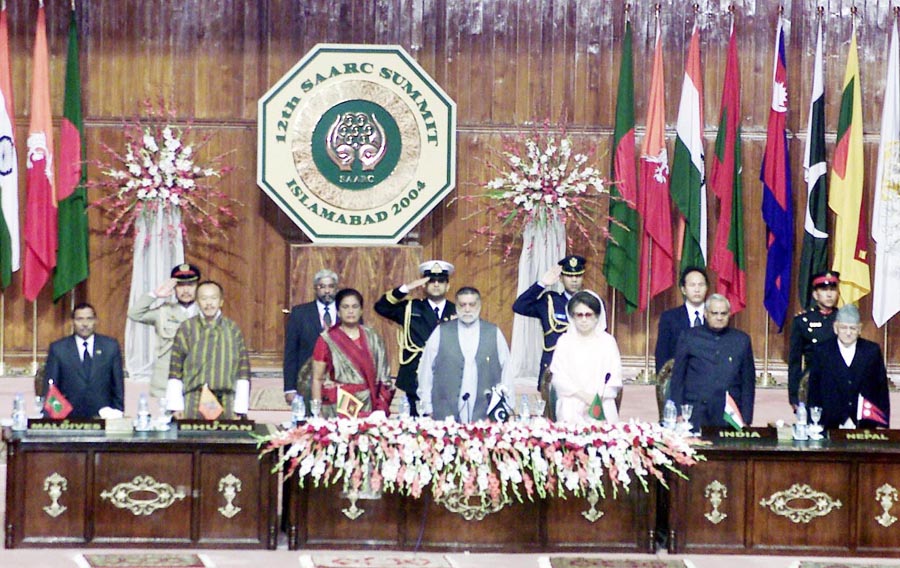
Indian trade policy is at its most backward with respect to this level, free trade agreements. The “best” parts of India's FTA “network” are its 2006 South Asian Free Trade Area and 2010 deal with the 10-member Association of South East Asian Nations.
They sound impressive, but they're not.
Lacking breadth and depth, SAFTA and AFTA are unambitious.India has Comprehensive Economic Partnership Agreements with Japan and Korea, but they are in varying stages of implementation and upgrading, as is its deal with Singapore.
The proposed Regional Comprehensive Economic Partnership would link the ASEAN countries with the six countries with which ASEAN has bilateral FTAs (Australia, China, India, Japan, Korea, and New Zealand). The goal is grand, but the process to it, which began in November 2011, is protracted. India insists on protecting its politically influential producers via product exemptions from market access commitments, debates the extent to which it also can protect cultural industries, and fights to ensure it can continue to supply generic medicines to poor countries.
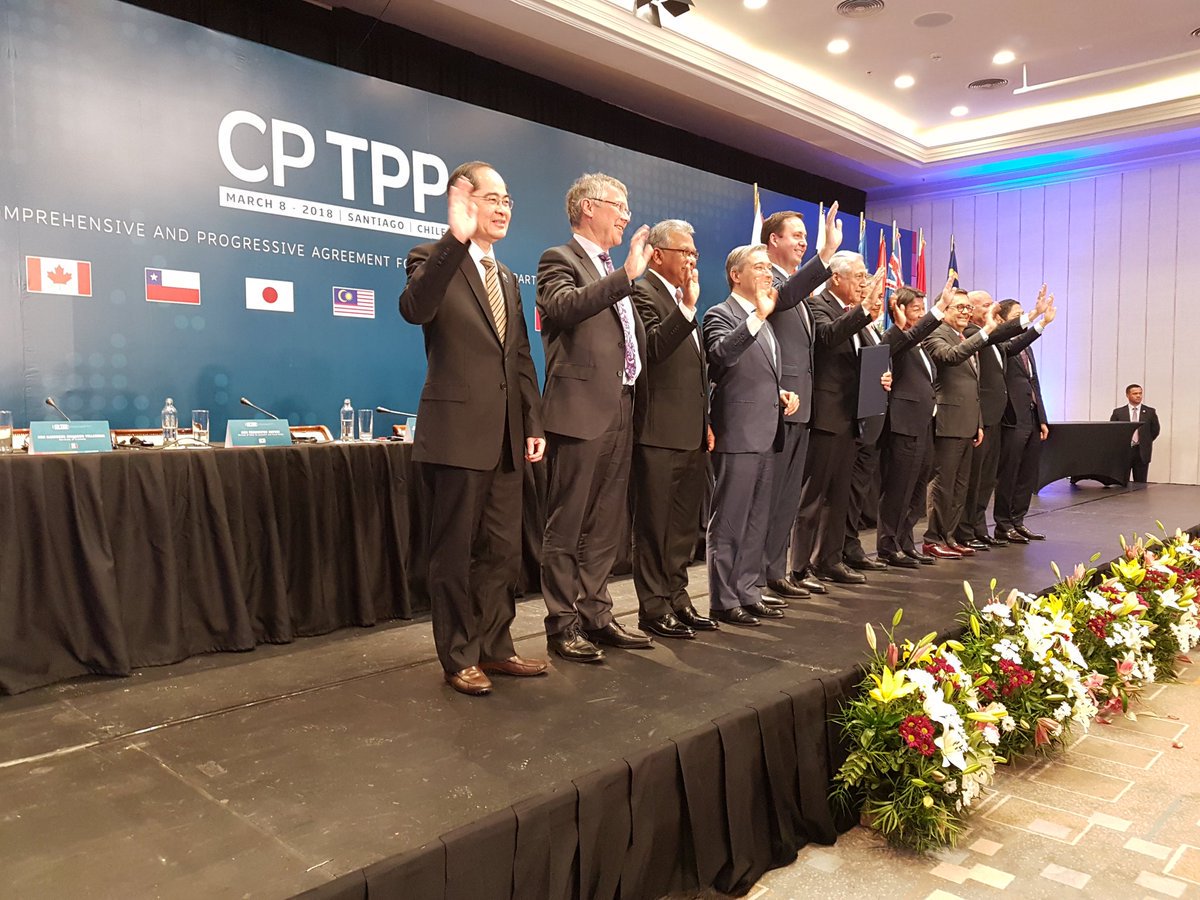
Joining the Comprehensive and Progressive Agreement for Trans Pacific Partnership would add India to an FTA that accounts for 14 percent of world gross domestic product. Gains from trade that economists laud – specialisation of production leading to greater output, and increased consumption opportunities at lower prices – would follow from India both providing and receiving DFQF treatment.
So, too, would adjustment costs, which would be visited on inefficient or sensitive sectors. But, through the adroit use of Scheduling Categories for goods, and Non-Conforming Measures for services, India could manage its CPTPP obligations to smooth out those costs by phasing in its free trade obligations over time.
India also could benefit from modernisation of its rules on IP, state owned enterprises, labor, and the environment.That's because India would put itself under an international legal obligation, namely, CPTPP, to implement WTO-Plus commitments (i.e., obligations beyond those in GATT-WTO rules) that CPTPP contains.
Simply put, India in CPTPP would be the grand fillip the new Lok Sabha needs to progress on a range of trade-related topics. And, Indian participation would efficiently conclude India's bilateral talks with Canada, New Zealand, and Peru. That's because these countries are among the 11 CPTPP Parties – the others being Australia, Brunei, Chile, Japan, Malaysia, Mexico, Singapore, and Vietnam.
From Exclusiveness To Inclusiveness, Discrimination To Fairness
A Domestic Level Revolution
Arguably the most exciting and rapidly changing area of trade policy is the expansion of linkages between trade liberalisation processes and social justice outcomes. Millennials and Generation Z are not sold on free trade for its conventional economic virtues of production and consumption gains.
They want trade policy to address the vices of discrimination based on gender and on sexual orientation and gender identity.They link those vices to male-dominated, plutocratic power structures that GATT-WTO and FTA regimes reinforce and expand. So, they seek to encase equal protection for women and LGBTQ+ persons in domestic legislation, and then leverage that position into international trade agreements.
India hasn't yet linked these causes to trade policy. But, the conditions for revolution are ripe.
Thanks to the landmark 2014 Indian Supreme Court decision in National Legal Services Authority v. Union of India, ‘other' (e.g., transgender) is a third category of Indian voters, alongside “male” and “female.” Thanks to India's Gulabi (Pink) Gang and #MeToo movements, inaugurated in 2006 and 2017, respectively, support for progressive causes has never been higher. India's new leadership can lead the revolution by:
- codifying gender, and SOGI-based employment protections, and
- vaulting those domestic statutory reforms into foreign trade deals.
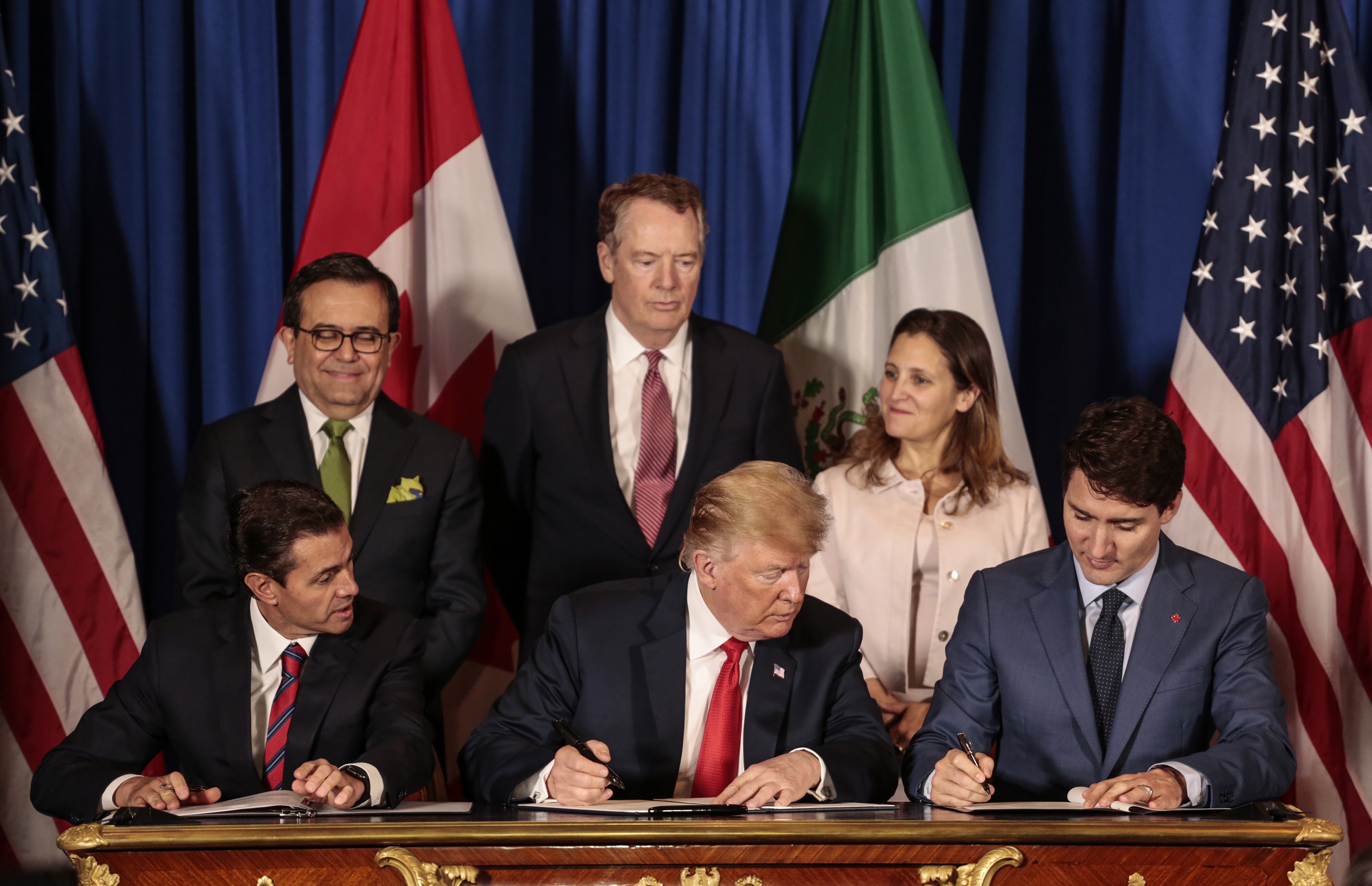
To be sure, free trade is not the sole cause of discrimination, nor is it a panacea. Brunei, for example, is in CPTPP, but this FTA doesn't compel, or is able to deter, the horrifically wrong-headed April 2019 decision by the Sultan to punish gay and lesbian sex by stoning to death and flogging, respectively. Rather, trade deals can promote socially just outcomes. CPTPP Article 23:4 calls for women's workplace empowerment, and Article 23:9 of the new North American Free Trade Agreement speaks of fairness with respect to women and LGBTQ+ persons.
Revolutionary Interactions
The revolutions can complement each other. For instance, a Level One plurilateral agreement can stimulate, and be stimulated by, a Level Two FTA. Safeguarding workplace rights regardless of gender or SOGI status at Level Three positions India for new FTAs at Level Two.
Are these revolutions quixotic dreams?
No more so than 900 million people casting ballots.
Raj Bhala is the inaugural Brenneisen Distinguished Professor, The University of Kansas, School of Law, and Senior Advisor to Dentons U.S. LLP. The views expressed here are his and do not necessarily represent the views of the State of Kansas or University, or Dentons or any of its clients, and do not constitute legal advice.
The views expressed here are those of the author, and do not necessarily represent the views of BloombergQuint or its Editorial team.
Essential Business Intelligence, Continuous LIVE TV, Sharp Market Insights, Practical Personal Finance Advice and Latest Stories — On NDTV Profit.