Xi’s G-20 Snub Marks Shift From Statesman To China ‘Emperor’
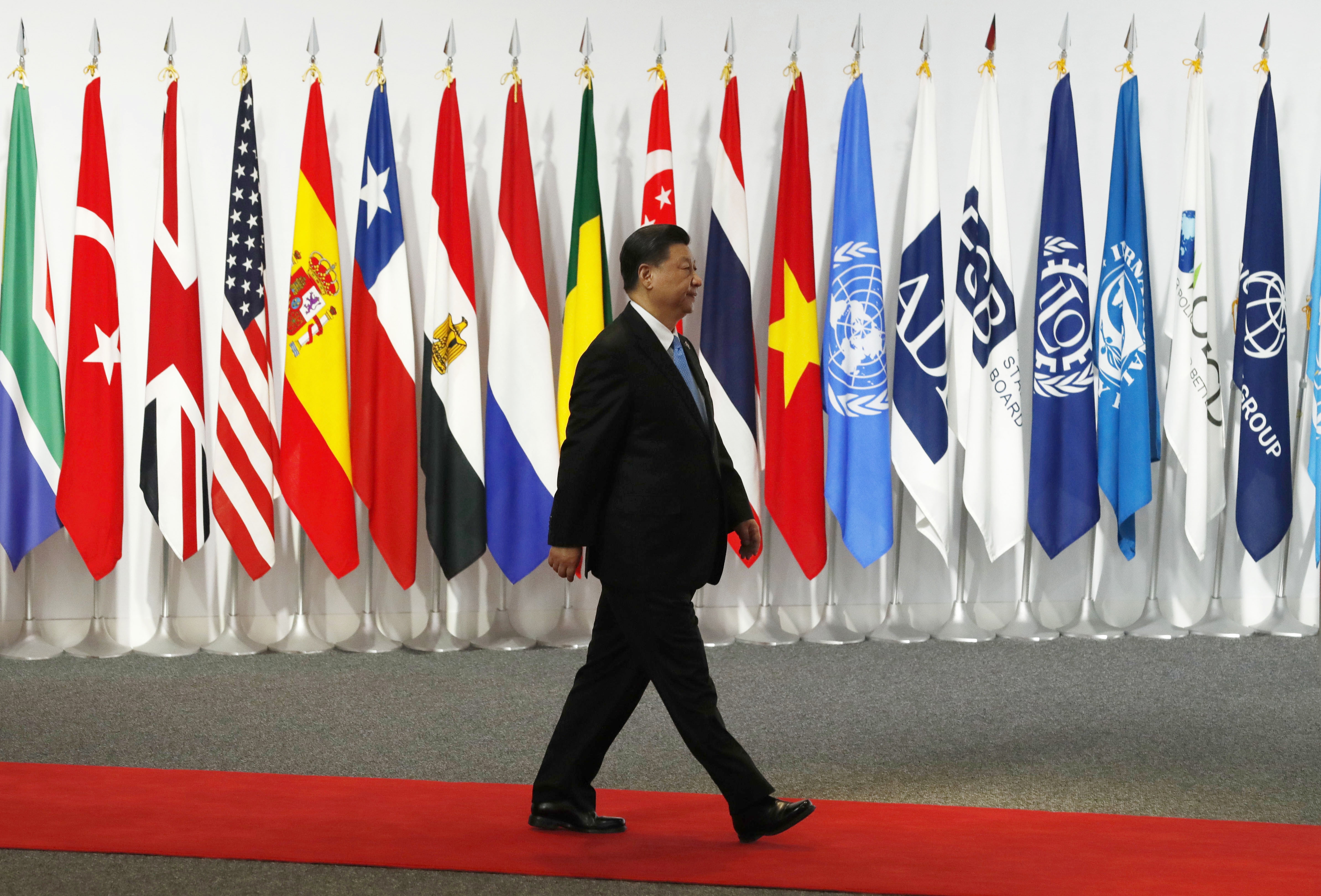
(Bloomberg) -- President Xi Jinping began his third term with a diplomatic blitz that bolstered his image as a global statesman. Now, he's set to skip the world's premier international forum of world leaders — and it's not exactly clear why.
It could be due to diplomatic sparring with India that Xi is snubbing the Group of 20 meeting in India. Or he wants to bolster the newly expanded BRICS forum. Maybe he wants to stay home to handle China's economic troubles, with one of the nation's largest property developers on the brink of default.
Whatever the reason, his absence would mark a major shift in how Xi operates. The Chinese leader has attended every G-20 leaders' summit since taking power in 2012, and he's also sought to burnish his image as a peacemaker since emerging from three years of Covid isolation at last year's meeting in Bali, Indonesia. Back then, Xi stressed the importance of dialogue, telling US President Joe Biden it was a statesman's responsibility to “get along with other countries.”
Biden said on Sunday he was “disappointed” about reports that Xi planned to skip the G-20.

Now Xi seems to be taking a different approach, dodging an event where he'd likely face thorny questions over China's economic trajectory, Beijing's military aggression toward Taiwan and his support for Russia after its invasion of Ukraine. That move also reinforces investor concerns that China is becoming increasingly unpredictable, with US Commerce Secretary Gina Raimondo last week saying businesses in China told her the abrupt policy swings had made the nation nearly “uninvestible.”
The Chinese leader's no-show at the G-20 would be made more flagrant by his recent trip to South Africa for a BRICS summit that also included India. Undercutting Prime Minister Narendra Modi's big moment so soon afterward would lay bare the limits of that bloc's ability to speak with a unified voice, or serve as a credible alternative to US-led groupings.
His next major event on the world stage would be the Belt and Road Forum in Beijing this October, which Russian President Vladimir Putin — who is also skipping the G-20 — has confirmed he will attend.
Xi is now in an “emperor mindset” and expects dignitaries to come to him, according to Alfred Wu, associate professor at the National University of Singapore's Lee Kuan Yew School of Public Policy. Leaders from Germany and France, along with four senior Biden administration lieutenants, have all visited Beijing since China lifted Covid controls.
“Xi enjoys a very high status when he receives foreign guests at home,” Wu added. “He also received special treatment at the BRICS summit. But he's unlikely to get that G-20.”
Last November, after becoming China's most-powerful leader since Mao Zedong at a once-in-five-year leadership congress, Xi embarked on a whirlwind campaign to reinvigorate Beijing's influence on the world stage. That was highlighted by his first in-person summit with Biden, helping temporarily reduce tensions over Taiwan, export controls on advanced technology and a range of human-rights issues.
Then in March, Xi brokered a landmark deal between Saudi Arabia and Iran, and traveled to Moscow shoring up his position as Putin's most-powerful backer. Shortly after, the Chinese leader held his first talks with Ukraine President Volodymyr Zelenskiy since Russia's invasion, bolstering his status as one of only a handful of people on the planet speaking to leaders on both sides of the war.
But after that initial flurry of diplomacy, Xi significantly scaled back his international travel: the Chinese leader has left his nation twice this year — compared to an average of 14 overseas trips per year prior to the pandemic.

One diplomat in Beijing who was previously based in New Delhi suspected Xi had little interest in participating in an event aimed at bolstering the global profile of a rival with whom China has territorial disputes.
That reluctance to embrace India's moment will deny Xi the chance for in-person dialogue with leaders of friendly G-20 members, such as Argentina and Saudi Arabia. The summit would also have put him in the orbit of Japanese Prime Minister Fumio Kishida, as the Asian powerhouses clash over Tokyo's release of treated nuclear wastewater.
Xi is focused on bolstering China's growing power in dependable groupings, said Drew Thompson, a former Pentagon official and a senior fellow at the Lee Kuan Yew School of Public Policy in Singapore. “China seeks to dominate a group of smaller, less-developed states like BRICS or the Shanghai Cooperation Organization where China can dictate the agenda,” he added.
Unpredictable Behavior
Xi's decision to pass on the G-20 would also highlight the lack of transparency in Asia's second-biggest economy. In July, he abruptly ousted his handpicked foreign minister, Qin Gang, without explanation after only seven months in the job.
Last month, Xi abruptly skipped delivering a scheduled speech at the BRICS Business Forum, even though other leaders from the bloc addressed the event. Instead, delegates were greeted on stage by Commerce Minister Wang Wentao, who read the text. Chinese-language state media reported that Xi delivered the speech.
Xi's comfort in delegating at major events suggests his leadership is becoming more like that of Mao, as he prefers to focus on grand visions rather than daily politics, said Neil Thomas, a fellow for Chinese politics at the Asia Society Policy Institute's Center for China Analysis. But that approach also carries risks.
“The further Xi moves down this path, the more policymaking will be disconnected from mounting challenges,” Thomas added.

The Chinese president's next major appearance outside China is supposed to be at the Asia-Pacific Economic Cooperation leaders' summit in San Francisco in November. The White House's reported decision to ban Hong Kong's leader from that event because he's subject to US sanctions, however, has cast doubt over Xi's attendance.
“Certainly the momentum for dialogue is not ripe,” said Karin Vazquez, a Shanghai-based associate professor of diplomatic practice at India's O.P. Jindal Global University, noting that joint declarations at G-20 summits have been thwarted by warring ideologies in recent years.
Member nations grandstanding at such events has become routine, added Josef Gregory Mahoney, a politics and international relations professor at Shanghai's East China Normal University.
“China-India bilateral ties are more consequential here than China-US ties,” he said. “It raises the question of whether the G-20 is reaching the end of its effective lifespan.”
--With assistance from Jing Li.
(Updates with Biden's comments in the fourth paragraph.)
More stories like this are available on bloomberg.com
©2023 Bloomberg L.P.

-
Navigating Energy Crossroads: S Jaishankar's Call For Diversified Supply Chains At G20 Ministerial Meeting

As geopolitical fault lines continue to test maritime trade routes and commodity flows, Jaishankar's message remains pertinent: true economic resilience requires open markets, protected transit lines, and a genuine commitment to multilateral cooperation rather than coercion.
-
Indians Are Travelling, But Not Every Journey Is A Holiday | The Week In Whys
Pilgrims, patients and working women are the real travellers, and the system hasn't quite caught up with them.
-
Getting To Work Costs Women More | The Reason Why
It is not just about women paying more than men. It is about women paying much more in cities than in villages.
-
AI Bias In Investing Cannot Be Eliminated, But It Can Be Governed
Framing is a particularly important example as identical financial information presented in terms of gains rather than losses can lead an LLM to reach a different assessment.
-
Joining The Dots | Dark Skies, Steady Diya: Why Hope Holds This Diwali
With war, a weak rupee and foreign outflows weighing on sentiment, policymakers at the NDTV World Summit and market veterans at NDTV Profit Ignite: Diwali Edition offered the same advice: stay invested and filter out the noise.
-
The Curious Case of Equitas Small Finance Bank And A CEO Who Quit For Stock
PN Vasudevan believes persistent investor concerns over a perceived conflict of interest had become a governance overhang on Equitas Small Finance Bank's stock, even as the lender improved profitability and asset quality.
-
Talking Points This Week: AI Cash Burn, A Tiger Comeback And An India That Still Finds Its Own Path
India is not immune to higher oil or tighter global liquidity, yet its earnings base is broader, its domestic policy levers are still available.
-
Foreign Investors Own Half Of HDFC Bank and ICICI Bank. An LTCG Cut Could Matter Most Here
Foreign portfolio investors have US$115 billion parked in HDFC Bank, ICICI Bank. If the government cuts long-term capital gains tax, Jefferies says returning foreign money could land here first.
-
'Never Seen This Level Of Negativity': Sandeep Tandon Says The Next Rally May Be Closer Than You Think
Veteran investor Sandeep Tandon says foreign selling is easing, large-caps are due a comeback and mid-caps are crowded, while he turns positive on gold, power and pharma this Diwali.
-
Indians Stay With Family, Not In Hotels | The Reason Why
India still lacks enough clean, reliable and affordable hotels for budget-conscious travellers.










