Xi Jinping Attends Meeting With Chinese Private Sector Leaders
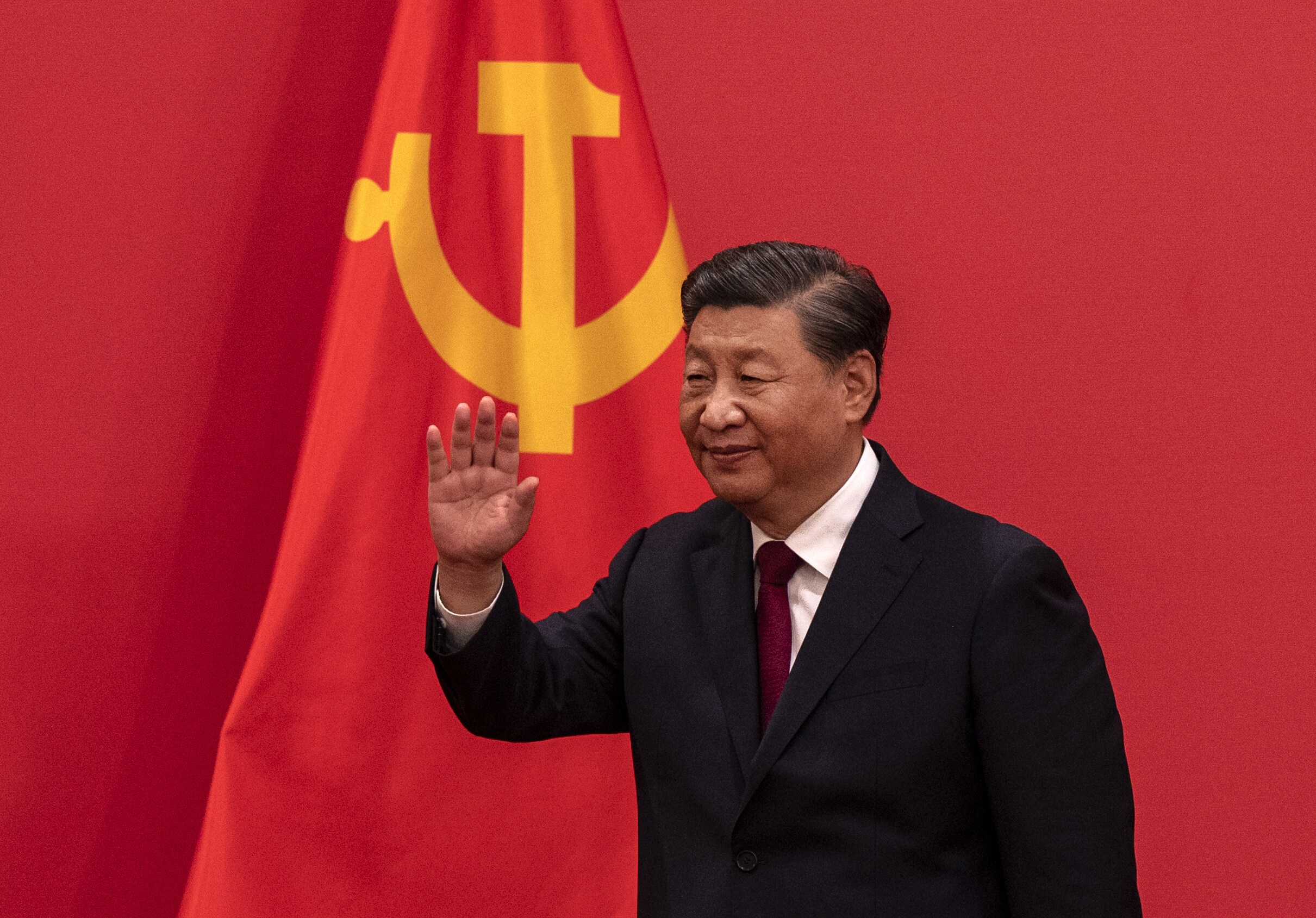
(Bloomberg) -- Chinese President Xi Jinping attended a meeting with prominent entrepreneurs on Monday, a potentially momentous show of support for the private sector after years of turmoil.
Xi delivered a speech after listening to representatives of private firms, the official Xinhua News Agency reported. Premier Li Qiang also showed up, Xinhua said. It didn't specify which firms or executives were represented.
Chinese leaders had been expected to meet with high-profile figures including Alibaba Group Holding Ltd. co-founder Jack Ma and Deepseek founder Liang Wenfeng on Monday. Such a summit would send a powerful signal that the Communist Party is adopting a more supportive stance toward the private-sector companies that fuel most of the country's economic growth.
Ma was the highest-profile casualty of Xi's crackdown on the internet and private sector in 2020, when authorities scuttled the blockbuster initial public offering of Alibaba-affiliate Ant Group Co. That episode kicked off a yearslong campaign to tighten state control over the world's second-largest economy, rein in the nation's billionaire class and shift resources toward Xi's priorities from national security to technological self-sufficiency. The outspoken entrepreneur disappeared from public view.
But authorities have taken a less combative approach as China's economy slowed and companies like Alibaba aligned themselves with Xi's push for leadership in areas like artificial intelligence.
“This is the strongest signal China could release to boost social confidence. The fact that Xi Jinping himself shows up to meet with the entrepreneurs highlight the political significance of this meeting,” said You Chuanman, senior lecturer at the School of Law, Singapore University of Social Sciences.
“It's an ‘enabling policy' rather than a 180-degree shift,” You said. “China has been pivoting from over-regulation on the property market and private sector before Covid to releasing positive policy signals to the private economy. We've seen a continuing shift in tone from Beijing towards the private sector: tolerance, improvement, and encouragement.”

Optimism over AI's potential has sparked a blistering rally in China's stock market over the past month, turning the Hang Seng China Enterprises Index into the world's best-performer. Speculation on social media about a potential meeting between Chinese authorities and companies including Alibaba has added to the positive sentiment in recent days, driving shares of the tech giant to their highest level since 2022.
Liang, whose low-cost chatbot has vaulted China near the top of the race for AI supremacy, attended a closed-door business symposium hosted by Chinese Premier Li last month. Ma, who has gradually become more visible in recent years, gave a speech on topics including AI to Ant employees in December.
Alibaba's own Qwen model has performed well in official benchmark tests and signaled the company's growing relevance in the field. And Apple Inc. is incorporating its AI technology into Chinese iPhones, a vote of confidence in its growing prowess in the field.
“The emergence of DeepSeek-R1, in addition to other recently-launched Chinese AI models that are seen as globally competitive and cost-effective, has altered the narrative of China technology, re-rated investors' optimism about the growth of and economic benefits from AI, and helped spark” the rally, Goldman Sachs wrote.
It remains unclear to what extent authorities plan to shift their stance toward the private sector. A show of support by Xi would almost certainly add fuel to the stock-market rally and revive animal spirits among entrepreneurs, but much would depend on whether authorities follow through with more concrete policy actions.
Few China watchers expect the government to revert to its pre-2020 stance, even as it seeks to shore up the economy for a potential trade war with the US under President Donald Trump.
No business figure encapsulates the ups and downs of China's private sector better than Ma, the former English school-teacher who created Alibaba from his lakeside apartment in 1999. Alibaba vanquished foreign rivals including eBay Inc. before growing into China's largest corporation, propelling Ma's reputation as a giant of private industry and tech innovation.
In 2015, the year after Alibaba pulled off what was then the world's largest initial public offering, Xi and Ma met on the sidelines of a US business summit that also included foreign executives like Tim Cook and Mark Zuckerberg. That year, the pair met at the annual government-sponsored Wuzhen gathering of internet officials and executives.
But in 2020, Ma took the stage at a Shanghai conference and let loose with a now-infamous public tirade against the state financial sector and regulators that rankled top officials in Beijing. They stunned Wall Street by shutting down Ant's IPO days later — at the time, the world's largest market debut —- before launching an assault against the rest of his empire.
Ma, who had been China's highest-profile business leader, largely disappeared from public over the next few years. He gradually emerged from around 2023 with occasional visits to the Alibaba campus, including one last week, as well as posts on the company's internal employee forum.
A meeting with Xi has the potential to supercharge a reversal of fortunes for Alibaba, which alienated investors in 2023 by unveiling a grand plan to split itself into several independent sector leaders only to scuttle that blueprint and replace key executives months later.
In 2024, Joe Tsai and Eddie Wu — two of Ma's earliest lieutenants — decided to bet big on AI. Alibaba's progress in that field helped the company gain more than $90 billion of market value this year.

-
A New Samvat Wishlist: Inclusive Prosperity And Human Development

India has strengthened its economic foundations through infrastructure, digital access and enterprise. Its next growth chapter must deepen productivity, create better livelihoods and widen participation in prosperity.
-
Love, Sex Aur Dhokha: The Audacious Plot To Spy On Jensen Huang
A Taipei dinner, a Singapore chip buyer and a suspected Chinese asset: inside the alleged spy operation that got close to NVIDIA's Jensen Huang.
-
Ten Things I Learnt This Samvat
Patience can be a trap. Cheap stocks can stay cheap. Leverage can wipe you out. What did Samvat 2082 teach us? Niraj Shah writes on 10 lessons from the year gone by.
-
Talking Points This Week: Tech Nerves, FII Buying, And A Faraway Banking Shock
The global markets are not shining this Diwali. The exception in the large markets is, India.
-
Midterm Rally Lasted A Day. The Hard Reality Of A Divided US May Last Two Years | Opinion
Between a contested AI boom, a debt ceiling that arrives in 2027 and a president with every incentive to act alone, the next two years may prove more volatile than the first day's rally suggests.
-
Blue Wave Will Derail the AI Trade but Won't Dismantle the AI Era | Unhedged Position
The Democrats' sweep of the US Congress will see politics collide with economic forces both over the long and short term.
-
It's Time To Take The GST Council's Bet On Trust Global
Payment records can prove India's services exports, and clear, proportionate rules can bring foreign digital sellers into the tax net.
-
Opinion | India at 38: From Innovation Overperformer to Innovation Powerhouse
India now has 453 VC-backed deep science startups, 18 of them late-stage, after 117 percent growth since 2020. Laurus Labs, at USD 9.3 billion, is the most valuable deep science company in any middle-income economy outside China.
-
Navigating Energy Crossroads: S Jaishankar's Call For Diversified Supply Chains At G20 Ministerial Meeting
As geopolitical fault lines continue to test maritime trade routes and commodity flows, Jaishankar's message remains pertinent: true economic resilience requires open markets, protected transit lines, and a genuine commitment to multilateral cooperation rather than coercion.









