Worldwide Survey Suggests Increasing Negative Attitude Towards Immigration
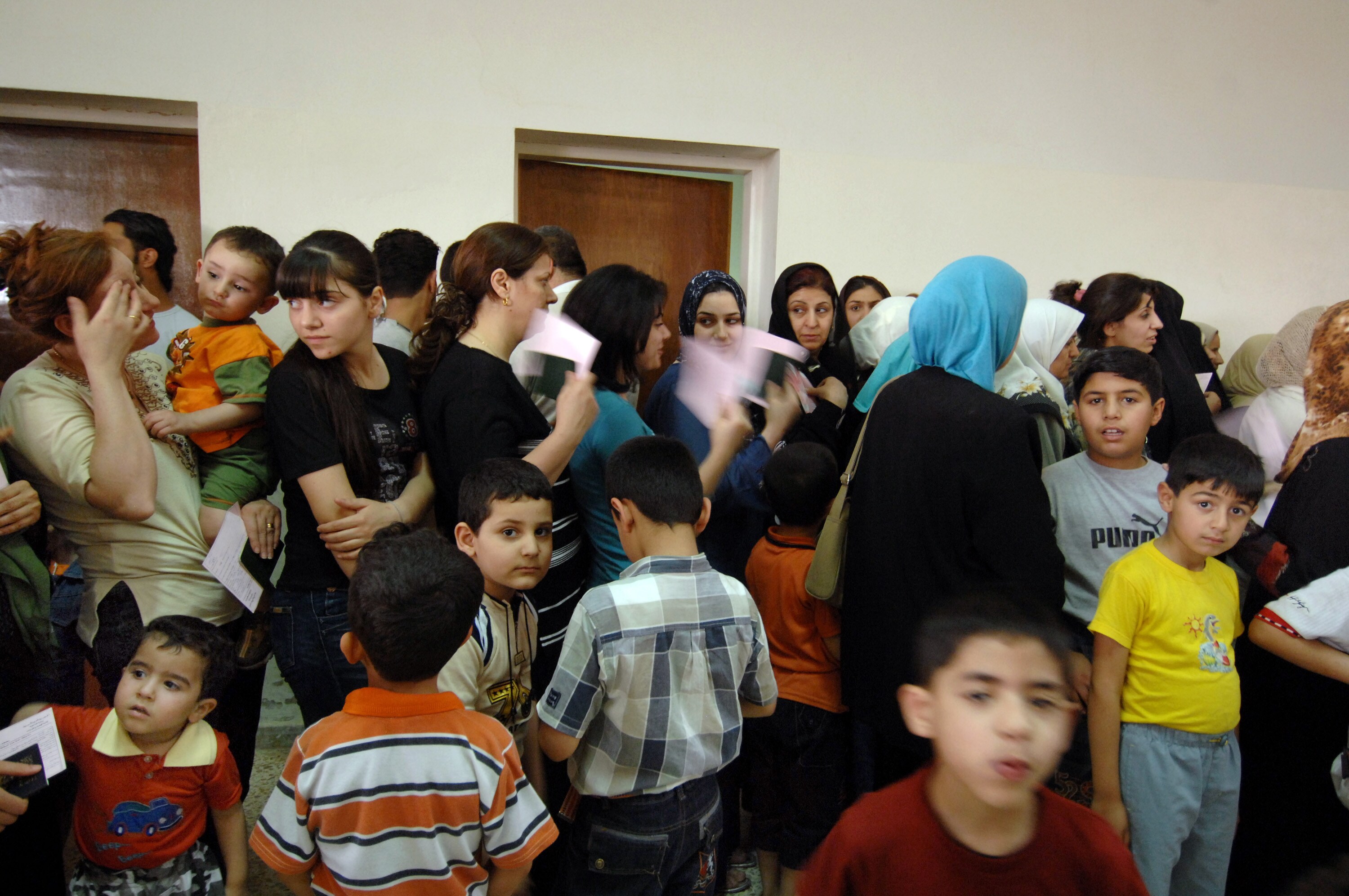
Immigration is spurring negative attitudes from the U.S. to Russia, according to an Ipsos Mori study that lays bare the attitude to migrants around the world.
About 45 percent of more than 16,000 people surveyed in 22 nations said immigration has had a negative effect on their country, compared with 20 percent who said it was positive, Ipsos Mori said Thursday in an e-mailed study. In Turkey, Italy, Russia, Hungary, France and Belgium, the proportion with negative views was more than six in 10. Almost half of the people surveyed worldwide said there are too many immigrants in their nation.
The survey exposes the tensions that immigration flows are causing in an increasingly globalized world. Elevated migration levels from within the European Union were a major plank of the successful campaign by Brexit proponents in the U.K.'s recent referendum on EU membership, while countries including Spain and Italy have faced increasing numbers of economic migrants braving treacherous seas to sail from North Africa. Greece grapples with an influx of refugees fleeing conflicts in Syria, Iraq and Afghanistan via Turkey.
“Immigration is a global issue, with very few countries entirely at ease with current levels, control and the impact of the mass movement of people,” Bobby Duffy, managing director of the Ipsos Mori Social Research Institute, said in an e-mailed statement.
The people surveyed were also suspicious of refugees, with four in 10 wanting to close borders to them, and six in 10 saying that terrorists are pretending to be refugees; in Turkey, the site of several recent terrorist attacks, it was 83 percent.
The countries surveyed were: Argentina, Australia, Belgium, Brazil, Canada, France, Germany, Hungary, India, Italy, Japan, Mexico, Poland, Russia, Saudi Arabia, South Africa, South Korea Spain, Sweden, Turkey, the U.K. and the U.S. Research was carried out from June 24 to July 8.

-
Where You Live Shapes How You Get To Work | The Reason Why

Two-wheelers are the most popular way to get to work in India, accounting for nearly 43% of workplace commutes.
-
High US Salaries, No Green Card Certainty: The Financial Calculation Facing Indian H-1B Families
The suspension of PERM processing at eight technology employers does not cancel existing H-1B visas. What it does is force a question many Indian families have been avoiding: is the US salary worth tying your career and family plans to one employer?
-
Unhedged Position: Can India See An Indonesia-Style Time Correction?
The Nifty is trading below levels it first clocked in 2024. Is there, then, as I have suggested in the headline, potential that the current time correction drags on painfully for the next three-five, even ten years?
-
Navigating Friction And Energy Realities: An Analysis Of Marco Rubio's October Visit To India
Occurring at a critical juncture marked by stalled trade negotiations and escalating geopolitical pressures over global energy supplies, the visit offers a profound window into modern US-India relations.
-
India Exports Capital. Why Not Export Trusteeship?
The big question, then, is whether India can build an institution that global borrowers, investors, banks, and lawyers can trust, even without an Indian connection.
-
France's Economy & Politics Are In Crisis | The Reason Why
Let's look at how the French economy and politics evolved under Nicolas Sarkozy, Franois Hollande and Emmanuel Macron.
-
You May Inherit The Business. You Must Earn Its Credibility.
Succession tests the founder's ability to share authority as much as it tests the next generation's readiness to assume it.
-
Signing Deals Is One Thing; Making Them Work Is Another | The Week In Whys
Sometimes, things don't turn out as planned. Indian companies have lost some bids to rivals, some projects won't produce until 2030.
-
FOMC Wall, PERM Suspension, Hospital Stocks | Talking Points This Week
A PERM suspension would directly affect green-card sponsorship rather than H-1B visas, so the near-term earnings impact could remain relatively limited. The key question is whether this marks a new phase in US scrutiny of Indian IT.
-
Everything, Everywhere, All At Once: Dalal Street's Week To Forget | Joining The Dots
Visa curbs, a Starlink spat and cancer drug caps: what connects this week's shocks for Indian markets









