Women’s Capital Is Their Courage, Says World Economic Forum’s Co-Chair
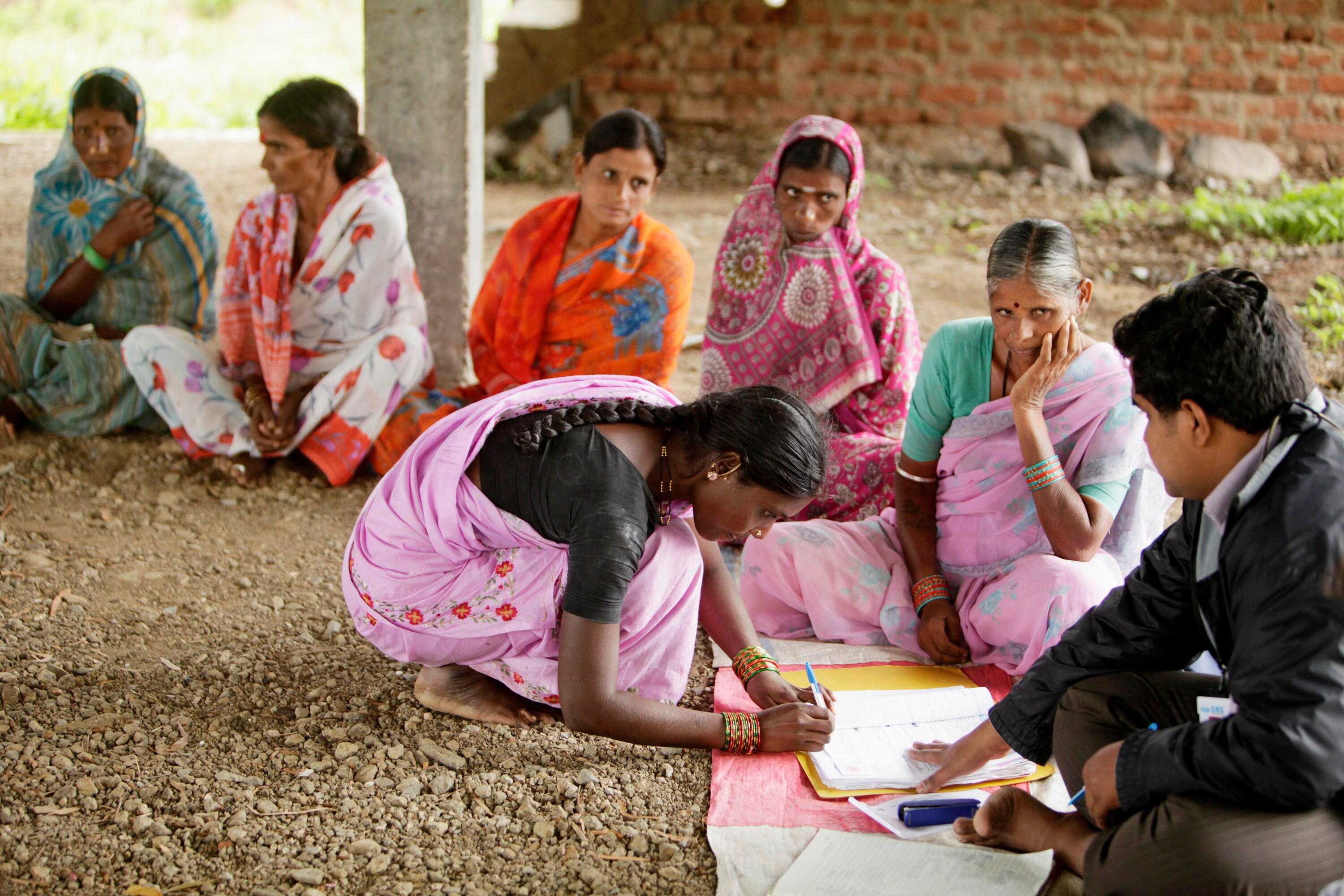
This year's World Economic Forum is being co-chaired by seven women, a first in the event's history. Among them is the founder of India's first bank to give small loans to rural women.
The bank is now looking for investments based on the courage of the women it serves as capital. “We want to appeal to investors to invest in these women, to invite, to engage and partner with them,” Chetna Sinha, founder of the Mann Deshi Foundation told BloombergQuint's Menaka Doshi on the sidelines of the WEF at Davos, Switzerland.
Talking about her journey as the founder of a rural microfinance lender, Sinha said that she has worked with women who consider courage as their real capital, and are passionate about becoming entrepreneurs. As co-chair at the WEF, she attemps to bring the “fractured voices” of rural women to the fore, she added.
Also Read: Modi Sees Three Big Global Threats And Offers Four Solutions At Davos
Sinha founded the bank to enable women in rural Maharashtra to keep their hard earned savings. Over time, the lender evolved into a business school, teaching women how to become entrepreneurs. It also provides tutelage and banking services to women on wheels.
Commenting on her experience at the forum so far, Sinha said that it is interesting to see women from all walks of life, holding different leadership positions across globe, come together and engage in dialogue for a better world.
Watch the full conversation here:

-
High US Salaries, No Green Card Certainty: The Financial Calculation Facing Indian H-1B Families

The suspension of PERM processing at eight technology employers does not cancel existing H-1B visas. What it does is force a question many Indian families have been avoiding: is the US salary worth tying your career and family plans to one employer?
-
Unhedged Position: Can India See An Indonesia-Style Time Correction?
The Nifty is trading below levels it first clocked in 2024. Is there, then, as I have suggested in the headline, potential that the current time correction drags on painfully for the next three-five, even ten years?
-
Navigating Friction And Energy Realities: An Analysis Of Marco Rubio's October Visit To India
Occurring at a critical juncture marked by stalled trade negotiations and escalating geopolitical pressures over global energy supplies, the visit offers a profound window into modern US-India relations.
-
India Exports Capital. Why Not Export Trusteeship?
The big question, then, is whether India can build an institution that global borrowers, investors, banks, and lawyers can trust, even without an Indian connection.
-
France's Economy & Politics Are In Crisis | The Reason Why
Let's look at how the French economy and politics evolved under Nicolas Sarkozy, Franois Hollande and Emmanuel Macron.
-
You May Inherit The Business. You Must Earn Its Credibility.
Succession tests the founder's ability to share authority as much as it tests the next generation's readiness to assume it.
-
Signing Deals Is One Thing; Making Them Work Is Another | The Week In Whys
Sometimes, things don't turn out as planned. Indian companies have lost some bids to rivals, some projects won't produce until 2030.
-
FOMC Wall, PERM Suspension, Hospital Stocks | Talking Points This Week
A PERM suspension would directly affect green-card sponsorship rather than H-1B visas, so the near-term earnings impact could remain relatively limited. The key question is whether this marks a new phase in US scrutiny of Indian IT.
-
Everything, Everywhere, All At Once: Dalal Street's Week To Forget | Joining The Dots
Visa curbs, a Starlink spat and cancer drug caps: what connects this week's shocks for Indian markets
-
India Is Going Abroad For Critical Minerals. But It May Take Years To Pay Off | The Reason Why
Although India's steps are in the right direction, they remain modest compared with India's growing dependence.









