Is China About to End Covid Zero? Here’s What We Know Right Now
(Bloomberg) -- Speculation about the fate of China's Covid Zero policy has reached fever pitch.
After President Xi Jinping defended the strategy in his much-anticipated Communist Party congress address in October, investors were left wondering what comes next as the lockdowns and blanket testing that are the hallmark of Covid Zero continued.
In the absence of a clear outlook on when it will all end, traders have seized on what they see as signs of progress, with an unverified screenshot of mysterious origins claiming China was making detailed plans to reopen stoking a $450 billion rally last week.
The rumors continued into the weekend, ahead of a briefing by China's National Health Commission, where newfound buzz about a Covid Zero exit plan was punctured by officials saying they were resolutely adhering to the strategy.
With markets continuing to whipsaw, and decoding China's intentions key to everything from the fortunes of beaten-down domestic stocks to the global economic outlook, we've brought together what we know about the controversial strategy going forward:
Has anything changed recently to suggest China is adjusting its Covid policies?
Since Xi's speech at the Party congress, there have been some solid indications that Chinese officials have at least started a dialog about how to ease the more isolationist aspects of Covid Zero.
Officials are debating how they may go about further reducing mandatory hotel quarantine for incoming travelers, Bloomberg News reported last month. The aviation regulator has also encouraged state-owned carriers to add more flights, and officials are considering scrapping a system that penalizes airlines for bringing a certain number of Covid-positive passengers into China. All of these -- while largely at the discussion or planning stage -- point to a desire to ease up at the border.
On the vaccine front, German Chancellor Olaf Scholz gave the first indication that China may be willing to roll out more effective, foreign Covid shots -- seen by many as key to being able to reopen without a mass wave of deaths -- when he said on Friday the country had agreed to make BioNTech SE's vaccine available to foreigners living there. Scholz said it was a potential first step toward wider adoption in the world's second-largest economy.
So is China getting ready to end Covid Zero – or just tweak it?
That's unclear. While relaxing border curbs could help reduce China's isolation from the rest of the world, it won't address the more economically-damaging aspects of Covid Zero. In fact, tweaking travel curbs could help prolong Covid Zero by making it more sustainable, bolstering a system of mass surveillance and reduced global interaction that can be beneficial for Xi. Read more about that here.
It's, however, hard to find concrete signs of China easing its internal Covid playbook of lockdowns, curbs on domestic travel and frequent mass testing.
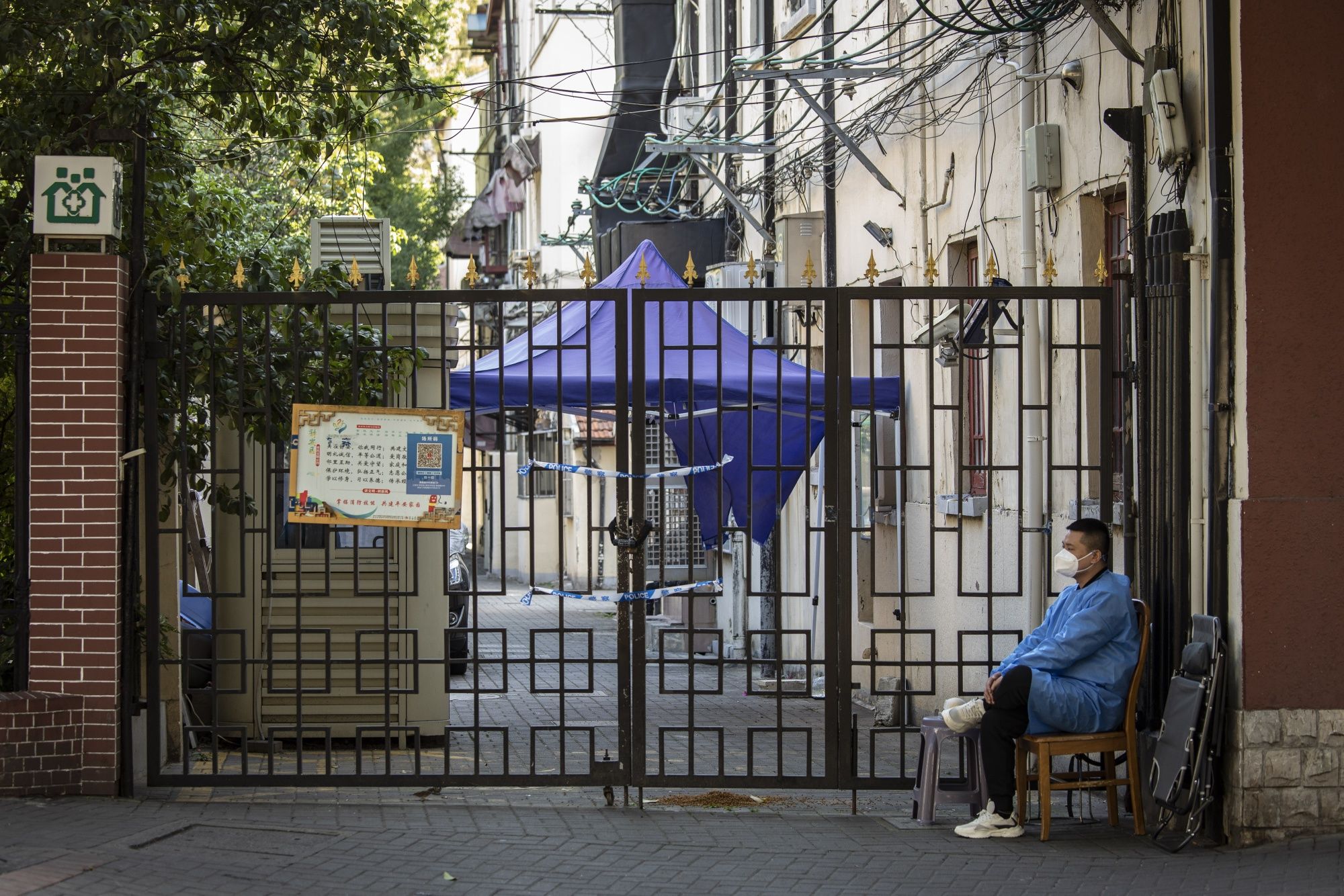
While Beijing has ramped up its directive for local officials to make Covid Zero less obtrusive, that seems to have mainly resulted in restrictions going under the radar. Lockdowns and other curbs like shutting schools are more covert now. A city may be locked down incrementally, neighborhood-by-neighborhood, to avoid making a broad announcement, and some residents have reported only finding out they were locked down when they got home.
If anything, lockdowns actually increased last week, according to an index compiled by Japanese bank Nomura. Just over 10% of China's total gross domestic product was under some form of lockdown as of Thursday, Nomura analysts wrote, up from 9.5% last Monday. A seven-day lockdown was ordered around the world's biggest iPhone factory in Zhengzhou, central China, spurring Apple Inc. to cut its outlook for shipments of the devices, and a district of southern manufacturing powerhouse, Guangzhou, will be locked down until Friday.
Parts of the northwest have been locked down for months, and a vast brick-and-mortar testing network has been built in some cities.
What about that unverified screenshot?
Disseminated by market commentators and traders via social media, the screenshot claimed that a member of China's top leadership met with experts -- translated by many as a “committee” -- to discuss a detailed plan for reopening by March next year. It was unclear who wrote the screenshot or where it had come from. There was no letterhead, watermark or other identifying features.
Despite this, it was seized on, spurring a rally in Chinese stocks that are trading near multi-year lows, thanks in part to the economic drag of Covid Zero.
A week on, no media organization -- Chinese or international -- has been able to verify the screenshot, and when asked about it at a briefing on Nov. 1, a spokesman for China's foreign ministry said he was unaware of any Covid Zero exit committee.
Similar speculative reports since have also failed to stack up. (We've looked into most of them).
What are Chinese officials and state media actually saying about Covid Zero now?
What they've always been saying: Officials are sticking to the script, with no cracks in the party line that Covid Zero is the correct approach for China and the government will implement it “unswervingly.”
Investors have been trying very hard to read between the lines of how state media and the authorities talk about Covid, jumping on what seem to be milder descriptions of the virus as representing a change in the propaganda. While a rhetorical shift is definitely a key indicator to watch for, the recent instances seized on are weak.
For example, some traders passed around an article posted on Party mouthpiece The People's Daily's health app in which the China CDC's chief epidemiologist Wu Zunyou appeared to downplay the risk of contracting long Covid. But those comments were made in October, and the article merely conveyed the observations of a Hong Kong-based expert that the definition of long Covid is still in doubt.
Similarly, much was made of the local health authority in Henan province describing Covid as a “self-limiting” disease on Oct. 31, meaning it can resolve without treatment. But as analysts at Australia & New Zealand Banking Group, led by Greater China chief economist Raymond Yeung, wrote in a note on Monday, the phrase is not new, has been used before in China and is irrelevant for the parameters that Beijing focuses on.
“It means the immune system can develop antibodies to combat the virus,” the analysts wrote. “However, policy makers are still concerned about the impact of long Covid and the burden on medical facilities.”
Why the reluctance to pivot despite vaccines and antiviral drugs to treat Covid?
Much has been made of the fact that China's vaccines are not as effective as Western mRNA shots and that may account for its reluctance to exit Covid Zero.
But the country's homegrown vaccines are highly effective in preventing fatalities. What's likelier to be the issue is that even with inoculations and antiviral pills like Pfizer's Paxlovid -- which China is producing domestically -- there still remains a small chance of dying from Covid. In China's vast population, that could amount to millions of deaths, which would be problematic for Xi. He's held up China's vastly lower Covid death toll as supreme evidence of the policy's rectitude, especially compared with the US.
There has been some news on the vaccine front, with Friday's BioNTech development preceded by the approval and rollout in some cities of a nasal vaccine from Chinese company CanSino Inc. But despite that, the country's vaccination rate has plateaued, with rates among the elderly still lower than in other countries. Their fears are less about how the vaccine is administered and more around whether it can have adverse effects if taken when you have another medical condition, as many older people tend to.
It's also possible that China's top leaders may simply be reluctant to allow the virus to spread freely until the risk of death drops further, either through the emergence of an even milder virus variant than omicron, or the development of even more effective vaccines and antivirals.
What needs to happen before China starts to exit Covid Zero?
Experts surveyed by Bloomberg are looking for a number of key developments, some of them also laid out by Chinese officials too. They include:
- a real vaccination push, especially among the elderly and potentially using mandates
- the concerted introduction of mRNA shots
- improved hospital capacity, including downgrading Covid to an illness you don't necessarily need to be hospitalized for
- easing of the border regime
- backing away from lockdowns and other Covid Zero mitigation measures
And the political rhetoric will have to change in clear terms.
Having committed so much of his legacy to a war-like campaign again Covid, Xi will need to signal in no uncertain terms that victory is in sight.
More stories like this are available on bloomberg.com
©2022 Bloomberg L.P.

-
Opinion | India at 38: From Innovation Overperformer to Innovation Powerhouse

India now has 453 VC-backed deep science startups, 18 of them late-stage, after 117 percent growth since 2020. Laurus Labs, at USD 9.3 billion, is the most valuable deep science company in any middle-income economy outside China.
-
Navigating Energy Crossroads: S Jaishankar's Call For Diversified Supply Chains At G20 Ministerial Meeting
As geopolitical fault lines continue to test maritime trade routes and commodity flows, Jaishankar's message remains pertinent: true economic resilience requires open markets, protected transit lines, and a genuine commitment to multilateral cooperation rather than coercion.
-
Indians Are Travelling, But Not Every Journey Is A Holiday | The Week In Whys
Pilgrims, patients and working women are the real travellers, and the system hasn't quite caught up with them.
-
Getting To Work Costs Women More | The Reason Why
It is not just about women paying more than men. It is about women paying much more in cities than in villages.
-
AI Bias In Investing Cannot Be Eliminated, But It Can Be Governed
Framing is a particularly important example as identical financial information presented in terms of gains rather than losses can lead an LLM to reach a different assessment.
-
Joining The Dots | Dark Skies, Steady Diya: Why Hope Holds This Diwali
With war, a weak rupee and foreign outflows weighing on sentiment, policymakers at the NDTV World Summit and market veterans at NDTV Profit Ignite: Diwali Edition offered the same advice: stay invested and filter out the noise.
-
The Curious Case of Equitas Small Finance Bank And A CEO Who Quit For Stock
PN Vasudevan believes persistent investor concerns over a perceived conflict of interest had become a governance overhang on Equitas Small Finance Bank's stock, even as the lender improved profitability and asset quality.
-
Talking Points This Week: AI Cash Burn, A Tiger Comeback And An India That Still Finds Its Own Path
India is not immune to higher oil or tighter global liquidity, yet its earnings base is broader, its domestic policy levers are still available.
-
Foreign Investors Own Half Of HDFC Bank and ICICI Bank. An LTCG Cut Could Matter Most Here
Foreign portfolio investors have US$115 billion parked in HDFC Bank, ICICI Bank. If the government cuts long-term capital gains tax, Jefferies says returning foreign money could land here first.










