What to Watch for After India’s Population Overtakes China

(Bloomberg) -- As India overtakes China as the world's most-populous nation, an array of demographic issues such as birth rates and labor markets are emerging as key themes to watch out for in the two Asian powerhouses.
India, with its predominantly young population, is on course to being the fastest-growing major economy in the coming years, while an aging China is expected to see slower growth after years of rapid expansion.
Here are five charts to show why demographics matter in this historic shift:
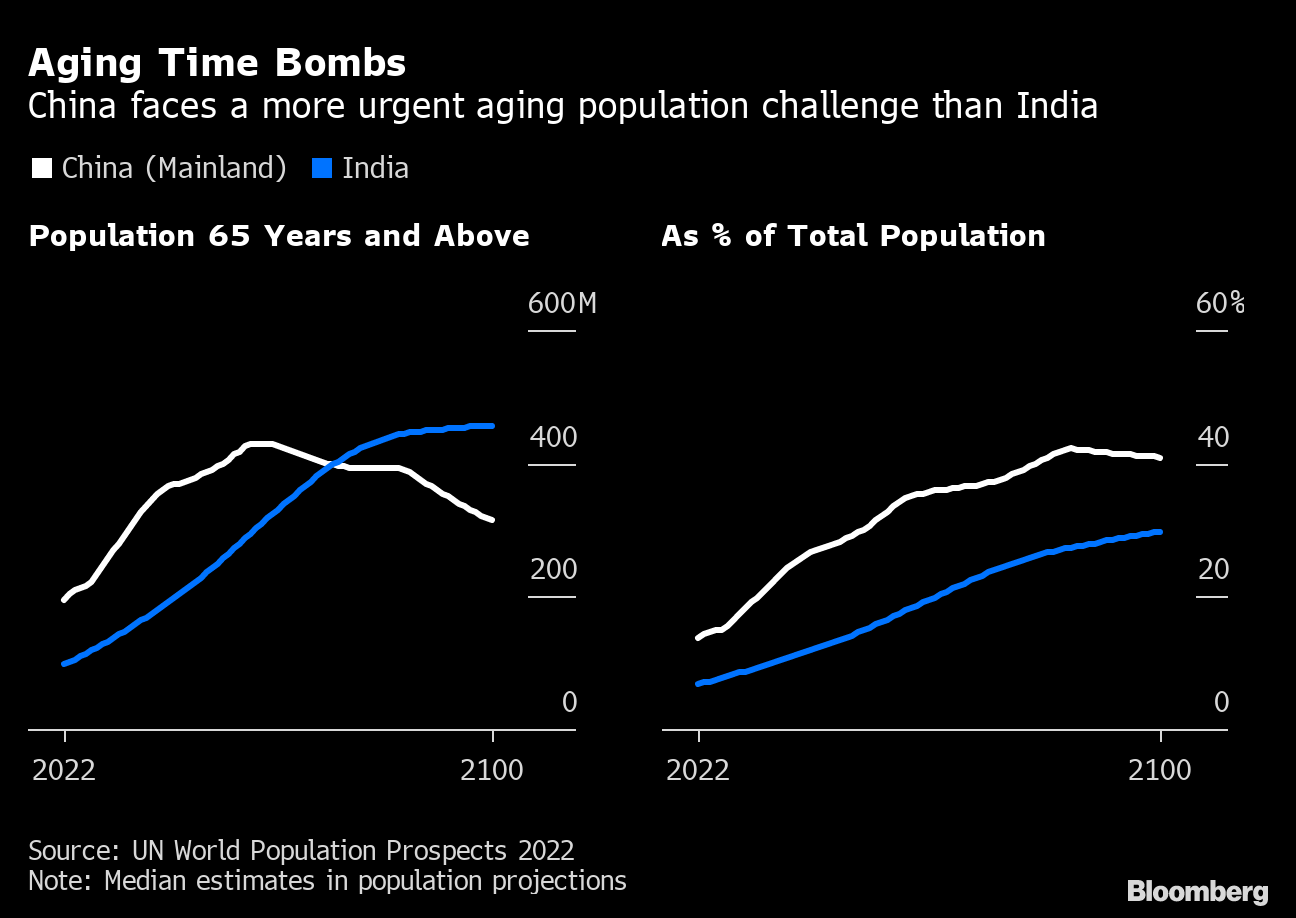
China, whose strict one-child policy until 2016 kept birth rates in check, will see its working-age population shrink over the century as people grow older and eventually make up more than 40% of its population. This compares to India where people aged 65 years and above will account for less than a third of the total 2.3 billion people projected by 2100.
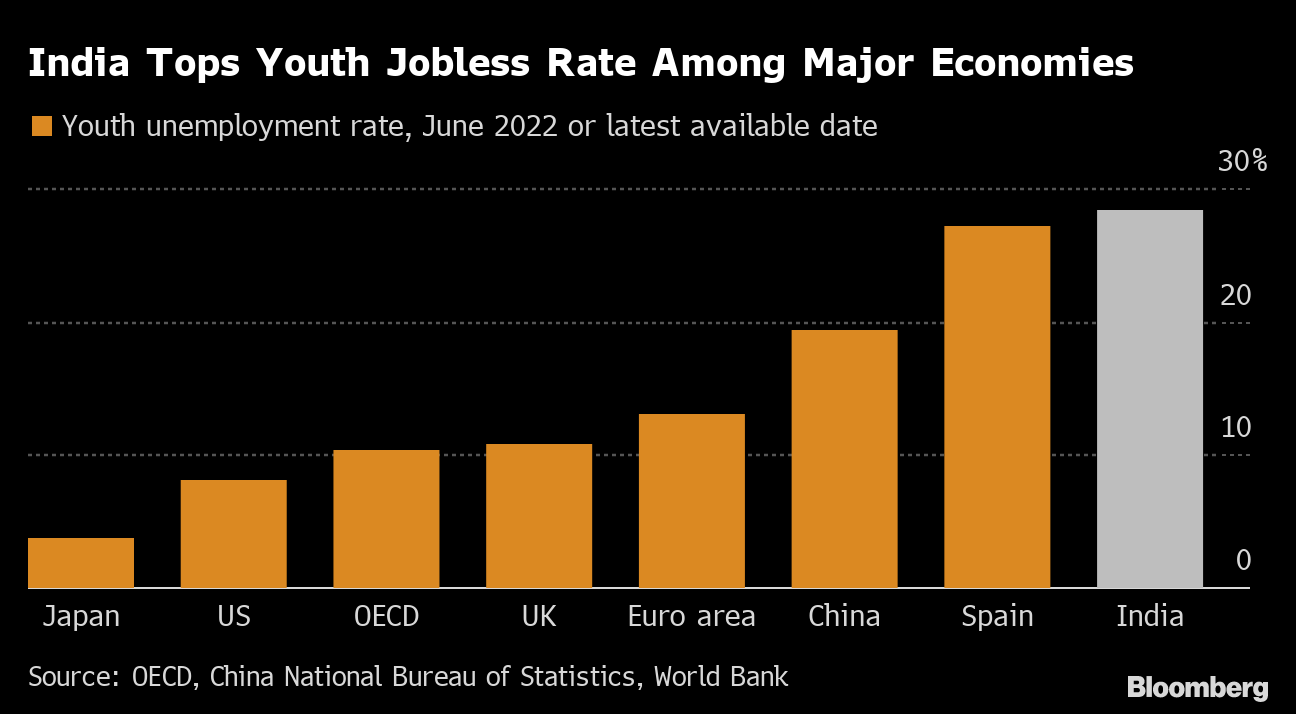
That's not to say everything looks rosy for India. Half of its population is under the age of 30, and some 12 or so million people enter the market every year looking for jobs. The challenge for India, which is estimated to grow 7% in the year ending March, is to sustain that pace of expansion in the coming decades or end up with even higher unemployment rates.
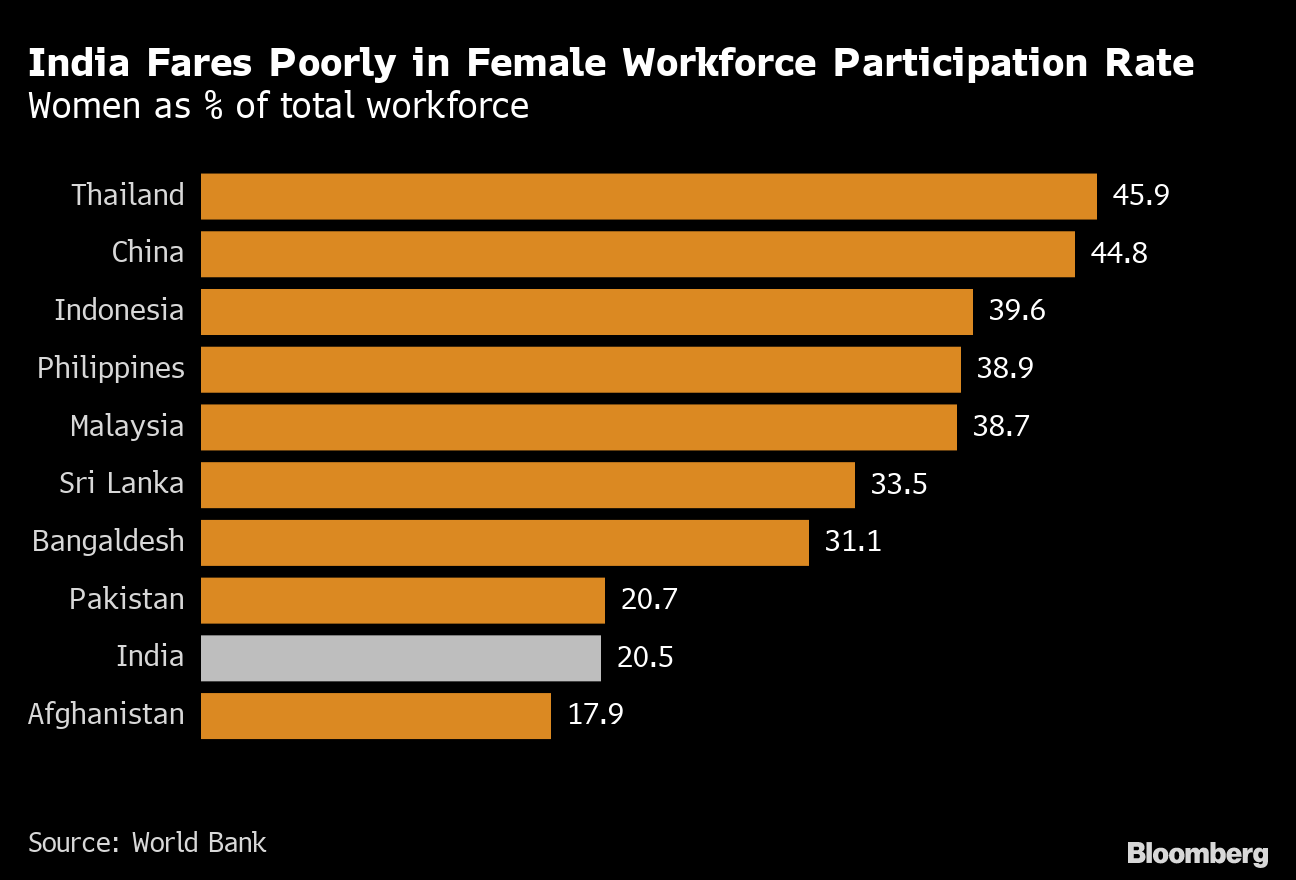
While India talks up its demographic dividend, a key number that escapes the headlines is the participation of women in the workforce. Women account for just a fifth of the total labor force, only slightly better than the rate of Afghanistan. Women in China, on the other, make up 44.8% of the workforce.
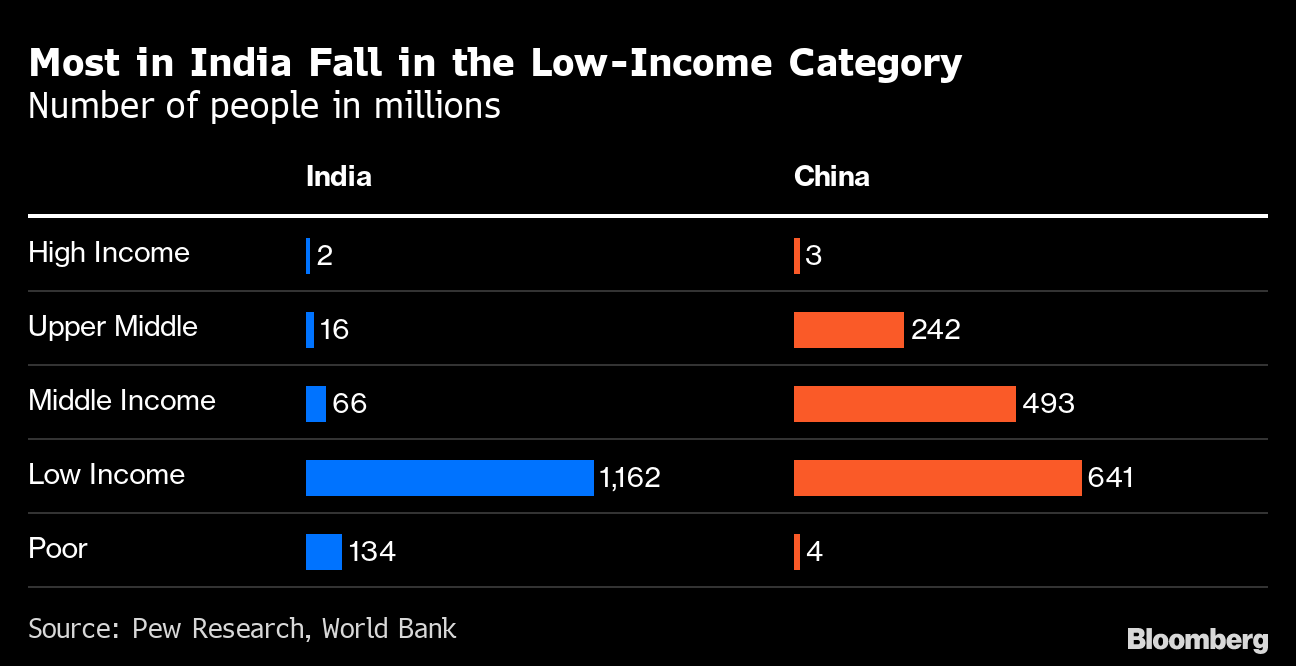
India's middle-class population pales in comparison to China's, but the country's relatively cheap labor makes it an attractive destination for businesses looking to move away from China. Apple Inc. began assembling its latest iPhone models in the South Asian nation, in a win for Prime Minister Narendra Modi's ‘Make in India' campaign. But there were others like General Motors Co. and Harley Davidson Inc. that have quit, frustrating Modi's goal of boosting manufacturing's share of the economy to 25% from the current 14%.
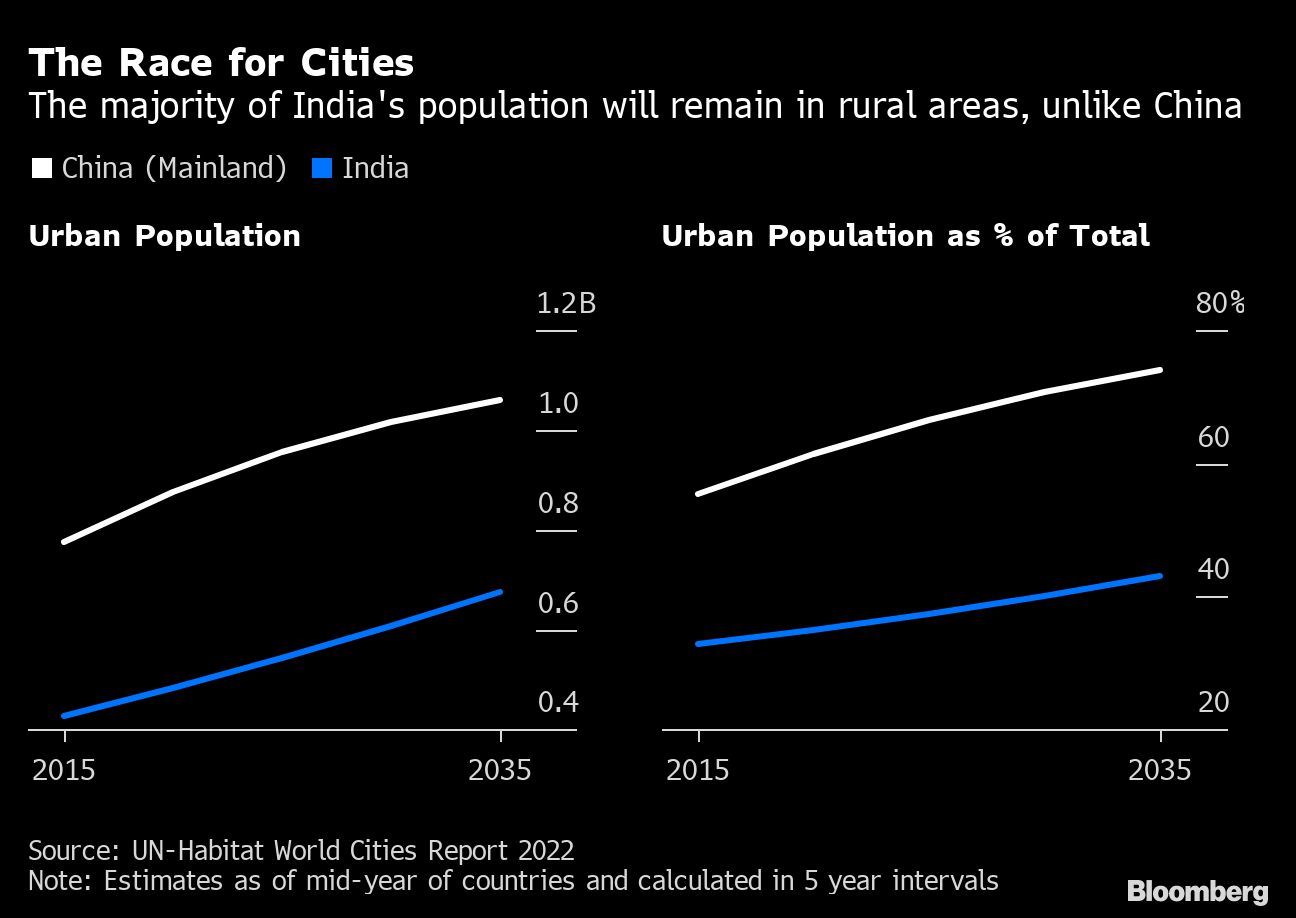
India's population remains largely rural, unlike China's. Even as both countries are seeing workers migrate to megacities seeking better prospects, the majority of India's people will remain in the hinterland, while the bulk of China will increasingly be urban by 2035, according to estimates from UN-Habitat.
That's a reminder of the challenges the South Asian country faces in alleviating poverty and reducing inequality.
More stories like this are available on bloomberg.com
©2023 Bloomberg L.P.

-
Talking Points This Week: Tech Nerves, FII Buying, And A Faraway Banking Shock

The global markets are not shining this Diwali. The exception in the large markets is, India.
-
Midterm Rally Lasted A Day. The Hard Reality Of A Divided US May Last Two Years | Opinion
Between a contested AI boom, a debt ceiling that arrives in 2027 and a president with every incentive to act alone, the next two years may prove more volatile than the first day's rally suggests.
-
Blue Wave Will Derail the AI Trade but Won't Dismantle the AI Era | Unhedged Position
The Democrats' sweep of the US Congress will see politics collide with economic forces both over the long and short term.
-
It's Time To Take The GST Council's Bet On Trust Global
Payment records can prove India's services exports, and clear, proportionate rules can bring foreign digital sellers into the tax net.
-
Opinion | India at 38: From Innovation Overperformer to Innovation Powerhouse
India now has 453 VC-backed deep science startups, 18 of them late-stage, after 117 percent growth since 2020. Laurus Labs, at USD 9.3 billion, is the most valuable deep science company in any middle-income economy outside China.
-
Navigating Energy Crossroads: S Jaishankar's Call For Diversified Supply Chains At G20 Ministerial Meeting
As geopolitical fault lines continue to test maritime trade routes and commodity flows, Jaishankar's message remains pertinent: true economic resilience requires open markets, protected transit lines, and a genuine commitment to multilateral cooperation rather than coercion.
-
Indians Are Travelling, But Not Every Journey Is A Holiday | The Week In Whys
Pilgrims, patients and working women are the real travellers, and the system hasn't quite caught up with them.
-
Getting To Work Costs Women More | The Reason Why
It is not just about women paying more than men. It is about women paying much more in cities than in villages.
-
AI Bias In Investing Cannot Be Eliminated, But It Can Be Governed
Framing is a particularly important example as identical financial information presented in terms of gains rather than losses can lead an LLM to reach a different assessment.









