What India Inc. Made Of Modi’s Davos Speech
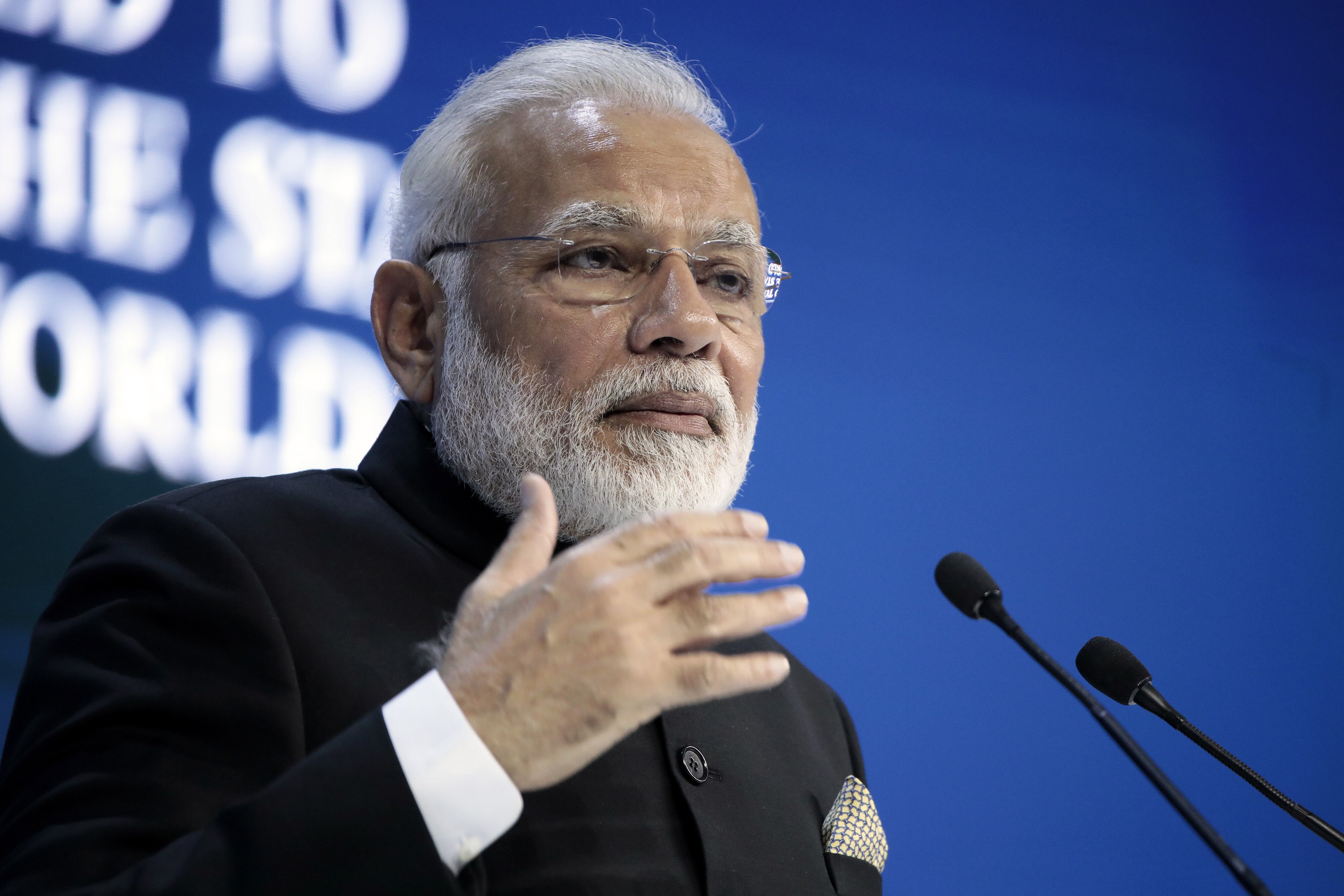
Terrorism, climate change and protectionism were the biggest threats of our times, and the world must unite and reform global institutions to meet these challenges, Prime Minister Narendra Modi said.
Modi called for collaboration by global leaders to work toward a future “where the world has not been broken up into fragments by narrow domestic walls”, taking a leaf out of Nobel Laureate Rabindranath Tagore's Gitanjali. His plenary address at the World Economic Forum was the first by an Indian Prime Minister in 21 years.
This was a different approach by Modi, who usually pushes the India story aggressively, said Sajjan Jindal, chairman of the JSW Group. Jindal had earlier told BloombergQuint that he expects Modi to “sell India”, by talking about its potential as an investment destination. Instead, the Prime Minister was way more ambitious, using the platform to larger global issues.
Here's what leaders from India Inc. made of PM Modi's near hour-long speech.
‘Well Balanced'
Jindal said that Modi's speech was well balanced and the Prime Minister used words wisely to address the forum. “I thought he has clearly portrayed India's leadership and talked about our history,” he said.
He did mention about coming to India, investing to India and but he didn't want to over ‘sell' the country.Sajjan Jindal, Chairman, JSW Group
Also Read: JSW Eyes Monnet Ispat, Bhushan Steel, But Not Majority Stake
‘Statesman Over Salesman'
This was the “speech of a global statesman” while the world was listening, said Uday Kotak, billionaire banker and vice-chairman and managing director of Kotak Mahindra Bank.
Prime Minister Narendra Modi has moved on from being a salesman of India...The three points he made on climate change, terrorism and protectionism are key points in the world order and what better place than this for this statement.Uday Kotak, Chairman, Kotak Mahindra Bank
Also Read: Kotak Says Allowing 100% Foreign Holding In Banks ‘Not A Great Idea'
India's Global Role Takes Centre Stage
The Prime Minister's speech struck the right note for the country, according to Ajit Gulabchand, the chairman of the Hindustan Construction Company Ltd. He addressed the issue of a “fractured world and how to bring it together”, Gulabchand told BloombergQuint.
If you notice, he made a reference several times that we are a democracy which is not just a question of votes but a question of philosophy and a way of doing things. He is directly comparing with China and saying that we are a different kind of force.Ajit Gulabchand, Chairman, HCC
Modi Chooses ‘A Moral Playground'
Modi did well to highlight India's soft power instead of just speaking about India's economic might, said Anand Mahindra, chairman of the Mahindra Group. The Prime Minister took an inclusive approach by inviting world and corporate leaders assembled at Davos to come to India, saying solutions to the world's biggest problems can be found here.
I think he covered all grounds by saying we are spiritual, harmonised and open but we are also becoming a more self-confident nation. I think it was a well-crafted piece of content and I think it'll be compared right away to President Trump's, so let's watch the action.Anand Mahindra, Chairman, Mahindra Group
Mahindra said that while some people may criticise Modi for not focusing on economics at such a forum, he's not in that camp.
I think when you change the rules of the game, then you dominate proceedings, and I think he did that.Anand Mahindra, Chairman, Mahindra Group
Also Read: Don't Know Enough To Call Demonetisation An ‘Epic Failure', Rajan Says
‘Refreshing Vision'
Modi's speech articulated a vision of India “rarely spoken about or discussed at a forum like this” which is expected to be business oriented, said Rajiv Lall, managing director and chief economic officer of IDFC Bank.
It was more of India as a democracy, as a multi-cultural society and it was about what India has to share with rest of the world without experiencing and dealing with that complexityRajiv Lall, MD & CEO, IDFC Bank
The speech had a "very coherent narrative" as it also talked about how India has improved financial inclusion through reforms, Lall added.
‘Measured and Humble'
The Prime Minister's speech was “powerful” as he voiced his aspirations for India with “great charisma in Hindi and not in English”, said John Studzinski, vice-chairman of the Blackstone Group. “His real charisma comes out in Hindi,” he told BloombergQuint.
However, offering “constructive criticism” Studzinski said Modi tried to cover a wide variety of issues, and investors and economy watchers had to wait till the end for his views on the India growth story.
Modi's speech reflected managing expectations, humility and his aspirations for India. He was much more measured and humble (than President Xi last year).John Studzinski, Vice-Chairman, Blackstone Group

-
High US Salaries, No Green Card Certainty: The Financial Calculation Facing Indian H-1B Families

The suspension of PERM processing at eight technology employers does not cancel existing H-1B visas. What it does is force a question many Indian families have been avoiding: is the US salary worth tying your career and family plans to one employer?
-
Unhedged Position: Can India See An Indonesia-Style Time Correction?
The Nifty is trading below levels it first clocked in 2024. Is there, then, as I have suggested in the headline, potential that the current time correction drags on painfully for the next three-five, even ten years?
-
Navigating Friction And Energy Realities: An Analysis Of Marco Rubio's October Visit To India
Occurring at a critical juncture marked by stalled trade negotiations and escalating geopolitical pressures over global energy supplies, the visit offers a profound window into modern US-India relations.
-
India Exports Capital. Why Not Export Trusteeship?
The big question, then, is whether India can build an institution that global borrowers, investors, banks, and lawyers can trust, even without an Indian connection.
-
France's Economy & Politics Are In Crisis | The Reason Why
Let's look at how the French economy and politics evolved under Nicolas Sarkozy, Franois Hollande and Emmanuel Macron.
-
You May Inherit The Business. You Must Earn Its Credibility.
Succession tests the founder's ability to share authority as much as it tests the next generation's readiness to assume it.
-
Signing Deals Is One Thing; Making Them Work Is Another | The Week In Whys
Sometimes, things don't turn out as planned. Indian companies have lost some bids to rivals, some projects won't produce until 2030.
-
FOMC Wall, PERM Suspension, Hospital Stocks | Talking Points This Week
A PERM suspension would directly affect green-card sponsorship rather than H-1B visas, so the near-term earnings impact could remain relatively limited. The key question is whether this marks a new phase in US scrutiny of Indian IT.
-
Everything, Everywhere, All At Once: Dalal Street's Week To Forget | Joining The Dots
Visa curbs, a Starlink spat and cancer drug caps: what connects this week's shocks for Indian markets
-
India Is Going Abroad For Critical Minerals. But It May Take Years To Pay Off | The Reason Why
Although India's steps are in the right direction, they remain modest compared with India's growing dependence.









