U.S. Unleashes More Yemen Strikes As Houthi Attacks Continue
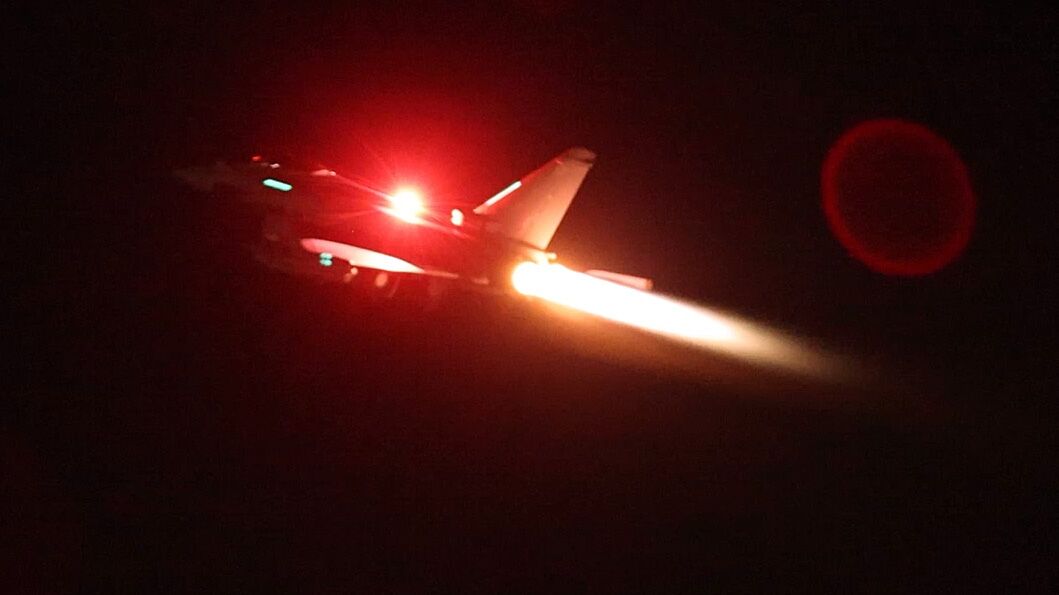
(Bloomberg) -- The US launched another round of strikes on Yemen's Houthis overnight as the Iran-backed militant group continues to roil global shipping markets with attacks around the Red Sea.
The American military targeted 14 Houthi missiles just before midnight Yemeni time. They were ready to be launched and presented “an imminent threat to merchant vessels and US Navy ships in the region,” Central Command said.
Yemeni media reported blasts in areas including the port city of Hodeida and the province of Saada near the border with Saudi Arabia.
Hours later, Pakistan launched missiles against militants in Iran, in the latest incident roiling the wider Middle East. Since the war between Israel and Hamas erupted in October, the Houthis have attacked vessels in the Red Sea, US bases have come under fire from Iran-backed groups in Iraq and Syria, and Tehran has struck targets in neighboring countries.

Oil prices edged higher on Thursday following the US strikes, with Brent rising above $78 a barrel.
It wasn't immediately clear how extensive the damage was or whether there were casualties in the latest American response to the Houthis. The group's missile and drone strikes since mid-November have disrupted global trade, forcing most vessels to avoid the Red Sea and sail a much longer route to or from Europe around southern Africa.
Shortly before the US launched more missiles on Yemen, the American-owned Genco Picardy was attacked by a drone in the Gulf of Aden, near the southern end of the Red Sea. Centcom, responsible for the US military in the Middle East and parts of Asia, described the vessel as a bulk carrier ship registered in the Marshall Islands. The ship sustained some damage, but no injuries were reported and it remained seaworthy.
It was the third ship targeted by the militants since a major round of US and UK-led attacks on Jan. 12 that included more than 150 strikes from surface ships, submarines and fighter jets.
Those followed repeated warnings to the Houthis, some of them via Iran, to stop their attacks. The group says it won't back down until Israel pulls out of Gaza.
The US is trying weaken the Houthis' ability to disrupt commercial shipping. But Wednesday's attack on the Genco Picardy indicates they still have weaponry at their disposal and the means to fire missiles, something that may force President Joe Biden to continue striking Yemen.
For Washington and its allies, the concern is that a deeper campaign in Yemen could exacerbate the various but inter-linked conflicts in the Middle East, which began when Hamas sent militants into Israel from Gaza on Oct. 7, killing 1,200 people.
Israel's retaliatory attack on the Palestinian territory has killed more than 24,000 people and created a humanitarian disaster, according to health officials in the Hamas-run enclave, infuriating governments in the Arab and Muslim worlds.
Israeli Prime Minister Benjamin Netanyahu has said the war won't stop until Hamas, designated a terrorist organization by the US and others, is destroyed. The government and its generals have said fighting in Gaza will last many more months, if not longer.
Saudi Arabia's foreign minister, Prince Faisal Bin Farhan, said this week he's “incredibly concerned for regional security” and called for an immediate ceasefire in Gaza.
“Continuing as we are now — continuing to see the suffering that's happening in Gaza — is likely to lead to continuing cycles of escalation” in the region, he said.
Read more: Oil Tanker Owners Halt Red Sea Trips After Yemen Airstrikes
Earlier on Wednesday, UK Foreign Secretary David Cameron met this Iranian counterpart, Hossein Amir-Abdollahian, at the World Economic Forum in Davos.
Cameron said the Houthi attacks in international waters were “illegal and unacceptable, and that Iran must use its influence” to stop them.
Iran has said that while it supports the Houthis' cause, they attack independently and don't take instructions from Tehran.
The Houthis initially said they were only going after Israel-linked vessels, though they targeted those with no obvious connection to the Jewish state. Since the US and UK strikes, the Houthis have said all American and British assets are legitimate targets.
Late last month, the US and some of its allies created a maritime task force — dubbed Operation Prosperity Guardian — to protect ships transiting the Red Sea. It's largely restricted itself to defending vessels under attack and the US has said its strikes on Yemen are seperate to the task force.
A growing number of ships are taking the unusual step of flagging on websites and elsewhere that they have no link to Israel, in a bid to gain safe passage through the Red Sea and Gulf of Aden.
(Updates with details from Yemeni media, oil-market reaction, Pakistan strikes.)
More stories like this are available on bloomberg.com
©2024 Bloomberg L.P.

-
A New Samvat Wishlist: Inclusive Prosperity And Human Development

India has strengthened its economic foundations through infrastructure, digital access and enterprise. Its next growth chapter must deepen productivity, create better livelihoods and widen participation in prosperity.
-
Love, Sex Aur Dhokha: The Audacious Plot To Spy On Jensen Huang
A Taipei dinner, a Singapore chip buyer and a suspected Chinese asset: inside the alleged spy operation that got close to NVIDIA's Jensen Huang.
-
Ten Things I Learnt This Samvat
Patience can be a trap. Cheap stocks can stay cheap. Leverage can wipe you out. What did Samvat 2082 teach us? Niraj Shah writes on 10 lessons from the year gone by.
-
Talking Points This Week: Tech Nerves, FII Buying, And A Faraway Banking Shock
The global markets are not shining this Diwali. The exception in the large markets is, India.
-
Midterm Rally Lasted A Day. The Hard Reality Of A Divided US May Last Two Years | Opinion
Between a contested AI boom, a debt ceiling that arrives in 2027 and a president with every incentive to act alone, the next two years may prove more volatile than the first day's rally suggests.
-
Blue Wave Will Derail the AI Trade but Won't Dismantle the AI Era | Unhedged Position
The Democrats' sweep of the US Congress will see politics collide with economic forces both over the long and short term.
-
It's Time To Take The GST Council's Bet On Trust Global
Payment records can prove India's services exports, and clear, proportionate rules can bring foreign digital sellers into the tax net.
-
Opinion | India at 38: From Innovation Overperformer to Innovation Powerhouse
India now has 453 VC-backed deep science startups, 18 of them late-stage, after 117 percent growth since 2020. Laurus Labs, at USD 9.3 billion, is the most valuable deep science company in any middle-income economy outside China.
-
Navigating Energy Crossroads: S Jaishankar's Call For Diversified Supply Chains At G20 Ministerial Meeting
As geopolitical fault lines continue to test maritime trade routes and commodity flows, Jaishankar's message remains pertinent: true economic resilience requires open markets, protected transit lines, and a genuine commitment to multilateral cooperation rather than coercion.









