U.S. Immigration Rebounds But Remains Far From Plugging Labour Gaps

(Bloomberg) -- Immigration to the U.S. is rebounding after a sharp two-year slowdown, but the pickup is unlikely to plug the pandemic-induced gap in new arrivals amid persistent employee shortages in industries reliant on foreigners.
Nearly a year after the U.S. reopened its borders, non-American workers are flowing in at a pace just under that last seen in 2019, an analysis by University of California at Davis economics professor Giovanni Peri showed.
But as of June, there were about 1.7 million fewer working-age immigrants living in the US than there would have been if immigration had continued at its pre-2020 pace, he said. About 600,000 of those are college-educated.
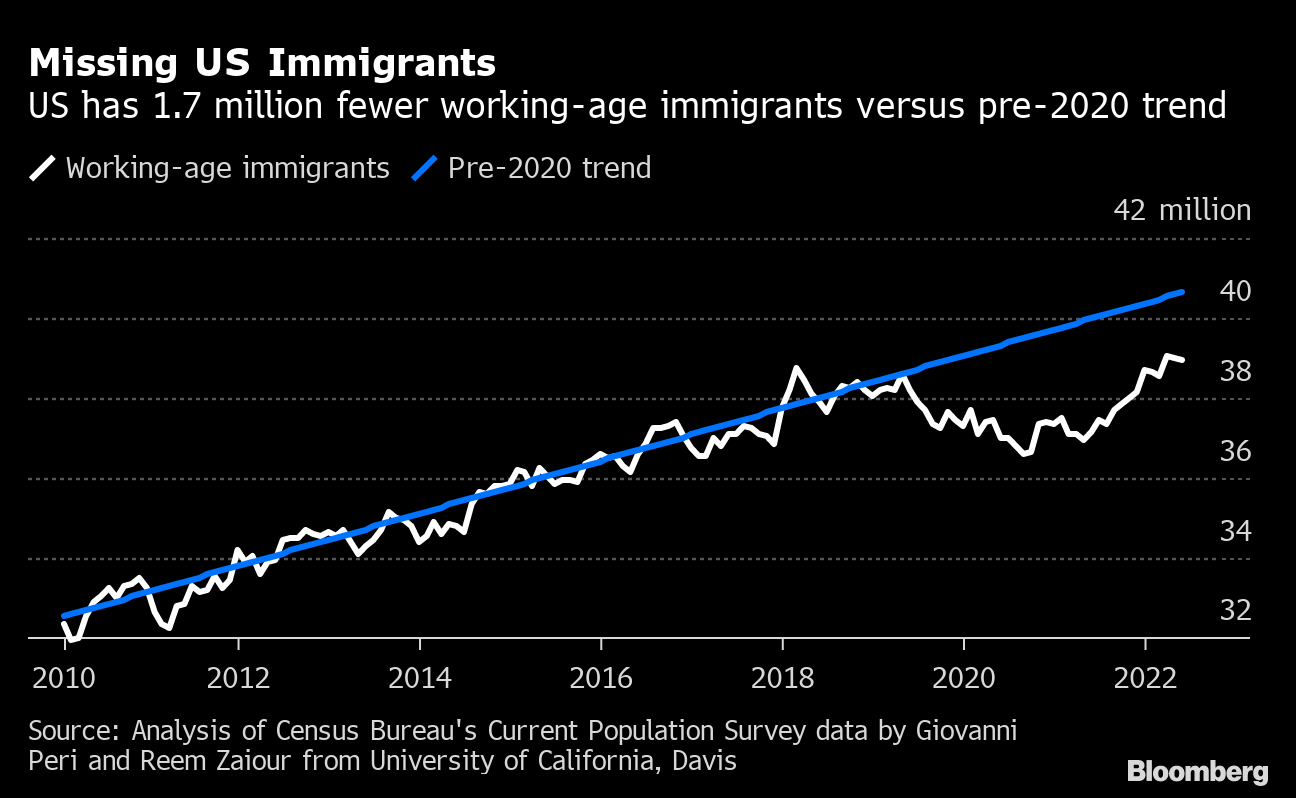
“Unless we put more resources into processing this or we expand the number of visas, I don't think we're going to catch up,” said Peri. “We're going to continue to grow, but not make up for this gap that we lost during Covid.”
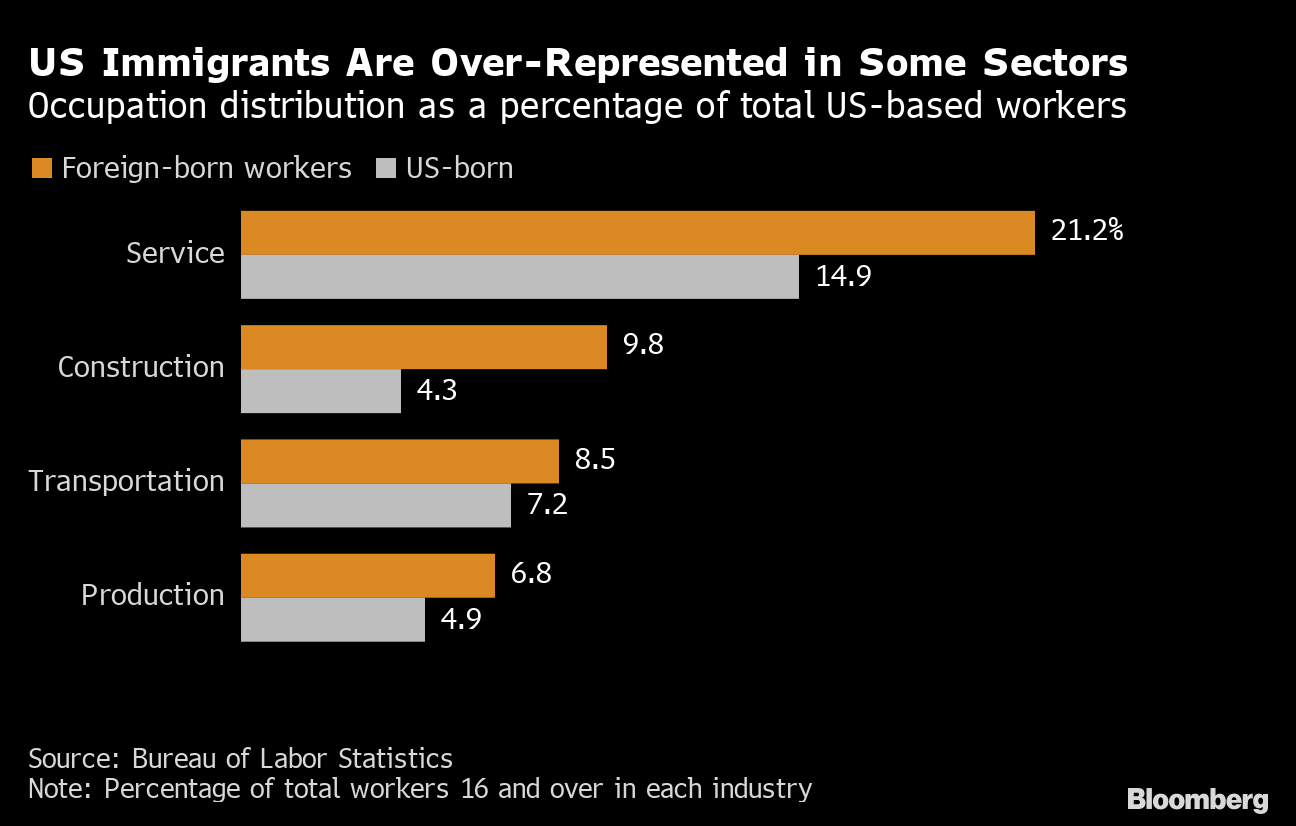
The once-in-a-generation labor deficit has seen U.S. employers struggle to hire and keep employees over the past two years, with those in construction, hospitality, and services -- which all historically rely on a greater proportion of immigrants -- feeling more pain. The shortage of both US-born and foreign workers has also triggered higher wages across industries, adding more fuel to the hottest inflation seen in about four decades.
While most of the growth in immigration to the U.S. over the past decade is from legal migration, according to Peri, the country is grappling with the contentious issue of arrivals of thousands of undocumented people along its southern border.
Texas Governor Greg Abbott has focused his campaign for re-election next month on border security and immigration, vowing to curb unauthorized migrant crossings. The Republican spearheaded an operation to transport migrants from Texas border towns to New York, Washington and Chicago that has delivered more than 10,000 people since April.
Rate Effects
The Federal Reserve is raising interest rates aggressively to help lower spending on goods and services and reduce demand for workers, which could in turn soften wage growth.
Hiring needs are moderating as a result of the tighter policy, but remain far above the supply of available workers. The number of U.S. job openings dropped in August to 10.1 million but is still high, resulting in about 1.7 positions for every unemployed person, Labor Department data showed.
If not addressed, the immigration and staffing shortfall could lead to reduced business investment and slower U.S. growth, said Pia Orrenius, a senior economist with the Federal Reserve Bank of Dallas.
“If businesses can't hire, they're not going to invest in new expansion of their operations because they can't even staff their existing operations,” said Orrenius.
Fed Chair Jerome Powell has described the U.S. labor market as being “clearly out of balance,” with demand exceeding the supply of workers. Other Fed officials say the immigration deficit is making that labor shortage worse.
Immigration to the U.S. began to drop in 2017 after a slew of restrictions were enacted under former President Donald Trump. The influx of foreign workers plunged further in 2020 and 2021 after the pandemic shut borders and travel across countries came to a standstill.
Job openings increased more for businesses that hire a greater share of immigrants, Kansas City Fed research shows. Besides construction, leisure and hospitality, such companies include private household cleaning, laundry and beauty services, economist Elior Cohen and research associate Samantha Shampine wrote.
In contrast, openings increased at a below-average pace for industries that had smaller shares of foreign workers, including finance, public administration and mining, they said.
“We are really dependent on a foreign-born workforce for a lot of parts of the economy,” said Tara Watson, an economist with the Brookings Institution.
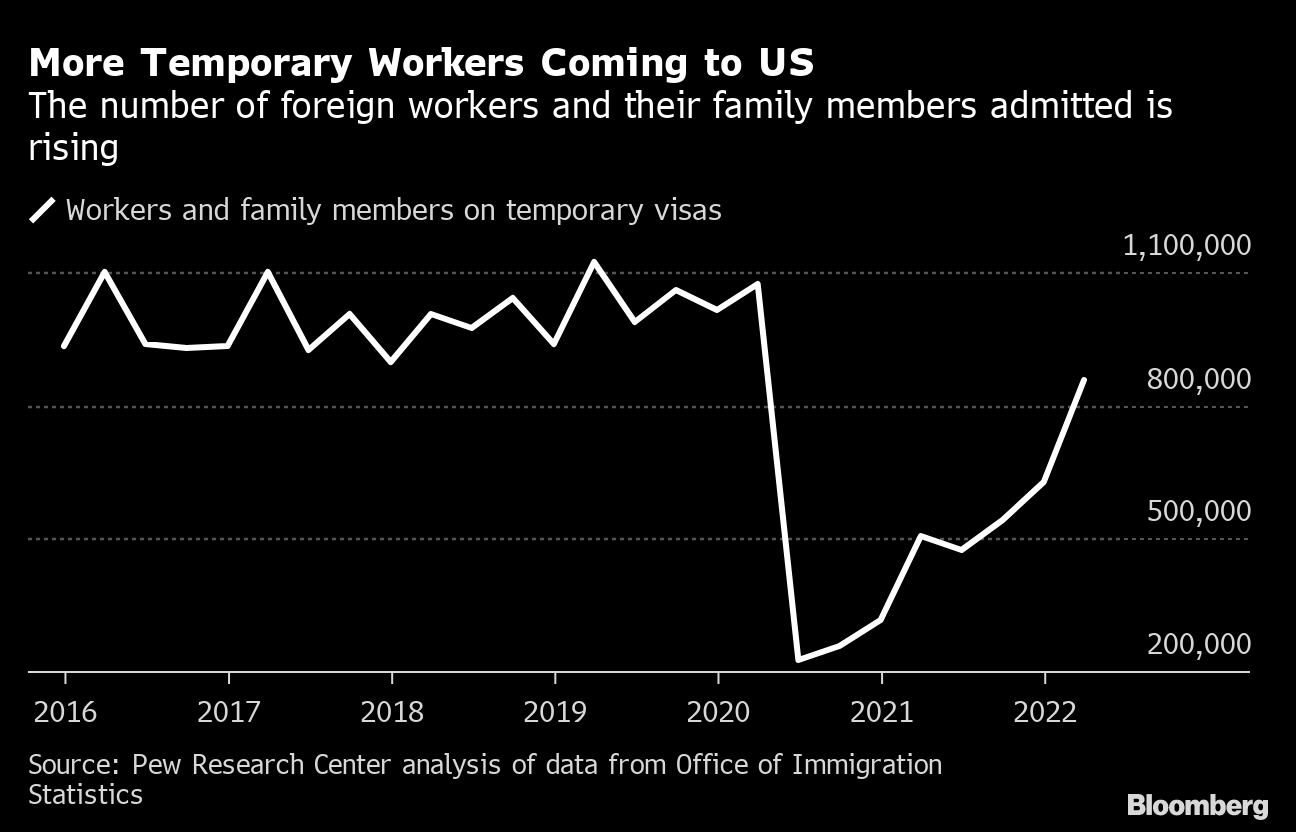
Late last year, the U.S. reopened its borders and started processing more applications for work visas and green cards. About 858,000 workers and their family members were admitted to the U.S. on temporary visas from January through March of this year, according to a Pew Research Center analysis of data from the Office of Immigration Statistics.
That is up from a low of 226,000 reached in April through June of 2020, and only slightly below the roughly 1 million people who arrived each quarter on average in the four years before the start of the pandemic, Pew said. About 96,000 people entered the country as legal permanent residents from January through March of this year, close to the 106,000 who entered in January through March of 2020.
The State Department now processes about 800,000 applications for non-immigrant visas monthly, including from foreign workers seeking to relocate to the U.S., according to a spokesperson for the agency. That's about 80% of the pre-pandemic figure, and processing of immigrant permits is almost back to the prior pace, the spokesperson said.
U.S. policy makers would need to lift the caps on the number of immigrants eligible for entry annually or increase resources to accelerate processing to make up for the workers who would have joined the labor force during the shutdowns. These two shifts will likely have even less political support if Republicans manage to flip Congress in November.
With more Americans reaching retirement age and the domestic workforce starting to shrink, insufficient immigration could lead to a long-term labor shortage, Orrenius said.
“Normally immigration is about half of our labor force growth,” she said. “It has a tremendous effect on the availability of workers.”
More stories like this are available on bloomberg.com
©2022 Bloomberg L.P.

-
Love, Sex Aur Dhokha: The Audacious Plot To Spy On Jensen Huang

A Taipei dinner, a Singapore chip buyer and a suspected Chinese asset: inside the alleged spy operation that got close to NVIDIA's Jensen Huang.
-
Ten Things I Learnt This Samvat
Patience can be a trap. Cheap stocks can stay cheap. Leverage can wipe you out. What did Samvat 2082 teach us? Niraj Shah writes on 10 lessons from the year gone by.
-
Talking Points This Week: Tech Nerves, FII Buying, And A Faraway Banking Shock
The global markets are not shining this Diwali. The exception in the large markets is, India.
-
Midterm Rally Lasted A Day. The Hard Reality Of A Divided US May Last Two Years | Opinion
Between a contested AI boom, a debt ceiling that arrives in 2027 and a president with every incentive to act alone, the next two years may prove more volatile than the first day's rally suggests.
-
Blue Wave Will Derail the AI Trade but Won't Dismantle the AI Era | Unhedged Position
The Democrats' sweep of the US Congress will see politics collide with economic forces both over the long and short term.
-
It's Time To Take The GST Council's Bet On Trust Global
Payment records can prove India's services exports, and clear, proportionate rules can bring foreign digital sellers into the tax net.
-
Opinion | India at 38: From Innovation Overperformer to Innovation Powerhouse
India now has 453 VC-backed deep science startups, 18 of them late-stage, after 117 percent growth since 2020. Laurus Labs, at USD 9.3 billion, is the most valuable deep science company in any middle-income economy outside China.
-
Navigating Energy Crossroads: S Jaishankar's Call For Diversified Supply Chains At G20 Ministerial Meeting
As geopolitical fault lines continue to test maritime trade routes and commodity flows, Jaishankar's message remains pertinent: true economic resilience requires open markets, protected transit lines, and a genuine commitment to multilateral cooperation rather than coercion.
-
Indians Are Travelling, But Not Every Journey Is A Holiday | The Week In Whys
Pilgrims, patients and working women are the real travellers, and the system hasn't quite caught up with them.









