US Election: Trump And Harris Are Both Faltering Economically, Says Ruchir Sharma
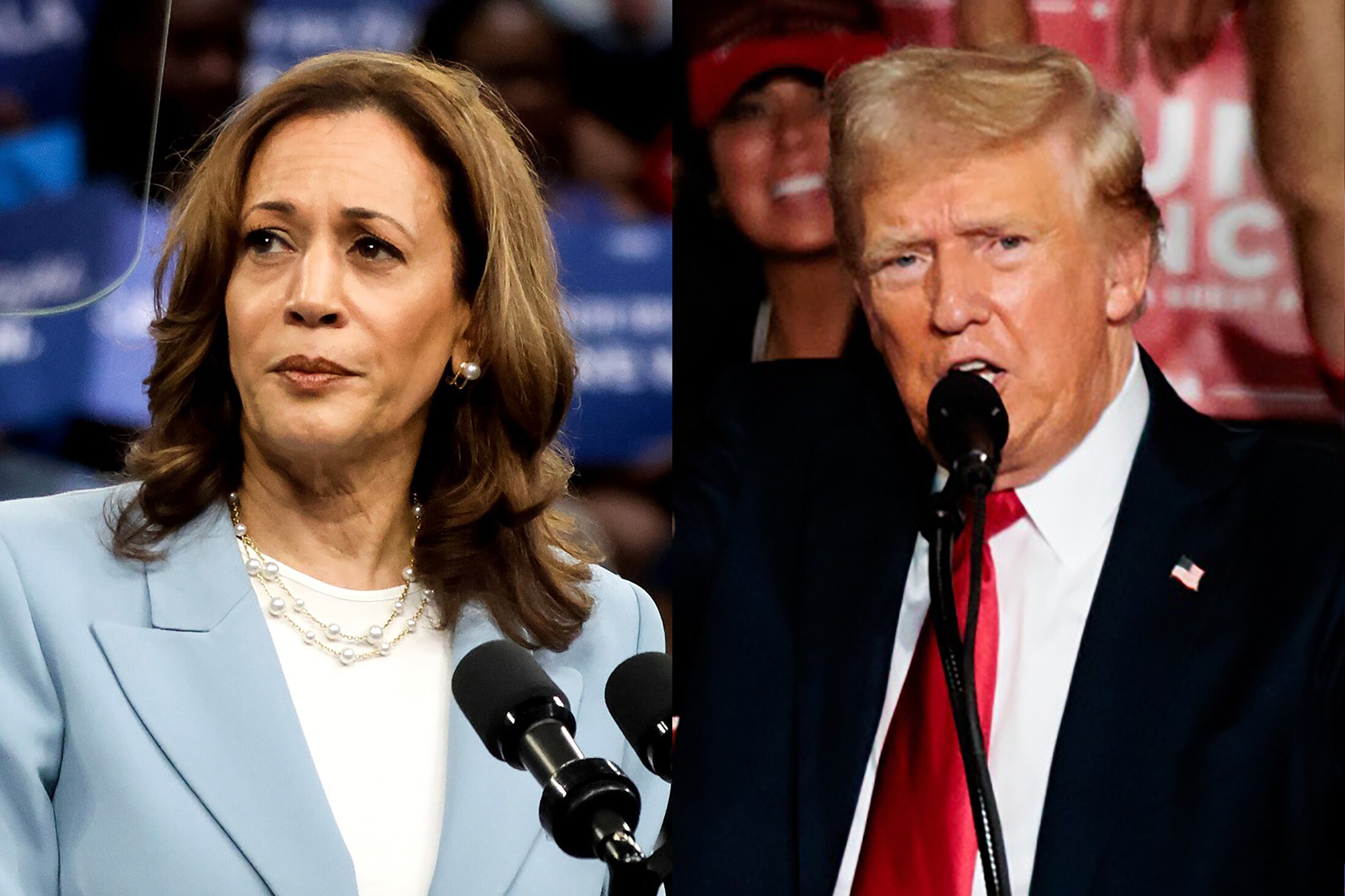
The US presidential election between Donald Trump and Kamala Harris is around the corner and out of all the promises being made during the heated campaign, there is one aspect that worries Ruchir Sharma the most.
"Loads are said in the campaign, but the bigger red flag is the promises made while they are unaware of their deficit and debt," said Ruchir Sharma, chairman of Rockefeller Capital Management International.
In conversation with market veteran Ramesh Damani, Sharma talked about the 6% deficit that the US economy is facing during the economic recovery. This degree of deficit is only justified in situations of sharp depression or war, according to the author.
An economic downturn could potentially bring it up to 10% debt on this path, he said.
Trump and Harris have taken populist stands with recent pledges like no tax on tips. The fact that they are unaware that their policies will further tighten the Fed's space to improve the deficit situation is worrying.
"Arrogance in America is that they can run the deficit they want because everyone will always buy dollars," said Sharma.
The demand for the dollar is taken for granted, and this attitude is further aided by contenders like China's inability to grow rapidly.
“What concerns (me) about America in the next few years is that they are tempting fate,” said Sharma. Deficits hovered around 3% before the pandemic and increased to nearly 6% of the GDP by June 2024.
Money Managing Strategies
The Democrat as well as the Republican candidate call for more government intervention. Sharma says that the issue with government intervention is that it is inherently an anti-market solution.
Chairs of the Federal Reserve like Paul A. Volcker and Alan Greenspan have worked with and fought greater economic battles, such as inflation and the 1987 market crash. Different strategies had been adopted by these chairs to tackle the challenges.
Volcker fought inflation by having tighter money, and he cut interest rates when he needed to, but only after inflation was vanquished, according to Sharma.
Greenspan was chairperson during one of the major turning points for capitalism, possibly for the worse.
"The Federal Reserve functions like the world's central bank. When the stock market crashed, Greenspan explicitly propped up the market by cutting interest rates and pumping more liquidity into the system," he said.
This broadly changed the investor's view of risk and impacted behaviour. Investors now believe that any downside is now protected by the Fed. At that point, investors set out to fearlessly capture the upside, with little focus on protection. The notion that "the Fed is there" to protect them was strong among investors, according to Sharma.

-
High US Salaries, No Green Card Certainty: The Financial Calculation Facing Indian H-1B Families

The suspension of PERM processing at eight technology employers does not cancel existing H-1B visas. What it does is force a question many Indian families have been avoiding: is the US salary worth tying your career and family plans to one employer?
-
Swiggy vs Eternal: Food Delivery's Two Rivals Are No Longer In The Same Race
Eternal is building a private AI assistant, dark.ai. Swiggy is still working out how to make Instamart pay, with an operating loss of Rs 895 crore in the July-September quarter while Blinkit stayed profitable.
-
Where You Live Shapes How You Get To Work | The Reason Why
Two-wheelers are the most popular way to get to work in India, accounting for nearly 43% of workplace commutes.
-
Unhedged Position: Can India See An Indonesia-Style Time Correction?
The Nifty is trading below levels it first clocked in 2024. Is there, then, as I have suggested in the headline, potential that the current time correction drags on painfully for the next three-five, even ten years?
-
Navigating Friction And Energy Realities: An Analysis Of Marco Rubio's October Visit To India
Occurring at a critical juncture marked by stalled trade negotiations and escalating geopolitical pressures over global energy supplies, the visit offers a profound window into modern US-India relations.
-
India Exports Capital. Why Not Export Trusteeship?
The big question, then, is whether India can build an institution that global borrowers, investors, banks, and lawyers can trust, even without an Indian connection.
-
France's Economy & Politics Are In Crisis | The Reason Why
Let's look at how the French economy and politics evolved under Nicolas Sarkozy, Franois Hollande and Emmanuel Macron.
-
You May Inherit The Business. You Must Earn Its Credibility.
Succession tests the founder's ability to share authority as much as it tests the next generation's readiness to assume it.
-
Signing Deals Is One Thing; Making Them Work Is Another | The Week In Whys
Sometimes, things don't turn out as planned. Indian companies have lost some bids to rivals, some projects won't produce until 2030.
-
FOMC Wall, PERM Suspension, Hospital Stocks | Talking Points This Week
A PERM suspension would directly affect green-card sponsorship rather than H-1B visas, so the near-term earnings impact could remain relatively limited. The key question is whether this marks a new phase in US scrutiny of Indian IT.









