US Consumer Spending Barely Rises, Key Inflation Gauge Picks Up
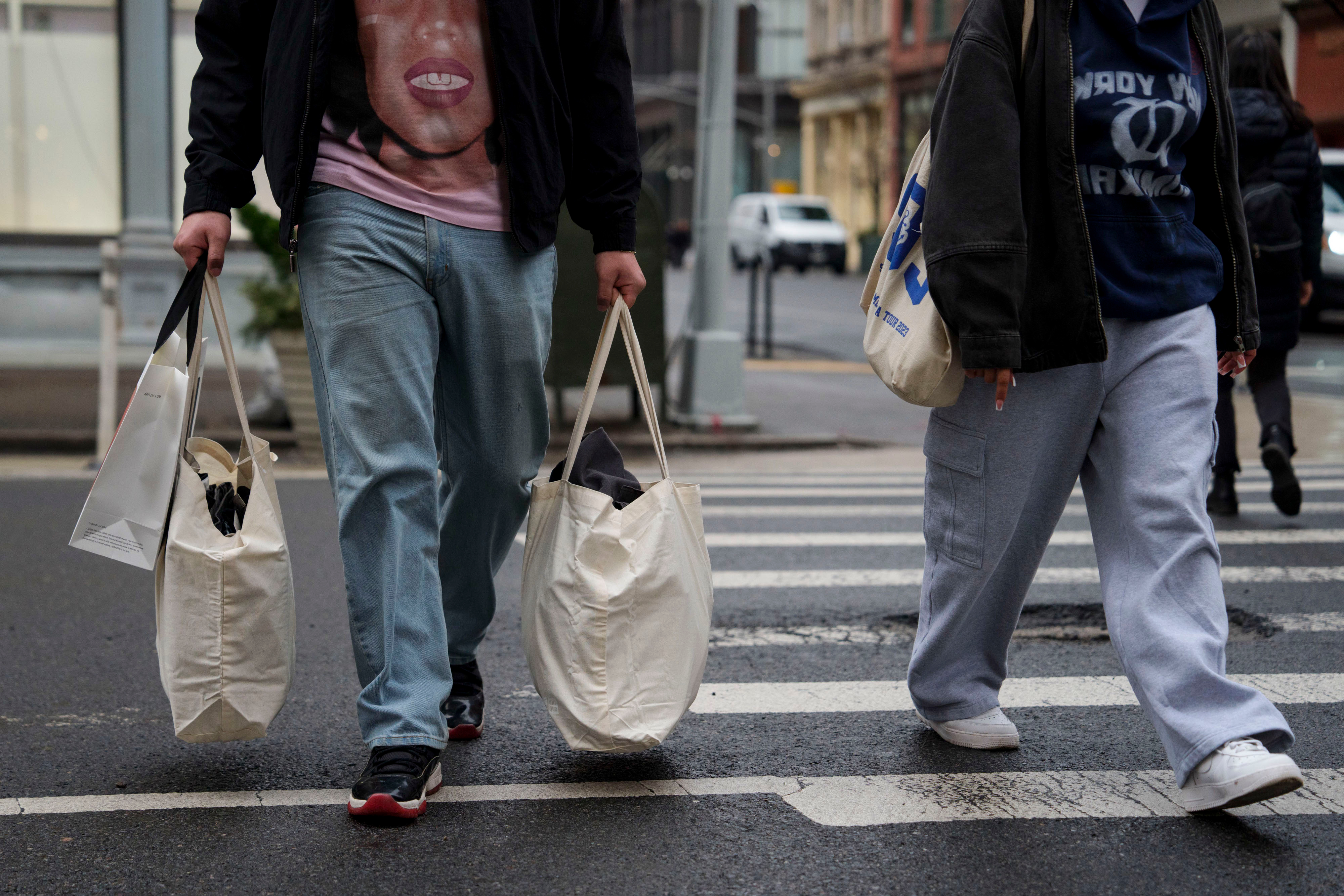
Consumer spending was weaker than expected again in February while a key inflation metric picked up, in a double whammy for the economy before the brunt of tariffs.
Inflation-adjusted consumer spending edged up 0.1% after falling in January by the most in nearly four years, which economists blamed on bad weather, according to Bureau of Economic Analysis data out Friday.
The so-called core personal consumption expenditures price index, which excludes food and energy items, rose 0.4% from January, the most in a year. From a year ago, the core PCE — the Federal Reserve's preferred inflation metric — advanced 2.8%. Both were slightly above economists' forecasts.

Stock futures fell further, Treasury yields remained lower while the dollar held a small gain. Swaps traders continued to price in about two quarter-point reductions this year, with the first seen coming in July.
“Consumers are resistant to price increases,” Neil Dutta, head of US economics at Renaissance Macro, said in a note. “Ultimately, inflation boils down to a household's budget constraint and conditions are deteriorating here. “
The report points to stubborn inflation just as President Donald Trump's planned tariffs risk stoking price pressures even further. His aggressive trade policy — which has tanked sentiment among businesses and consumers — combined with growing signs of household financial stress, has raised concerns that the economy may fall into stagflation or even recession.
The Fed's own forecasts underscore those fears, as policymakers signaled slower growth and faster inflation in fresh projections released at last week's policy meeting. Chair Jerome Powell downplayed those concerns, even reviving the loaded word “transitory” to describe his expectations for tariff-driven inflation. Some of his colleagues have expressed greater caution.
Officials are holding interest rates steady until they have a better sense of Trump's policies — particularly tariffs, ahead of next week's big rollout that the president has dubbed “Liberation Day.” While Trump imposed some levies on China last month, they didn't seem to have much of an impact on price data, as consumer and producer prices both stepped down in February.
Much of the tariff impact to prices would come through goods. A measure of goods inflation that excludes food and energy climbed 0.4% for a second month in February, the biggest back-to-back advance since 2022. Core services prices — a closely watched category that excludes housing and energy — rose at a similar pace.
While consumer sentiment readings have been dismal of late, it remains to be seen whether they're a good predictor of spending. Goods outlays bounced back on demand for durable goods like cars, while services spending fell for the first time in three years largely due to a pullback in dining out.
The saving rate rose to the highest since June, illustrating a consumer more guarded about finances. Other signs have emerged that Americans are under greater financial strain, including falling behind on car payments and difficulty coming up with funds for emergencies.
A slowing job market isn't helping either. Inflation-adjusted disposable personal income edged up about 0.1% for a third month. That measure excludes payments from the government and businesses — BEA cited settlements from a domestic medical device manufacturer and a social media company.
Meanwhile, nominal wages and salaries picked up.

-
High US Salaries, No Green Card Certainty: The Financial Calculation Facing Indian H-1B Families

The suspension of PERM processing at eight technology employers does not cancel existing H-1B visas. What it does is force a question many Indian families have been avoiding: is the US salary worth tying your career and family plans to one employer?
-
Swiggy vs Eternal: Food Delivery's Two Rivals Are No Longer In The Same Race
Eternal is building a private AI assistant, dark.ai. Swiggy is still working out how to make Instamart pay, with an operating loss of Rs 895 crore in the July-September quarter while Blinkit stayed profitable.
-
Where You Live Shapes How You Get To Work | The Reason Why
Two-wheelers are the most popular way to get to work in India, accounting for nearly 43% of workplace commutes.
-
Unhedged Position: Can India See An Indonesia-Style Time Correction?
The Nifty is trading below levels it first clocked in 2024. Is there, then, as I have suggested in the headline, potential that the current time correction drags on painfully for the next three-five, even ten years?
-
Navigating Friction And Energy Realities: An Analysis Of Marco Rubio's October Visit To India
Occurring at a critical juncture marked by stalled trade negotiations and escalating geopolitical pressures over global energy supplies, the visit offers a profound window into modern US-India relations.
-
India Exports Capital. Why Not Export Trusteeship?
The big question, then, is whether India can build an institution that global borrowers, investors, banks, and lawyers can trust, even without an Indian connection.
-
France's Economy & Politics Are In Crisis | The Reason Why
Let's look at how the French economy and politics evolved under Nicolas Sarkozy, Franois Hollande and Emmanuel Macron.
-
You May Inherit The Business. You Must Earn Its Credibility.
Succession tests the founder's ability to share authority as much as it tests the next generation's readiness to assume it.
-
Signing Deals Is One Thing; Making Them Work Is Another | The Week In Whys
Sometimes, things don't turn out as planned. Indian companies have lost some bids to rivals, some projects won't produce until 2030.
-
FOMC Wall, PERM Suspension, Hospital Stocks | Talking Points This Week
A PERM suspension would directly affect green-card sponsorship rather than H-1B visas, so the near-term earnings impact could remain relatively limited. The key question is whether this marks a new phase in US scrutiny of Indian IT.









