Trump Team Has Prepped Options For Pressuring Russia To End War
US officials have prepared a set of options for President Donald Trump to increase economic pressure on Russia, according to people familiar with the matter, as President Vladimir Putin drags his feet over attempts to end the war in Ukraine.
The people, who spoke on condition of anonymity to discuss private deliberations, cautioned that Trump has made no decision yet as diplomatic efforts were ongoing. They declined to detail what options are on the table and said any decision was for the president alone.
Ukraine and its allies have been urging the US to increase pressure on Moscow, including through more restrictions on energy exports and oil revenues, to force it into a ceasefire on terms proposed by Trump. The US and European Union have already imposed an unprecedented level of sanctions on Moscow since its February 2022 full-scale invasion, but have been unable to force Putin to stop the fighting.
The US National Security Council and State Department didn't respond to requests for comment. A spokesman for Trump's special envoy Steve Witkoff, who met Putin last week, also didn't respond.

The deliberations over next steps may be clouded by the abrupt sidelining of Trump's national security advisor, Mike Waltz, and appointment of interim replacement Secretary of State Marco Rubio. It could help streamline US strategy with Rubio holding both roles, as the White House's approach to Ukraine has been driven by the various ideas of top officials, including Witkoff, who's seen as more sympathetic to Russia's positions.
Moscow has so far refused to accept US demands for a permanent ceasefire, and Putin has maintained maximalist positions, including that Russia gain control of four Ukrainian regions it doesn't fully occupy. Meanwhile, Ukrainian President Volodymyr Zelenskiy agreed to grant the US control over some future resource revenues in order to maintain Trump's support and has backed calls for an unconditional truce of at least 30 days.
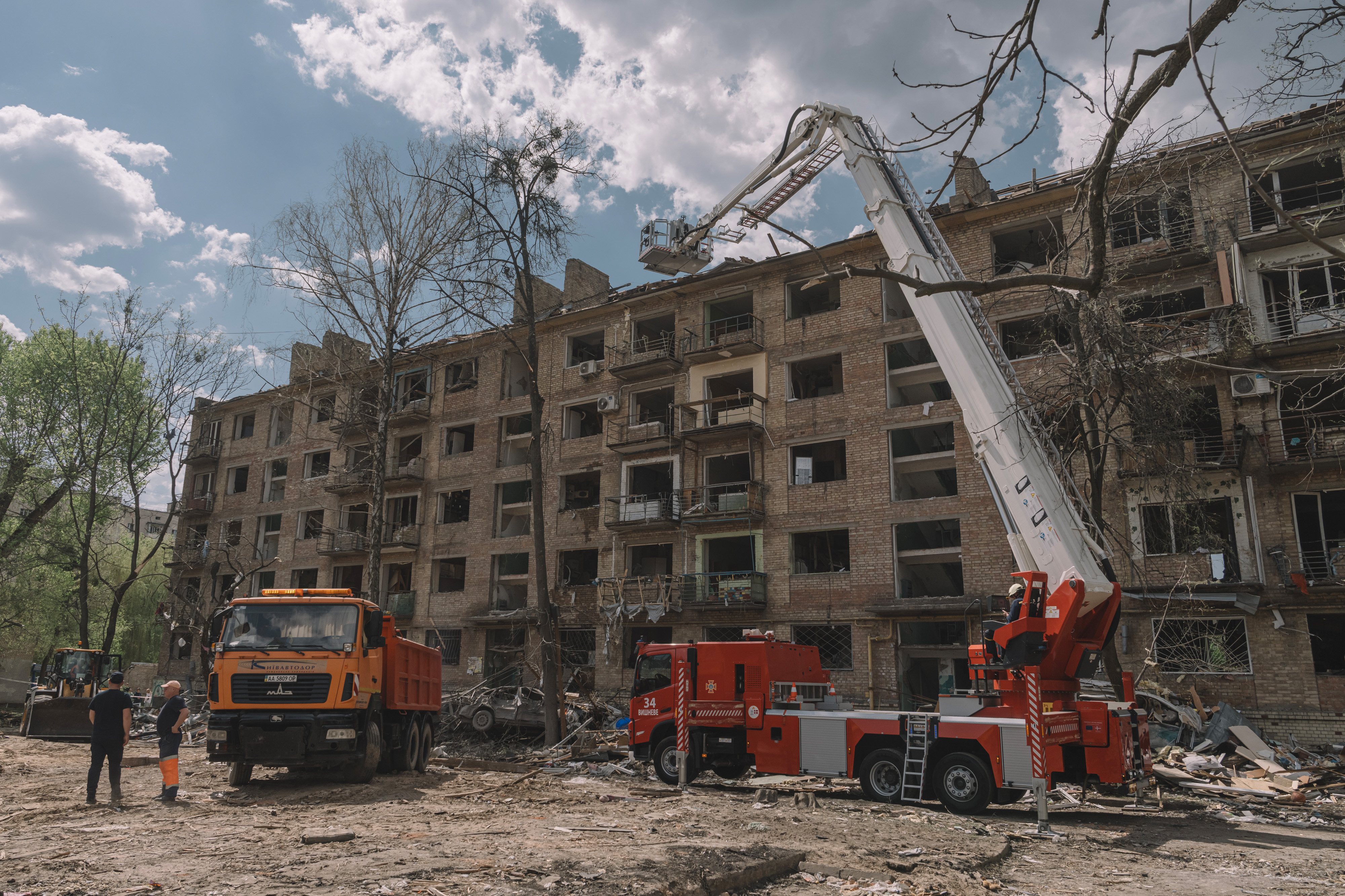
Trump, who's seeking to end the war and initiate a broader remake of the US-Russia economic relationship, has previously threatened to sanction Moscow if Putin doesn't seriously engage in peace talks. On his Truth Social account last week, after meeting Zelenskiy, he wrote there's “no reason for Putin to be shooting missiles into civilian areas” and “it makes me think that maybe he doesn't want to stop the war,” before suggesting he could target Russia's banking sector or impose so-called secondary sanctions.
Separately, Trump ally US Senator Lindsey Graham said earlier this week that he has the commitment of 72 colleagues for a bill that would enact “bone-crushing” new sanctions on Russia and tariffs on countries that buy its oil, gas and other key products if Putin doesn't engage in serious talks to halt the war.
Those punishments would include a 500% tariff on imports from countries that buy Russian oil, petroleum products, natural gas or uranium, according to a draft of the bill.
As part of proposals shared with European allies last month, the US would be ready to recognize Russian control of Crimea, the Black Sea peninsula Putin annexed from Ukraine in 2014. The deal would also freeze the conflict largely along existing battle lines, giving Russia effective control of parts of the other four Ukrainian regions it occupies.
Kyiv's aspirations of joining NATO would be off the table, sanctions on Russia would be eventually lifted and Ukraine would receive security guarantees to ensure that any deal holds.
The Trump administration also wants Moscow to return Ukraine's Zaporizhzhia nuclear power plant, the biggest in Europe, which it seized early in the war. The facility would then come under US control and would supply energy to both sides.
Russian Foreign Minister Sergei Lavrov ruled that out in an interview with CBS's Face The Nation broadcast Sunday, saying “I don't think any change is conceivable.”

-
Talking Points This Week: Tech Nerves, FII Buying, And A Faraway Banking Shock

The global markets are not shining this Diwali. The exception in the large markets is, India.
-
Midterm Rally Lasted A Day. The Hard Reality Of A Divided US May Last Two Years | Opinion
Between a contested AI boom, a debt ceiling that arrives in 2027 and a president with every incentive to act alone, the next two years may prove more volatile than the first day's rally suggests.
-
Blue Wave Will Derail the AI Trade but Won't Dismantle the AI Era | Unhedged Position
The Democrats' sweep of the US Congress will see politics collide with economic forces both over the long and short term.
-
It's Time To Take The GST Council's Bet On Trust Global
Payment records can prove India's services exports, and clear, proportionate rules can bring foreign digital sellers into the tax net.
-
Opinion | India at 38: From Innovation Overperformer to Innovation Powerhouse
India now has 453 VC-backed deep science startups, 18 of them late-stage, after 117 percent growth since 2020. Laurus Labs, at USD 9.3 billion, is the most valuable deep science company in any middle-income economy outside China.
-
Navigating Energy Crossroads: S Jaishankar's Call For Diversified Supply Chains At G20 Ministerial Meeting
As geopolitical fault lines continue to test maritime trade routes and commodity flows, Jaishankar's message remains pertinent: true economic resilience requires open markets, protected transit lines, and a genuine commitment to multilateral cooperation rather than coercion.
-
Indians Are Travelling, But Not Every Journey Is A Holiday | The Week In Whys
Pilgrims, patients and working women are the real travellers, and the system hasn't quite caught up with them.
-
Getting To Work Costs Women More | The Reason Why
It is not just about women paying more than men. It is about women paying much more in cities than in villages.
-
AI Bias In Investing Cannot Be Eliminated, But It Can Be Governed
Framing is a particularly important example as identical financial information presented in terms of gains rather than losses can lead an LLM to reach a different assessment.









