Trump Tax Bill Narrowly Passes House, Overcoming Infighting
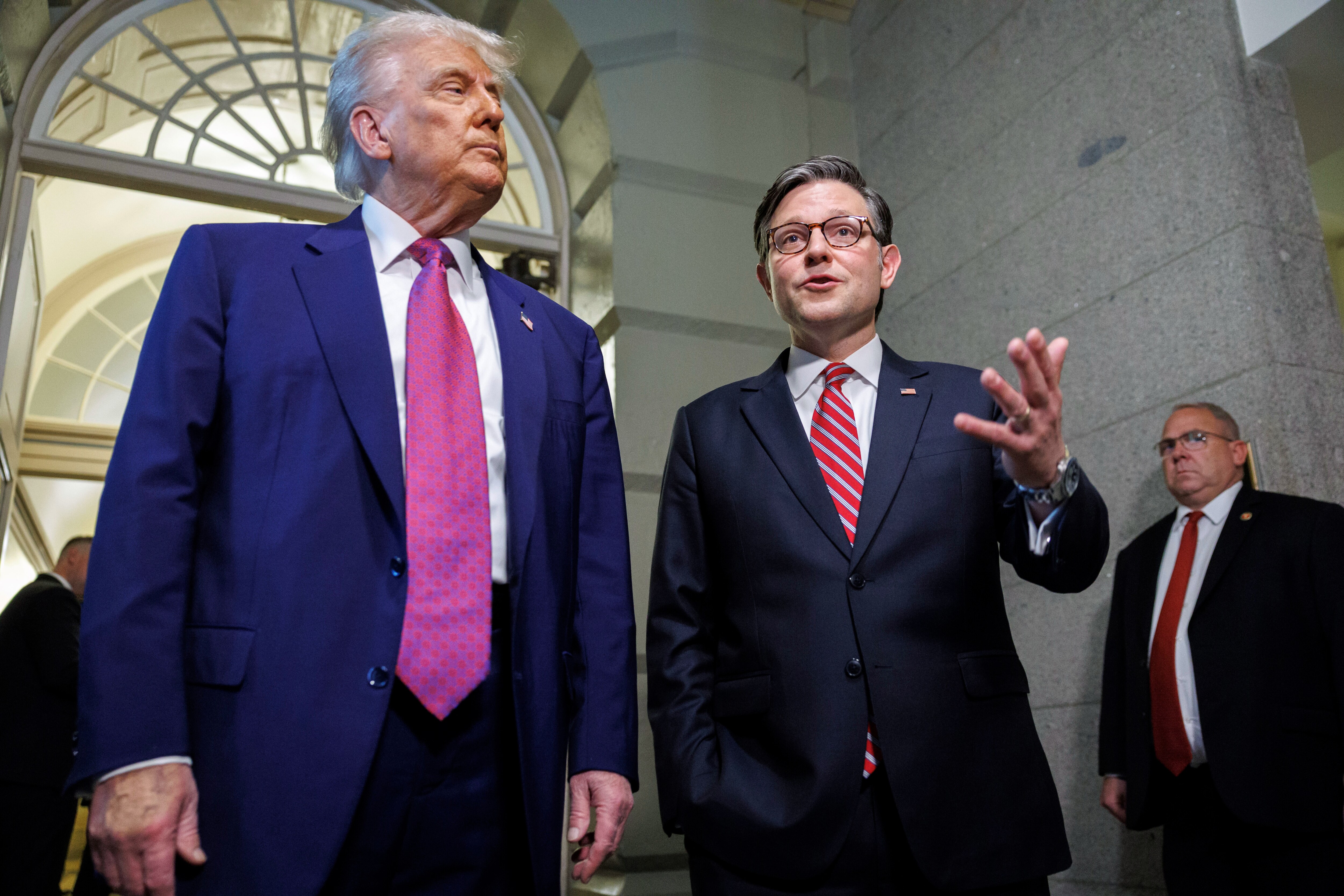
President Donald Trump's signature tax bill narrowly passed the House Thursday morning, advancing a sprawling multi-trillion dollar package that would avert a year-end tax increase at the expense of adding to the US debt burden.
The bill now heads to the Senate, where groups of Republicans are pressing for extensive change. Lawmakers plan to vote on approval by August. The bill includes a $4 trillion increase in the US debt ceiling, which the Treasury Department forecasts could otherwise force a default as soon as August or September, adding urgency to the timeline.
The 215-214 House vote, with one abstention, was met with cheers from Republicans in the chamber. It followed a furious offensive by Trump, who visited the Capitol to rally Republicans, worked lawmakers by phone late into the night and summoned holdouts to the Oval Office. His budget office released a statement branding any GOP lawmaker who failed to support the package guilty of the “ultimate betrayal.”
Trump took a victory lap on his social media platform Truth Social Thursday morning, calling the One Big Beautiful Bill Act the “the most significant piece of Legislation that will ever be signed in the History of our Country!”
“Now, it's time for our friends in the United States Senate to get to work, and send this Bill to my desk AS SOON AS POSSIBLE! There is no time to waste,” Trump said.
House Speaker Mike Johnson and his lieutenants went through rounds of negotiations steps from the House floor to balance the demands of lawmakers from high-tax states pressing for an increase in the state and local tax deduction. Hardline conservatives insisted on deeper spending cuts and vulnerable swing-district Republicans were wary of slashing Medicaid.
The measure would avoid a blow to US growth just as the economy struggles with the impact of the steepest tariff increases in almost a century, though it's expected to add hundreds of billions a year to the deficit.

It would extend Trump's first-term tax cuts due to expire Dec. 31, along with new tax relief including raising the limit on the deduction for state and local taxes to $40,000 and temporarily exempting tips and overtime pay from taxes.
Cuts to safety-net programs such as food stamps and Medicaid health coverage for the poor and disabled could worsen economic inequality even as wealthy Americans gain the largest share of tax cuts.
Deficits driven by the tax cuts also risk exacerbating bond investors' concerns about the ballooning US debt, highlighted by Moody's decision to downgrade the US government's credit rating.
Democrats vowed to make House Republicans pay a price in next year's midterm elections, casting the measure as a Robin Hood-in-reverse effort to take from the poor and give to the rich.
“The GOP tax scam will hurt working families the most while delivering massive tax breaks for billionaires like Elon Musk,” said House Minority Leader Hakeem Jeffries of New York.
Republicans counter that their voters will be energized by enactment of Trump's top legislative priority for the year and reward them politically.
Spending Cuts
Ultraconservative Freedom Caucus members were able to insert new language in the bill that would dramatically speed up the end of clean energy tax credits passed under the Biden administration, which would generally have to be put into service before 2029 and would have to be well under way within 60 days of the bill's enactment. The hardliners also were able to move up the start date for new Medicaid work requirements to December 2026 from a 2029 start in the initial version of the package.
The acceleration of new Medicaid work requirements could become an issue in the midterm elections — which fall just one month earlier — with Democrats eager to criticize Republicans for restricting health benefits for low-income households.

Johnson was also able to strike an elusive deal with lawmakers from high-tax states on the state and local tax deduction. The deal would raise the $10,000 cap to $40,000 for individuals and joint filers starting this year, with a phase out for those making more than $500,000 per year. The cap would increase by 1% a year for ten years.
Other sweeteners were added for states like Texas, which would be the main beneficiary of $12 billion in reimbursements for state border security expenses incurred in recent years. And GOP leaders eliminated a provision that would have cut federal pensions by basing benefits on the highest five years of salary rather than the highest three, in a move cheered by Republican Representative Mike Turner of Ohio, who called the pension cut “unfair.”
The package also imposes tax increases on targets of Trump's ire such as Harvard University and immigrants. Private universities with large endowments per student would pay a 21% tax on net investment income, up from the current rate of 1.4%. Immigrants would face a new levy on transfers of money to foreign countries.
The bill would boost military spending by $150 billion and add $175 billion for immigration enforcement, both top Trump priorities. It also includes numerous other provisions affecting health care, energy production and manufacturing, reorienting the government away from climate change concerns in favor of fossil fuels.
That includes the elimination of most EV tax credits including for market leader Tesla by the end of 2025, replaced by a tax break for auto loan interest for US-built vehicles, a move championed by Trump and Ohio Senator Bernie Moreno.
Late changes to the bill even included changing the name of new savings accounts for babies born in the next few years, to be seeded with $1,000 from the government. It's now “Trump” accounts instead of “MAGA” accounts.
Republican senators have said they will press for substantial changes before approving the package.
A number of Senate Republicans want to make permanent tax cuts that are now temporary under the package, especially breaks benefiting businesses. Some GOP senators have warned against any cuts to Medicaid. Others have pushed for far deeper overall spending cuts.

-
Talking Points This Week: Tech Nerves, FII Buying, And A Faraway Banking Shock

The global markets are not shining this Diwali. The exception in the large markets is, India.
-
Midterm Rally Lasted A Day. The Hard Reality Of A Divided US May Last Two Years | Opinion
Between a contested AI boom, a debt ceiling that arrives in 2027 and a president with every incentive to act alone, the next two years may prove more volatile than the first day's rally suggests.
-
Blue Wave Will Derail the AI Trade but Won't Dismantle the AI Era | Unhedged Position
The Democrats' sweep of the US Congress will see politics collide with economic forces both over the long and short term.
-
It's Time To Take The GST Council's Bet On Trust Global
Payment records can prove India's services exports, and clear, proportionate rules can bring foreign digital sellers into the tax net.
-
Opinion | India at 38: From Innovation Overperformer to Innovation Powerhouse
India now has 453 VC-backed deep science startups, 18 of them late-stage, after 117 percent growth since 2020. Laurus Labs, at USD 9.3 billion, is the most valuable deep science company in any middle-income economy outside China.
-
Navigating Energy Crossroads: S Jaishankar's Call For Diversified Supply Chains At G20 Ministerial Meeting
As geopolitical fault lines continue to test maritime trade routes and commodity flows, Jaishankar's message remains pertinent: true economic resilience requires open markets, protected transit lines, and a genuine commitment to multilateral cooperation rather than coercion.
-
Indians Are Travelling, But Not Every Journey Is A Holiday | The Week In Whys
Pilgrims, patients and working women are the real travellers, and the system hasn't quite caught up with them.
-
Getting To Work Costs Women More | The Reason Why
It is not just about women paying more than men. It is about women paying much more in cities than in villages.
-
AI Bias In Investing Cannot Be Eliminated, But It Can Be Governed
Framing is a particularly important example as identical financial information presented in terms of gains rather than losses can lead an LLM to reach a different assessment.









