Trump Tariff Impact: China, Japan, South Korea Renew Free-Trade Call In Bid To Build Ties
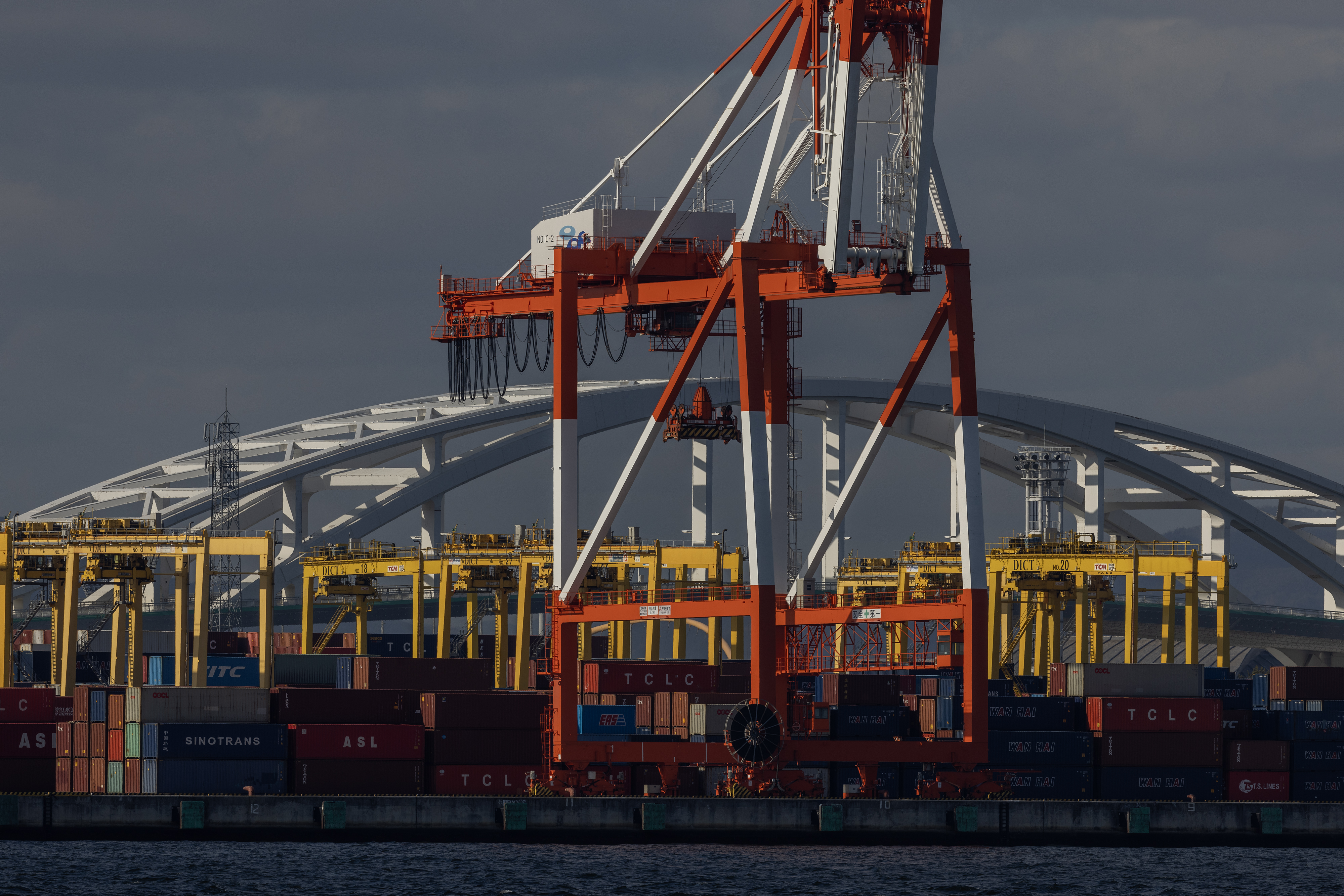
Trade chiefs from China, Japan and South Korea renewed their call for an open, fair flow of goods and pledged to deepen economic ties, a few days before the Trump administration is set to unleash fresh tariffs on nations around the world.
South Korea's Industry Minister Ahn Duk-geun and his counterparts, Yoji Muto of Japan and China's Wang Wentao, discussed a free trade agreement in Seoul on Sunday. While they didn't signal significant progress toward a pact, the gathering demonstrated increasing willingness among the three countries to strengthen ties as they face the impact of US tariffs.
“We especially recognised the need for ongoing trilateral economic and trade cooperation to effectively address emerging challenges and achieve tangible outcomes in key areas,” the ministers said in a joint statement.
The meeting took place with the US' 25% levy on car imports set to take effect at 12:01 a.m. Washington time on April 3. Both South Korea and Japan are major exporters of vehicles to America.
President Donald Trump is also expected to announce so-called reciprocal tariffs, potentially affecting sectors including semiconductors and pharmaceuticals. Any impact to chip sales would be particularly damaging for South Korea, given they remain a key driver of growth for the export-reliant nation.
The three Asian countries are among those targeted by Trump. While China is in the middle of a renewed trade war with the US, Washington's broader use of tariffs shows even American allies including Japan and South Korea are not immune to the threats.
The nations' latest meeting is in line with the message China has been sending, that it is open for business — contrasting with the US' more protectionist “America First” policies.
On Friday, President Xi Jinping met with a group of global business leaders in Beijing in an effort to boost investor sentiment as rising tariffs fuel uncertainty for the economy and international trade. The meeting was attended by Wang and executives including Samsung Electronics Co.'s Jay Y. Lee and SK Hynix Inc. Chief Executive Officer Kwak Noh-jung, both South Korean companies.
The three ministers also pledged to strengthen the Regional Comprehensive Economic Partnership, a framework that aims to streamline supply chains and enhance trade and investment among the largest economies in Asia including China, Japan and South Korea. The US is not part of the pact.
The US car tariffs have prompted Japan to consider measures to protect local jobs, while South Korea said it will come up with emergency steps to help its automakers. China has implemented retaliatory levies against the US while Beijing tries to stabilise ties with its major trading partners.
The gathering of the trade chiefs followed a recent meeting of the countries' top diplomats in Tokyo. Japan is scheduled to host the three nations' next summit of their leaders.

-
Where You Live Shapes How You Get To Work | The Reason Why

Two-wheelers are the most popular way to get to work in India, accounting for nearly 43% of workplace commutes.
-
High US Salaries, No Green Card Certainty: The Financial Calculation Facing Indian H-1B Families
The suspension of PERM processing at eight technology employers does not cancel existing H-1B visas. What it does is force a question many Indian families have been avoiding: is the US salary worth tying your career and family plans to one employer?
-
Unhedged Position: Can India See An Indonesia-Style Time Correction?
The Nifty is trading below levels it first clocked in 2024. Is there, then, as I have suggested in the headline, potential that the current time correction drags on painfully for the next three-five, even ten years?
-
Navigating Friction And Energy Realities: An Analysis Of Marco Rubio's October Visit To India
Occurring at a critical juncture marked by stalled trade negotiations and escalating geopolitical pressures over global energy supplies, the visit offers a profound window into modern US-India relations.
-
India Exports Capital. Why Not Export Trusteeship?
The big question, then, is whether India can build an institution that global borrowers, investors, banks, and lawyers can trust, even without an Indian connection.
-
France's Economy & Politics Are In Crisis | The Reason Why
Let's look at how the French economy and politics evolved under Nicolas Sarkozy, Franois Hollande and Emmanuel Macron.
-
You May Inherit The Business. You Must Earn Its Credibility.
Succession tests the founder's ability to share authority as much as it tests the next generation's readiness to assume it.
-
Signing Deals Is One Thing; Making Them Work Is Another | The Week In Whys
Sometimes, things don't turn out as planned. Indian companies have lost some bids to rivals, some projects won't produce until 2030.
-
FOMC Wall, PERM Suspension, Hospital Stocks | Talking Points This Week
A PERM suspension would directly affect green-card sponsorship rather than H-1B visas, so the near-term earnings impact could remain relatively limited. The key question is whether this marks a new phase in US scrutiny of Indian IT.
-
Everything, Everywhere, All At Once: Dalal Street's Week To Forget | Joining The Dots
Visa curbs, a Starlink spat and cancer drug caps: what connects this week's shocks for Indian markets









