Trump Launches Military Strikes On Houthi Fighters In Yemen
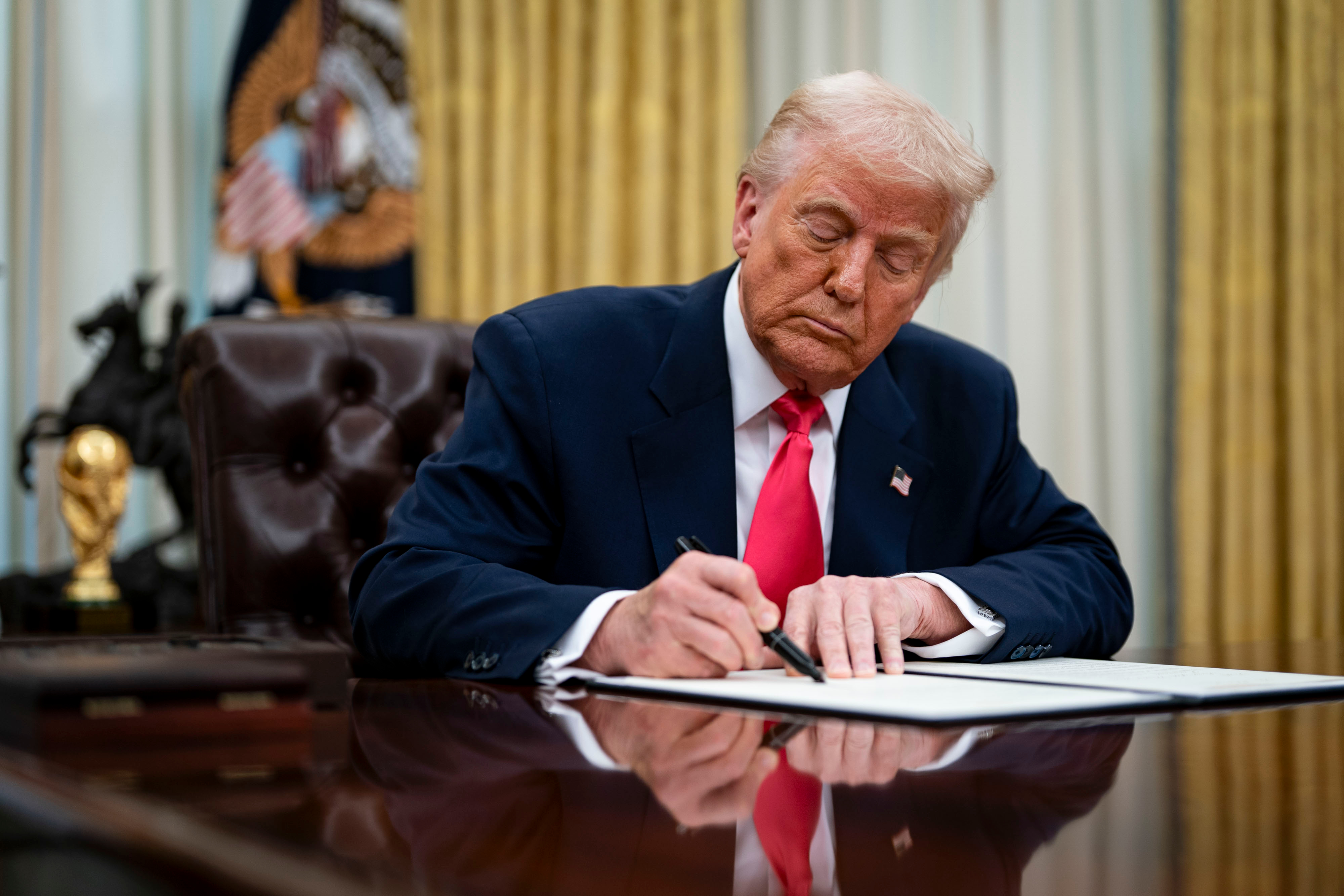
President Donald Trump said he ordered military attacks against sites in Yemen controlled by the Iranian-backed Houthi militia after months of disruption to shipping lanes in the Red Sea.
Trump said on Saturday the strikes came in response to the Houthis' maritime attacks on vessels sailing through the Suez Canal and southern Red Sea, ostensibly in solidarity with Hamas following the 2023 outbreak of its war with Israel in Gaza.
US Secretary of State Marco Rubio discussed the military operation with Russian counterpart Sergei Lavrov, Russia's foreign ministry said in a statement posted Sunday on Telegram.
Lavrov called for an immediate halt to using force in the region, stressing the importance of all parties to enter political dialogue, the ministry said, adding that the call was initiated by the US.
The US strikes were described as more far-reaching than those undertaken under former President Joe Biden, and were set to last days, if not weeks, an administration official said.
“These relentless assaults have cost the U.S. and World Economy many BILLIONS of Dollars while, at the same time, putting innocent lives at risk,” Trump said in a post on his social media platform Truth Social. “We will use overwhelming lethal force until we have achieved our objective,” he said.
The full scale and scope of the US military attacks weren't immediately clear. Spokespeople for the White House National Security Council didn't immediately respond to requests for comment. The campaign was previously reported by the New York Times.
Houthi media reported that 15 people were killed and at least 19 others wounded in the military strikes in Sana'a and on Saada province, the Houthi main stronghold. Four children were among the civilian casualties, Houthi-run Al-Masirah TV reported earlier.
Trump added in a later post on X: “To all Houthi terrorists, YOUR TIME IS UP...”
The repeated attacks have prompted most Western shippers to avoid the area and go around southern Africa instead — a longer and more costly route.
The military action comes days after the Houthi militant group vowed to resume attacking Israeli ships if more aid doesn't reach Gaza.
The US, UK and Israel have carried out other airstrikes against Houthi targets in Yemen since early 2024 in an effort to stop assaults on ships and on Israel. Those strikes had been halted since a truce in Gaza began in January.

-
Talking Points This Week: Tech Nerves, FII Buying, And A Faraway Banking Shock

The global markets are not shining this Diwali. The exception in the large markets is, India.
-
Midterm Rally Lasted A Day. The Hard Reality Of A Divided US May Last Two Years | Opinion
Between a contested AI boom, a debt ceiling that arrives in 2027 and a president with every incentive to act alone, the next two years may prove more volatile than the first day's rally suggests.
-
Blue Wave Will Derail the AI Trade but Won't Dismantle the AI Era | Unhedged Position
The Democrats' sweep of the US Congress will see politics collide with economic forces both over the long and short term.
-
It's Time To Take The GST Council's Bet On Trust Global
Payment records can prove India's services exports, and clear, proportionate rules can bring foreign digital sellers into the tax net.
-
Opinion | India at 38: From Innovation Overperformer to Innovation Powerhouse
India now has 453 VC-backed deep science startups, 18 of them late-stage, after 117 percent growth since 2020. Laurus Labs, at USD 9.3 billion, is the most valuable deep science company in any middle-income economy outside China.
-
Navigating Energy Crossroads: S Jaishankar's Call For Diversified Supply Chains At G20 Ministerial Meeting
As geopolitical fault lines continue to test maritime trade routes and commodity flows, Jaishankar's message remains pertinent: true economic resilience requires open markets, protected transit lines, and a genuine commitment to multilateral cooperation rather than coercion.
-
Indians Are Travelling, But Not Every Journey Is A Holiday | The Week In Whys
Pilgrims, patients and working women are the real travellers, and the system hasn't quite caught up with them.
-
Getting To Work Costs Women More | The Reason Why
It is not just about women paying more than men. It is about women paying much more in cities than in villages.
-
AI Bias In Investing Cannot Be Eliminated, But It Can Be Governed
Framing is a particularly important example as identical financial information presented in terms of gains rather than losses can lead an LLM to reach a different assessment.









