Trump Extends Deadline For 50% Tariffs On EU Goods To July 9
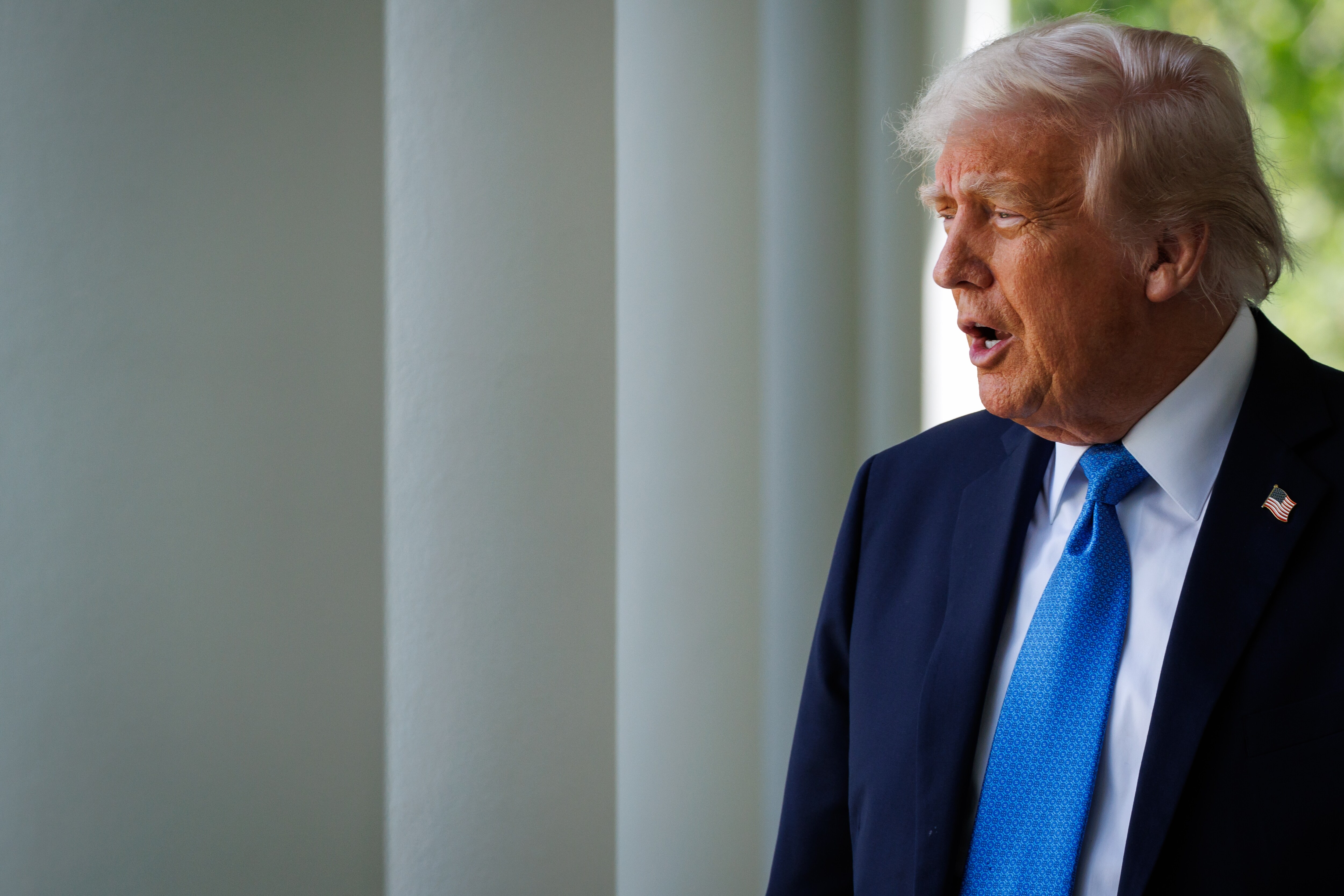
President Donald Trump said he would extend the deadline for the European Union to face 50% tariffs until July 9 after a phone call with Commission President Ursula von der Leyen.
“We had a very nice call and I agreed to move it,” Trump told reporters Sunday at Morristown Airport in New Jersey on his way back to Washington.
Von der Leyen, who heads the EU's executive arm, said earlier Sunday in a post on X that “Europe is ready to advance talks swiftly and decisively,” but “a good deal” will need “time until July 9.” That's the date that Trump's 90-day pause of his so-called reciprocal tariffs had originally been set to end.
The EU had been slated for a 20% tariff under those reciprocal rates announced in April, and a temporary pause took the rate down to 10% through July 9.
But Trump on Friday threatened to impose a higher, 50% tariff on the EU starting June 1 after complaining the bloc was slow-walking negotiations and unfairly targeting US companies with lawsuits and regulations.
US equity-index futures climbed in early Asian trading after Trump's comments. The dollar fluctuated after falling on Friday to its lowest level since December 2023.
The EU has been struggling to understand what Trump is looking for in trade negotiations. Officials have suggested that the EU and US could take their tariffs down to zero on many goods, but Trump has been focused on what he calls non-tariff trade barriers.
Deputy Treasury Secretary Michael Faulkender said on Fox News' Sunday Morning Futures hours earlier that the US faces a “simultaneous challenge” of negotiating with the EU as a bloc on tariffs while also seeking to address most of those non-tariff barriers in talks with individual European nations, creating a “negotiation problem.”
The EU last week shared a revived trade proposal with the US in a bid to boost talks, and the bloc's trade chief, Maros Sefcovic, held a call with his US counterpart, Jamieson Greer, on Friday.
The new EU framework covers tariff and non-tariff barriers, as well as ways to enhance economic security, mutual investments, strategic purchases and cooperation on global challenges, according to people familiar with the matter who requested anonymity to discuss the terms, which are not public.
Trump's 50% tariff threat would hit $321 billion worth of US-EU goods trade, lowering US gross domestic product by close to 0.6% and boosting prices by more than 0.3%, according to Bloomberg Economics calculations.
The US president has said that he wants to use tariffs to encourage companies to build plants in the US rather than overseas to manufacture goods. On the same day he announced the 50% EU tariff threat, he also threatened 25% tariffs on smartphones made abroad by companies like Apple Inc. and Samsung Electronics Co.
But on Sunday, Trump said he agrees with recent comments by Treasury Secretary Scott Bessent that the US doesn't need to bring back textile manufacturing into its borders.
“We're not looking to make sneakers and T-shirts, and we want to make military equipment,” Trump said, adding he wants to make “big things” in the US, citing chips, computers and AI development.

-
Talking Points This Week: Tech Nerves, FII Buying, And A Faraway Banking Shock

The global markets are not shining this Diwali. The exception in the large markets is, India.
-
Midterm Rally Lasted A Day. The Hard Reality Of A Divided US May Last Two Years | Opinion
Between a contested AI boom, a debt ceiling that arrives in 2027 and a president with every incentive to act alone, the next two years may prove more volatile than the first day's rally suggests.
-
Blue Wave Will Derail the AI Trade but Won't Dismantle the AI Era | Unhedged Position
The Democrats' sweep of the US Congress will see politics collide with economic forces both over the long and short term.
-
It's Time To Take The GST Council's Bet On Trust Global
Payment records can prove India's services exports, and clear, proportionate rules can bring foreign digital sellers into the tax net.
-
Opinion | India at 38: From Innovation Overperformer to Innovation Powerhouse
India now has 453 VC-backed deep science startups, 18 of them late-stage, after 117 percent growth since 2020. Laurus Labs, at USD 9.3 billion, is the most valuable deep science company in any middle-income economy outside China.
-
Navigating Energy Crossroads: S Jaishankar's Call For Diversified Supply Chains At G20 Ministerial Meeting
As geopolitical fault lines continue to test maritime trade routes and commodity flows, Jaishankar's message remains pertinent: true economic resilience requires open markets, protected transit lines, and a genuine commitment to multilateral cooperation rather than coercion.
-
Indians Are Travelling, But Not Every Journey Is A Holiday | The Week In Whys
Pilgrims, patients and working women are the real travellers, and the system hasn't quite caught up with them.
-
Getting To Work Costs Women More | The Reason Why
It is not just about women paying more than men. It is about women paying much more in cities than in villages.
-
AI Bias In Investing Cannot Be Eliminated, But It Can Be Governed
Framing is a particularly important example as identical financial information presented in terms of gains rather than losses can lead an LLM to reach a different assessment.









