Traders See Federal Reserve Cutting Rates Just Twice In 2025 On Cooling Trade War
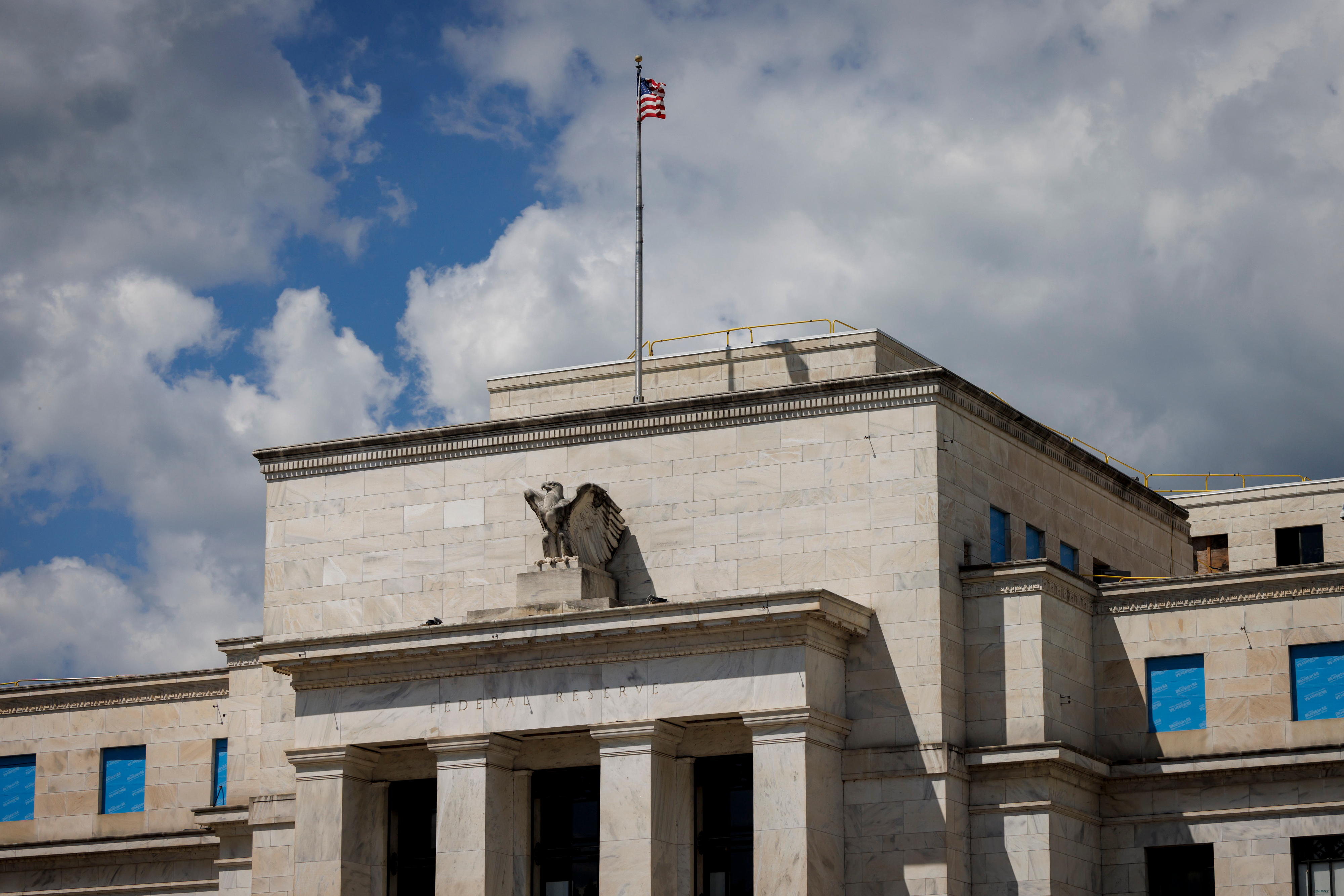
Traders lowered their bets on the Federal Reserve's interest-rate cuts this year, pricing in just two reductions for 2025 after the US and China agreed to cut tariffs and moderate their trade war.
Swaps that track upcoming central bank meetings showed just 55 basis points of easing by December, down from near 75 basis points last week. Traders still see the first quarter-point cut in September. The policy-sensitive two-year yield rose as much as 12 basis points Monday to back above 4%, as traders pulled back their estimates of rate cuts for 2025.
The rise in yields combined with decreasing certainty over rate cuts reflect further weakening of bullish bond wagers as the latest reduction in tariffs is viewed as bolstering the economy. Risk assets rallied sharply to start the week, dimming the appeal of Treasuries.
The pullback in market expectations of the Fed's rate path has extended since the US central bank published its meeting statement and chair Jerome Powell advocated for a wait-and-see approach to assess how tariffs will impact inflation and growth. Over the past week, the two-year yield has climbed from a low of 3.55%, while the five-year note yield has risen to 4.11% from around 3.85%.
“Markets are in the overshooting business and right now the money in motion is flowing to risk,” said Ed Al-Hussainy, rates strategist at Columbia Threadneedle Investment. The firm prefers selling the front-end, with Al Hussainy saying attractive cheaper levels for the two-year would require the market pricing in less than two cuts for this year.

Only last month, the bond market was pricing in four quarter-point cuts, with the Fed seen as resuming its easing cycle in June amid concerns that the trade war would derail the US economy. Now traders appear more aligned with the call of just two cuts in 2025 made by Fed officials in March, as employment remains firm and the prospect of sticky inflation is viewed as keeping the Fed on the sidelines.
In the past week, a contrarian wager that the Fed won't cut interest rates this year gained momentum in the rates options market, with open interest in a specific put option exceeding 275,000 contracts, according to CME data.
Wall Street views on how much Fed easing is likely to occur this year illustrates plenty of uncertainty around monetary policy, with economists calling a range from none to as much as 125 basis points of cuts. Several large-bank economists forecast either two or three cuts this year, beginning in July or September.
Economists at Citigroup Inc. for example pushed their prediction for the next rate cut from June to July following the announcement that the US will reduce its 145% tariff rate on Chinese goods to 30% for 90 days. The bank expects cuts at each meeting between July and January totaling 125 basis points.

-
Unhedged Position: Can India See An Indonesia-Style Time Correction?

The Nifty is trading below levels it first clocked in 2024. Is there, then, as I have suggested in the headline, potential that the current time correction drags on painfully for the next three-five, even ten years?
-
Navigating Friction And Energy Realities: An Analysis Of Marco Rubio's October Visit To India
Occurring at a critical juncture marked by stalled trade negotiations and escalating geopolitical pressures over global energy supplies, the visit offers a profound window into modern US-India relations.
-
India Exports Capital. Why Not Export Trusteeship?
The big question, then, is whether India can build an institution that global borrowers, investors, banks, and lawyers can trust, even without an Indian connection.
-
France's Economy & Politics Are In Crisis | The Reason Why
Let's look at how the French economy and politics evolved under Nicolas Sarkozy, Franois Hollande and Emmanuel Macron.
-
You May Inherit The Business. You Must Earn Its Credibility.
Succession tests the founder's ability to share authority as much as it tests the next generation's readiness to assume it.
-
Signing Deals Is One Thing; Making Them Work Is Another | The Week In Whys
Sometimes, things don't turn out as planned. Indian companies have lost some bids to rivals, some projects won't produce until 2030.
-
FOMC Wall, PERM Suspension, Hospital Stocks | Talking Points This Week
A PERM suspension would directly affect green-card sponsorship rather than H-1B visas, so the near-term earnings impact could remain relatively limited. The key question is whether this marks a new phase in US scrutiny of Indian IT.
-
Everything, Everywhere, All At Once: Dalal Street's Week To Forget | Joining The Dots
Visa curbs, a Starlink spat and cancer drug caps: what connects this week's shocks for Indian markets
-
India Is Going Abroad For Critical Minerals. But It May Take Years To Pay Off | The Reason Why
Although India's steps are in the right direction, they remain modest compared with India's growing dependence.
-
When Everyone Has AI, What Gives You An Edge?
India's young workforce is entering an uncertain world of work where powerful AI tools are becoming widely accessible. The advantage will belong to those who combine deep expertise with digital fluency, and the distinctly human capabilities that technology cannot manufacture.









