Trade Wars: The Past And The Present
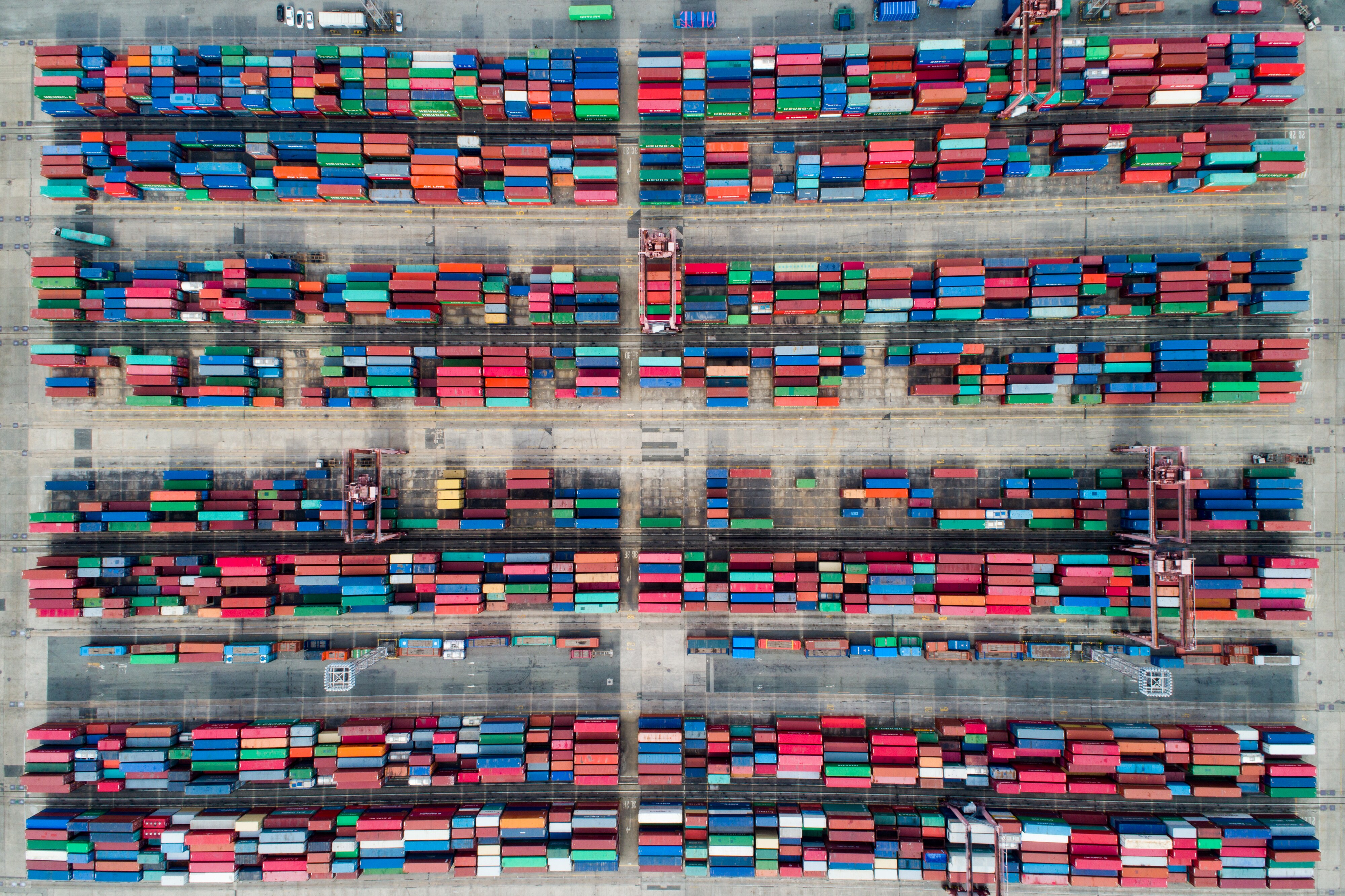
Late Thursday evening President Donald Trump announced that the U.S. will impose 25 percent duties on China produce worth at least $50 billion including items in aerospace, information and communication technology and machinery. It also intends to to propose new investment restrictions on chinese companies.
“This is the first of many” trade actions, Trump promised while criticising China for intellectual property theft worth hundreds of billions of dollars.
Section 301 of the Trade Act of 1974 provides the United States with the authority to enforce trade agreements, resolve trade disputes, and open foreign markets to U.S. goods and services. It is the principal statutory authority under which the United States may impose trade sanctions on foreign countries that either violate trade agreements or engage in other unfair trade practices. When negotiations to remove the offending trade practice fail, the United States may take action to raise import duties on the foreign country's products as a means to rebalance lost concessions. —U.S. Department of Commerce
As a candidate, I pledged that if elected I would use every lawful tool to combat unfair trade, protect American workers, and defend our national security. Today, we took another critical step to fulfill that commitment. https://t.co/7NBI0Dibmx pic.twitter.com/nmzqos3BUA
March 22, 2018
Hours later, China retaliated by announcing that it plans to impose reciprocal tariffs on $3 billion of U.S. imports, including pork, wine, fruit and steel. China's commerce ministry has proposed a list of 128 U.S. products as potential retaliation targets, according to a statement on its website. China will also pursue legal action against the U.S. at the World Trade Organization.“We don't want a trade war ... But we are not afraid of it.”Cui Tiankai, China's Ambassador To U.S.
Here below is a collection of excerpts from research papers, reports and columns that offer insight on previous trade wars and their impact, as well as the impact if these current hostilities turn into a full-fledged war. The quotes are in reference to events of the last week.The History And Impact Of Trade Wars?
International Trade And Peace
The link between international commerce and peace has been apparent for so long that it is sometimes taken for granted. As the German philosopher Immanuel Kant wrote in his 1795 essay, Perpetual Peace, “The spirit of trade cannot coexist with war, and sooner or later this spirit dominates every people.”
Smoot-Hawley Act of 1930George Santayana penned arguably the most famous quote on history, “Those who cannot remember the past are condemned to repeat it.” Yet voices around the world demand a repeat of an error so awful it lengthened and deepened the misery of the Great Depression of the 1930s.
The mistake was the horror story of the United States' anti-trade Smoot-Hawley Act of 1930, sponsored by Senator Reed Smoot and Congressman Willis Hawley. It raised U.S. tariffs to their highest level since 1828 and sparked a devastating trade war.
Smoot-Hawley began small and snowballed. Initially the idea was to increase tariffs to protect U.S. farmers. But, it mutated into the snowball from hell. As it moved through Congress, the political game became “if you support my tariff, I'll support yours” until 890 tariffs were raised.
Most economists believe the result was disastrous. World trade fell by 66 percent from 1929 to 1934; U.S. exports and imports to and from Europe each also fell by about two-thirds. The causes were varied but one influential study, though it examines trade only through to 1932, estimates that the Smoot-Hawley inspired trade war caused half the decline.
Benefits? The depression worsened for farmers and workers, the supposed beneficiaries. Smoot and Hawley were defeated in their re-election bids.
A trade war wounds all combatants: It rattles business and consumer confidence, restrains exports, and hurts growth. Many U.S. businesses rely on low trade barriers to create international supply chains that reduce costs and increase efficiency. These could come apart amid the new tariffs. The last time the United States imposed sweeping tariffs, in the 1930s, the effect was to prolong and worsen the Great Depression. Winning a trade war by destroying both imports and exports would be a Pyrrhic victory.Eswar Prasad, Professor of Trade Policy, Cornell University (To the Washington Post)
Slide To ProtectionismThe movement toward more restrictive trade policies first became evident immediately following the 1929 business cycle peak. The United States imposed the Smoot-Hawley tariff in June 1930, raising the average tariff on dutiable imports by nearly 20 percent. The increase in American tariffs was deeply resented abroad, particularly as the United States was an international creditor and exports to the U.S. market were already declining. Smoot-Hawley provoked retaliatory responses, notably from its largest trading partner, Canada, as well as from a handful of European countries. Yet, Smoot-Hawley was not the main trigger for the wave of protectionist measures that began in mid-1931. In comparison to what was to come, relatively few countries raised their tariffs in late 1930 and early 1931.
The spark that really caused the world trading system to collapse was the financial crisis in the summer of 1931. The failure of the largest Austrian bank, the Creditanstalt, unsettled financial markets and caused capital flows to seize up. The German government depended on foreign loans to finance its expenditures, and the drying up of those loans triggered a run on the mark. To stop the rapid loss of gold and foreign exchange reserves, the government was forced to impose strict controls on foreign exchange transactions, affecting both capital movements and the finance of trade. In theory, Germany could have devalued, but the reparations agreement fixed its obligation in dollars of constant gold content. This meant that devaluing would have had devastating effects on the public finances. In any case, memories of hyperinflation when the gold standard was in abeyance meant that abandoning the system would have unleashed fears of monetary chaos. Hungary's financial system also came under pressure but its banking system was closely tied to Austria's; it imposed controls in July 1931. Other countries such as Chile, which was battered by declining copper prices, followed with controls of their own.
In August, the pressure spread to Britain as trade credits extended to Germany by British merchant banks were frozen. A sharp increase in interest rates did little to stem the Bank of England's gold losses. Against the backdrop of rising unemployment which rendered the bank reluctant to raise interest rates further, on September 19th Britain abandoned the gold standard and allowed sterling to depreciate. This move sent shockwaves through the world economy. Other countries either followed Britain in going off the gold standard or imposed restrictions on trade and payments as a defensive measure to reduce imports and strengthen the balance of payments. Within days, other countries with close trade and financial ties to Britain—Denmark, Finland, Norway, and Sweden among them—allowed their currencies to depreciate relative to gold. Japan, concluding that its recent resumption of gold convertibility had been a mistake, followed in December.
Other countries responded by imposing exchange controls to stem gold outflows. In September-October 1931, exchange controls were adopted by Uruguay, Colombia, Greece, Czechoslovakia, Iceland, Bolivia, Yugoslavia, Austria, Argentina, Belgium, Norway, and Denmark. In addition, the improvement in the price competitiveness of exports from countries with depreciated currencies prompted defensive countermeasures in countries remaining on the gold standard. A large number of countries ratcheted up their tariffs to block cheap imports. France imposed a 15 percent surcharge on British goods to offset the depreciation of sterling and adopted more restrictive import quotas. Canada and South Africa, which did not delink from gold along with Britain, adopted antidumping duties aimed at imports from Britain. In January 1932, the German government was empowered to raise “equalizing” tariffs on goods coming from countries with depreciated currencies. The Netherlands also broke from its traditional policy of free trade, raising its duties by 25 percent to offset currency depreciation abroad.
This proliferation of restrictions on international trade and payments in the aftermath of Britain's devaluation dealt a severe blow to world commerce. World trade volume fell 16 percent from the third quarter of 1931 to the third quarter of 1932. Between 1929 and 1932 it fell 25 percent, and nearly half of this reduction was due to higher tariff and nontariff barriers.
The solution to the threats to U.S. national security and jobs must include strong, effective efforts to provide enforceable reductions in global overcapacity in these industries.Robert Scott, Director of Trade and Manufacturing Policy Research, Economic Policy Institute
Birth of the Free Trade ConsensusIn his 1958 State of the Union address, Eisenhower declared that free trade was “both in our national interest, and in the interest of world peace”. The line could have come from Cordell Hull.
By the 1950s, most Republicans had joined the free trade consensus. Why? The answer lies in the unique circumstances of the postwar world.
World War II had decimated America's major trading partners; the European and Japanese economies had collapsed. In this context, American manufacturers saw trade liberalization less as a threat than an opportunity. Free trade enabled businesses to export their goods to willing buyers while facing little competition from imports. With major business constituencies eager for trade, Congressional representatives obliged.
These economic circumstances coincided with a geopolitical crisis: the dawn of the Cold War. Most American policymakers, regardless of party, saw trade as a way to incorporate other nations into the capitalist “free world” led by the United States, thereby limiting the reach of the USSR. In the global competition for allies and resources, trade policy was an essential part of foreign policy.
- The Collapse of America's Free Trade Consensus: Origins
Back To The 18th Century?The truth is that America has prospered economically and become the world's strongest power in the post–Bretton Woods era, and we should not toss the structures we created onto the trash heap lightly. It is true that other countries are growing faster and catching up, but that does not mean we are losing. It means that we have created a system that works for everybody, not just a few. Pulling away from those institutions is not a winning strategy. The end result will be the gradual transition of world leadership from us to countries that do not share our values and do not value the role we play in the world. That will not make America great again.
U.S. vs China: What Happens Now?
Impact On Economic Growth
The economic effects of the tariffs either implemented or proposed to date are highly uncertain. Theory strongly indicates that increasing trade protectionism will result in worse economic outcomes on net, despite potentially being beneficial for some parties. The magnitude of this adverse effect will depend on confidence effects, emerging price pressures as a result of the tariffs (and policymakers' responses), and a range of other factors. However, the direction of the effect on the trade deficit is less clear cut, hinging on the following:
- The extent to which the tariffs can be successfully applied, given that many of China's exports are produced using integrated global supply chains making application potentially difficult.
- The prevalence of substitution to imports from other countries, as opposed to substituting to domestic products. The US will likely instead import the goods from other (higher-priced) economies, so overall imports may not decline (or may even increase, depending on demand elasticities) even if imports from China fall.
- China's retaliation and broader escalation. China has stated that they will not “sit by and watch as China's interests are damaged”. Retaliation in kind would have an adverse effect on US exports, potentially offsetting any reduction in imports.
In general we are of the view that ultimately it is the capital account that drives the current account – or more simply the savings/investment gap must equal the current account deficit. This suggests that the U.S. deficit will actually increase this year as the tax cuts reduce U.S. savings. Any bilateral tariffs are therefore likely to have more impact on the composition and origin of exports than on the overall trade balance.
- Trump, Trade and China - Dogma or Negotiation? Macquarie Research
Protectionism = Job Growth?Could gains at home be worth the potential global fallout? After all, the ultimate purpose of these trade policies is to revive the manufacturing sector, growing jobs in the process.
That may be easier said than done, says Ellen Zentner, Morgan Stanley's chief U.S. economist. “Decades-long shrinkage in U.S. manufacturing has not only reduced the size of the manufacturing sector to 10 percent of total private sector jobs, but years of sluggish demand for U.S. manufactured goods also led to a mass exodus of workers and loss of skill set," she says. Even if companies begin to create jobs stateside, they may not be able to find the right workers to staff them, at least, in the near term. The policies could boost U.S. GDP growth slightly in the short run, Zentner estimates. However, this would come primarily from a reduction in the trade deficit.
When it comes to the lasting effects of a protectionist trade stance, the outlook is less than optimistic. The Morgan Stanley report modeled the effect of 5 percent, 20 percent and 45 percent tariffs on GDP growth over 50 years. “Beyond a one-year horizon, the longer-term impacts on the U.S. GDP are negative in all scenarios," Zentner says.
- As Risks Rise, Gauging the Impact of U.S. Protectionism: Morgan Stanley Research Report
Impact On Emerging MarketsThis year, the Trump administration has taken a more aggressive stance on trade, and we expect the Section 301 investigation to reveal that China has committed some significant intellectual property right violations. This, plus the U.S. trade deficit with China ballooning in January to a record high of $380 bn, together with the U.S. midterm elections approaching, heightens the risk of growing tit-for-tat trade protectionism between the U.S. and China that, in the worst case, could flare up into a full-blown trade war. After decades of trade liberalisation that has driven the fragmentation of production across countries – a full one-third of the value-added in China's exports is sourced from other countries – growing trade restrictions by the world's two largest economies is bound to hurt exports of other countries, and probably in unexpected ways given sophisticated global value chains. Here again, Emerging Markets are more exposed than Developed Markets, given EM economies are generally more open – of the world's major economies, seven out of 10 of the most open to trade are in EM.
- In an EM snapback, where do the risks lie? Nomura Global Markets Research
Down the Rabbit Hole: An all-out #TradeWar could cost millions of #jobs. #Zandi https://t.co/poE260Ma3Y #Trump #tariffs #steel #China #trade pic.twitter.com/L1XSJXfe6R
March 21, 2018
$1 Trillion Impact?To simulate the economic impact of a full-fledged trade war between the U.S. and its trading partners, we have used the macro-econometric trade model NiGEM. To simplify matters, we assume that the trade war will result in an additional import tariff of 20 percent on all US imports and assume that foreign countries will install an additional tariff 20 percent on all imports from the US. This is, of course, a firm assumption, and should be regarded as a thought experiment in case of a full-fledged trade war.
Our calculations show that such a scenario would have a large negative impact on the U.S. economy of -6 percent GDP up to 2023, which is far more substantial than, for instance, a hard NAFTA breakdown. This comes down to $1,000 bn, which is ironically equal to the amount Trump has vowed to invest in US infrastructure over the next ten years.
For China (-1.6 percent total GDP losses up to 2023) and the EU (-1.7 percent GDP losses), the negative impact of a trade war would be substantial, but far lower than in the US (figures 5 and 6). Both China and the EU would have the opportunity to step up trade with each other and the rest of the world, as their relative competitiveness vis-à-vis the US increases. This assumes, however, that both countries continue their trade ties on the same footing, whereas tensions between Europe and China have been rising. Of course, the U.S. would not have that luxury and in our stylized scenario would face tariffs by all its trading partners.
- Is a U.S. trade war imminent? RaboResearch Economic Research
The risk that piecemeal protectionist measures escalate into a more damaging trade war has risen in recent months, but China's measured response so far and U.S. indications of openness to negotiation suggest this scenario should still be avoided.Fitch Ratings (On Bloomberg)
A Paradoxical OutcomeIn the case of the United States safeguard on tire imports from China (2009-2011), the employment increase in the tire industry was insignificant: nil by some estimates, at most 1,200 workers by others. Even in the latter case, the cost per job saved was disproportionately large: $900,000 per worker. The safeguard measures mainly benefited third country (not Chinese) exporters. Moreover, there were likely negative effects on other U.S. sectors. In addition, this safeguard measure gave raise to several retaliations and adjudications, culminating additional costs for all parties involved.
Regarding the U.S. safeguard measure on steel products (2002-2003) (vis-à-vis all source countries), the political motivation of garnering support from a powerful vested interest in sensitive areas apparently played a key role. In practice, the safeguard included many exemptions, inducing trade diversion, rather than reduction. While no tangible indicators could be found of a positive impact on employment in the steel sector, negative impacts on steel-using industries seem to have been disproportionately large, including outsourcing overseas – a paradoxical outcome for a measure designed to protect domestic jobs. The only significant positive impact on the sector was increased stock share prices – benefitting owners, not workers – and even this was mirrored in declines in downstream industries.
We conclude that unequal gains from globalization entail political risks, endangering the overall gains from trade. Demands for protection and concerns about the consequences of globalization should be better acknowledged by policymakers. However, protectionism is not a suitable answer: it is inefficient, as those who gain from it are not always those who were targeted, and profits often benefit entities other than workers; it is unfair, because the costs are disproportionately born by those without a clear and focused political voice: consumers (and especially poorer households, in many cases), and sectors with limited capacities to defend their interests in a coordinated manner.
Section 301Hysteria over Trump administration protectionism should be dialed down, at least for the moment. A 25 percent tariff on $50 billion worth of Chinese goods is certainly a change from the status quo but pales against 15 years of PRC aggression on IP. More to the point, it pales in size against the potential impact of the Republican tax reform on trade and even the simple arithmetic trend in Chinese imports.
While $50 billion sounds like a lot, 2017 U.S. imports from China of goods and serviceswere $524 billion and imports from all countries were $2.9 trillion. The bilateral deficit with China was $337 billion (just goods was $376 billion) and the full deficit was $568 billion (just goods was $811 billion).
The administration believes the tariffs will lock out affected Chinese goods and narrow both imports and the trade gap close to $50 billion. This is highly unlikely in the short term. The PRC climbed the technology ladder using illegal practices. But it offers scale and logistics capabilities in supply chains that cannot be quickly replaced. Rather than $50 billion being blocked, it will be more like $20 billion. For comparison, imports from China rose $45 billion last year.
In the long term, the administration is aware that it is other countries, not new U.S. production, that will replace most of the Chinese imports. If the tariffs are retained, the bilateral deficit is likely to shrink further over the course of several years but that large aggregate deficit won't.
- Observations on Section 301: By Derek Scissors, Resident Scholar, American Enterprise Institute
“As America's third largest and most rapidly growing export market and as the largest foreign owner of Treasuries, China has considerably more leverage over the U.S. than Washington politicians care to admit.”- Stephen Roach, former Non-Executive Chairman, Morgan Stanley Asia (To Bloomberg)
China's ReactionBeyond the goods markets, China has potentially large retaliatory capacities through either capital and currency markets (for example, through the amount of US dollars and US Treasury bonds retained by the Chinese central bank) or export restrictions (for example, through leveraging its high market share in the global production of rare earths). These are clearly strong mechanisms with which the Chinese government can exert pressure on the US government.
- Discussion paper on ‘U.S. Trade Wars with Emerging Countries in the 21st Century'
“This seems to be the beginning of an era of reversing globalization.”Tao Dong, Vice Chairman-Greater China, Credit Suisse Private Banking


-
High US Salaries, No Green Card Certainty: The Financial Calculation Facing Indian H-1B Families

The suspension of PERM processing at eight technology employers does not cancel existing H-1B visas. What it does is force a question many Indian families have been avoiding: is the US salary worth tying your career and family plans to one employer?
-
Unhedged Position: Can India See An Indonesia-Style Time Correction?
The Nifty is trading below levels it first clocked in 2024. Is there, then, as I have suggested in the headline, potential that the current time correction drags on painfully for the next three-five, even ten years?
-
Navigating Friction And Energy Realities: An Analysis Of Marco Rubio's October Visit To India
Occurring at a critical juncture marked by stalled trade negotiations and escalating geopolitical pressures over global energy supplies, the visit offers a profound window into modern US-India relations.
-
India Exports Capital. Why Not Export Trusteeship?
The big question, then, is whether India can build an institution that global borrowers, investors, banks, and lawyers can trust, even without an Indian connection.
-
France's Economy & Politics Are In Crisis | The Reason Why
Let's look at how the French economy and politics evolved under Nicolas Sarkozy, Franois Hollande and Emmanuel Macron.
-
You May Inherit The Business. You Must Earn Its Credibility.
Succession tests the founder's ability to share authority as much as it tests the next generation's readiness to assume it.
-
Signing Deals Is One Thing; Making Them Work Is Another | The Week In Whys
Sometimes, things don't turn out as planned. Indian companies have lost some bids to rivals, some projects won't produce until 2030.
-
FOMC Wall, PERM Suspension, Hospital Stocks | Talking Points This Week
A PERM suspension would directly affect green-card sponsorship rather than H-1B visas, so the near-term earnings impact could remain relatively limited. The key question is whether this marks a new phase in US scrutiny of Indian IT.
-
Everything, Everywhere, All At Once: Dalal Street's Week To Forget | Joining The Dots
Visa curbs, a Starlink spat and cancer drug caps: what connects this week's shocks for Indian markets
-
India Is Going Abroad For Critical Minerals. But It May Take Years To Pay Off | The Reason Why
Although India's steps are in the right direction, they remain modest compared with India's growing dependence.









