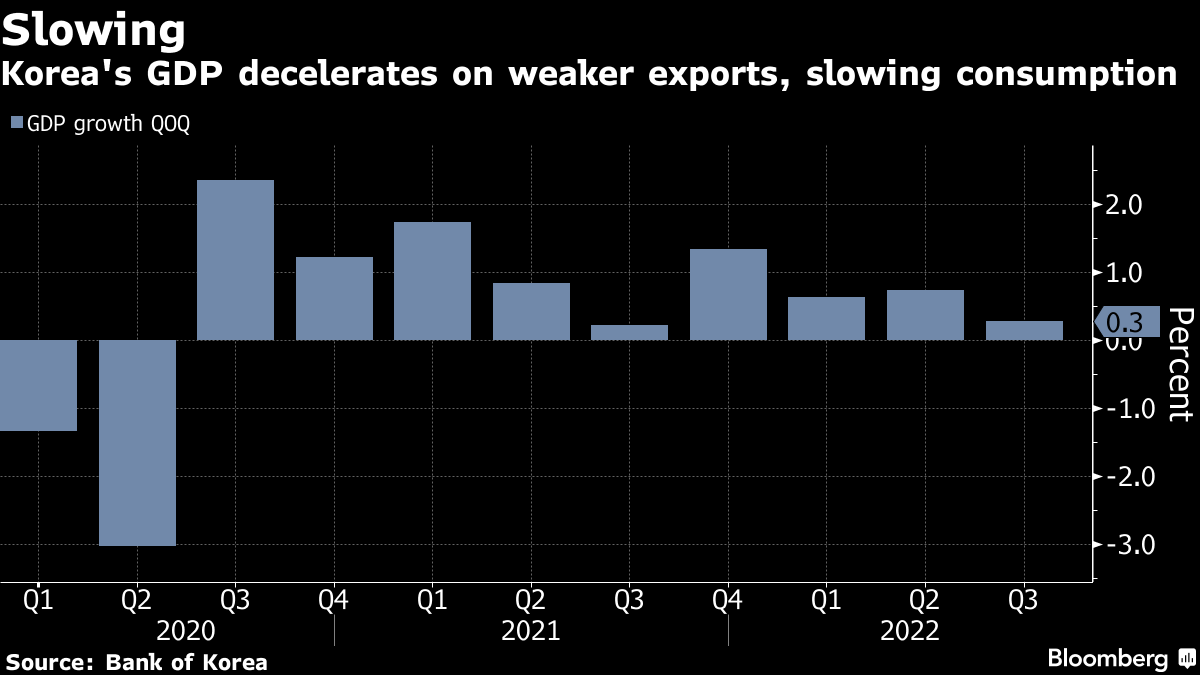
(Bloomberg) -- South Korea's economic growth decelerated last quarter in response to slowing exports and a weakening currency, a result that's unlikely to prevent the central bank from further policy tightening.
Gross domestic product rose 0.3% in the three months through September from the previous quarter, the Bank of Korea said Thursday, matching economists' estimates. From a year earlier, it advanced 3.1%.
Pressure is building on the Korean economy as rates rise rapidly and stalling export growth sees trade deficits accumulate. That's partly why the won is weakening to levels last seen in the 2008-09 financial crisis, driving up import costs and exacerbating inflation.
Korea's inflation reached the highest level in 24 years in the July-September period and remains elevated this quarter, keeping the BOK on a tightening path. The central bank raised rates by a half-percentage point in July and October, seeking to keep its policy gap with the Federal Reserve from widening too much and putting more pressure on the won.
“The latest numbers are unlikely to sway the BOK's monetary policy, given its focus remains on inflation and financial stability, including the currency,” said Chang Jaechul, chief economist at KB Kookmin Bank. “With one month left until the next decision, the possibility remains open to either a 25 or 50 basis point hike.”
Higher rates have strained Korea's credit markets and a rare default by a local developer sent the corporate bond market tumbling this month. The government has stepped in with a pledge to supply at least 50 trillion won, seeking to bolster confidence among investors.
Deteriorating sentiment in financial markets is likely to persist as the BOK remains committed to boosting borrowing costs. Consumers face an increasingly challenging environment with inflation and higher rates eroding their purchasing power.
The won, meanwhile, is the worst performing currency after the yen in Asia this year.
The government also plans to keep its fiscal spending restrained after unprecedented stimulus to keep the economy afloat during the pandemic. Authorities have relaxed Covid regulations significantly to support more private activity and boost consumption.
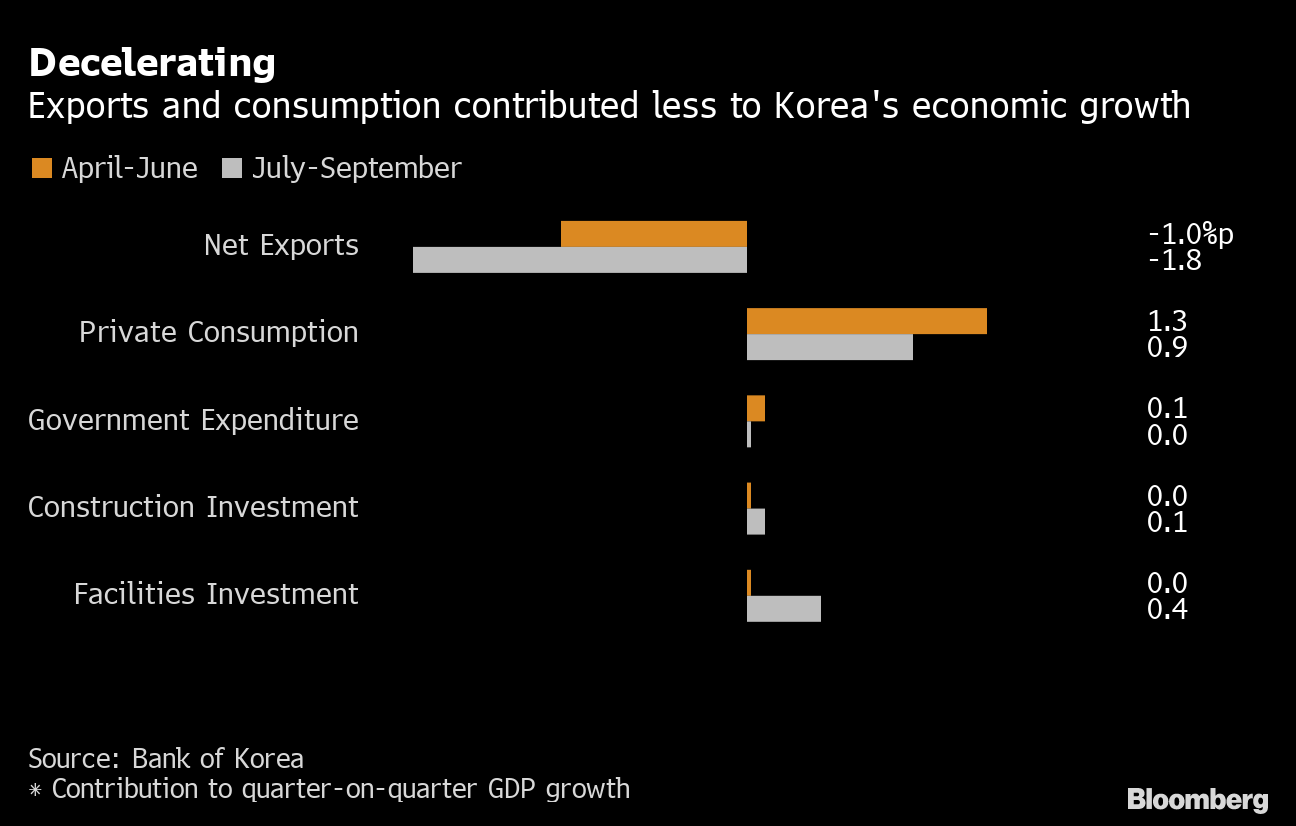
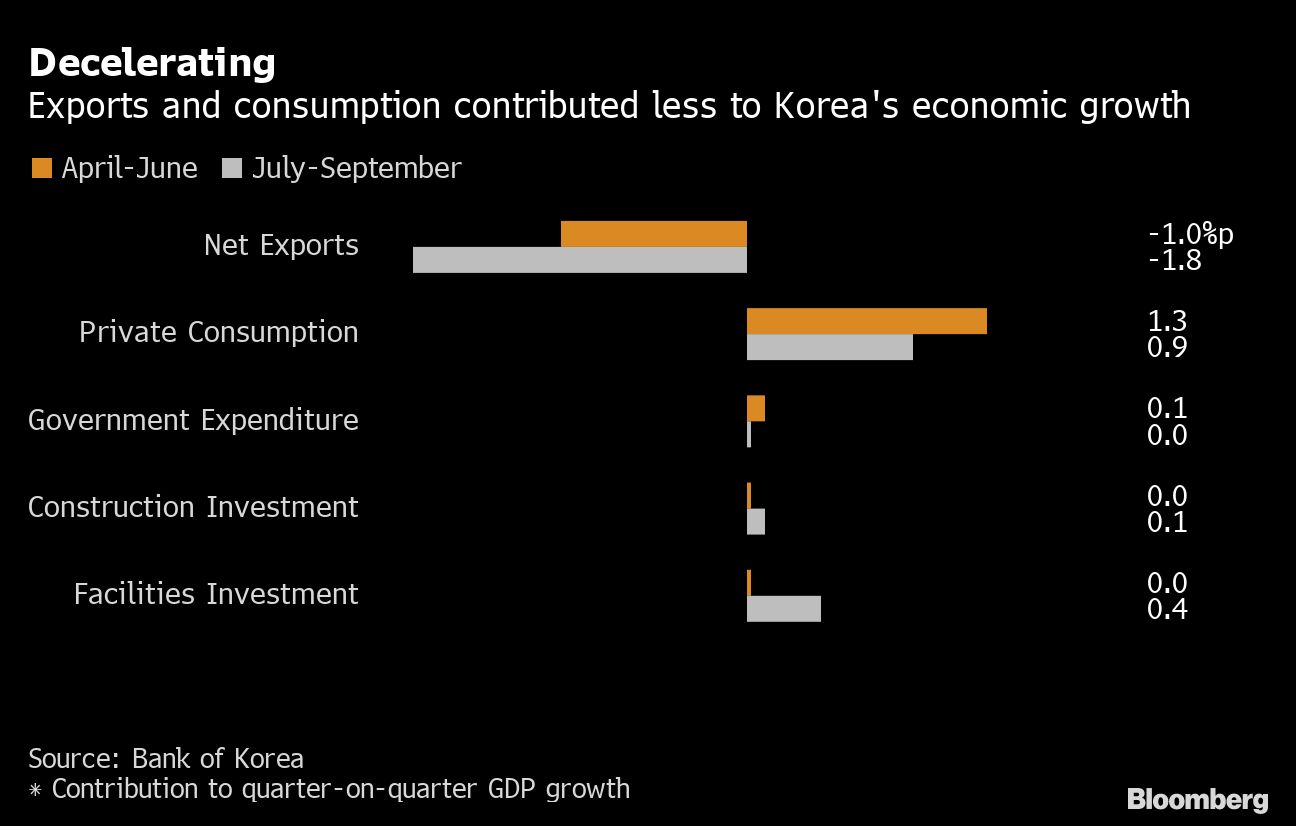
From the previous quarter, private consumption rose 1.9%, while government spending was up 0.2%. Exports advanced 1%, as facilities investment expanded 5%.
But imports grew 5.8%, outpacing exports by a large margin. As a result, net exports detracted 1.8 percentage points from GDP growth.
(Updates with economist's comment)
More stories like this are available on bloomberg.com
©2022 Bloomberg L.P.
Essential Business Intelligence, Continuous LIVE TV, Sharp Market Insights, Practical Personal Finance Advice and Latest Stories — On NDTV Profit.