Singapore Oil Sales To Ships Jump As Vessels Avoid Red Sea Risks
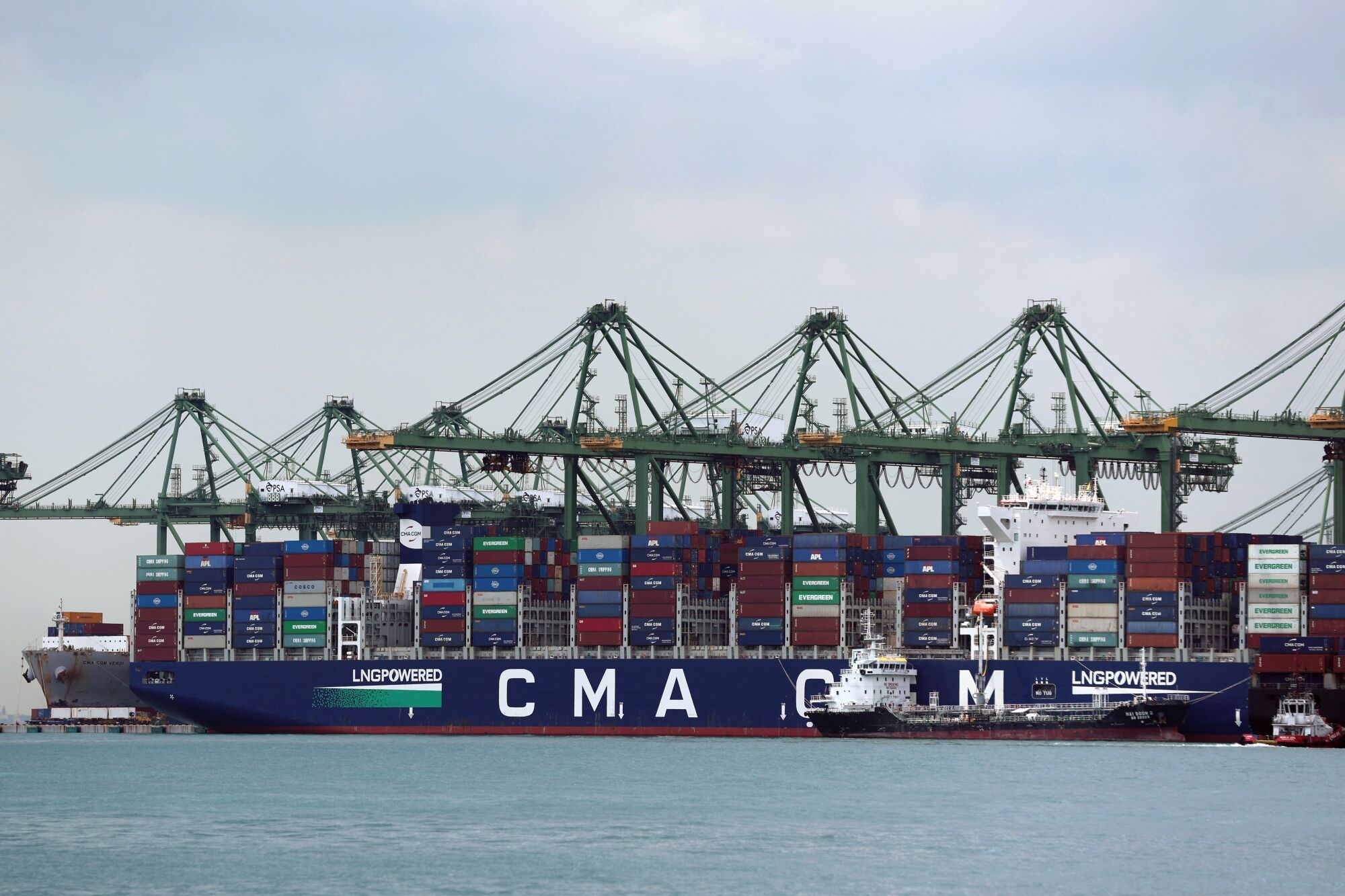
(Bloomberg) -- The Red Sea shipping crisis is making waves in Singapore as the disruption to global shipping patterns spurs higher fuel sales at one of the world's busiest ports.
Volumes were 12% higher in January compared with a year ago, according to port authority data. That's the second month of sharp gains as the confrontation in the region sends vessels scrambling to top up fuel at the Asian hub.

“Demand in Singapore has increased as it's almost the last stop before heading to the Indian Ocean,” said Simon Neo, executive director of ship-refueling consultancy SDE International Pte. Other ports such as Fujairah in the United Arab Emirates and Sri Lanka may also be options for rerouted vessels, he added.
Global maritime trade has been upended in recent months as Iran-backed Houthi rebels in Yemen target merchant vessels off their coasts to support Hamas against Israel. The attacks have continued despite repeated military strikes by the US, with many shipowners avoiding the area and passage via the Suez Canal, preferring the safer journey around the Cape of Good Hope.
The longer voyages — as well as some vessels opting to boost sailing speeds — have stoked consumption of bunker fuel. That's driving them to top up their tanks at less traditional refueling ports along the route around Africa, such as Durban and Walvis Bay, as well as at major hubs like Singapore.
Read more: Red Sea Crisis Sends Tremors Through Asian Fuel Markets
“Overall, demand for bunkering should increase due to the longer distances to be covered,” said Fotios Katsoulas, lead analyst for tanker shipping and alternative fuels for S&P Global Commodity Insights. Estimates suggest “this could add up to 5%, if more ships avoid the Red Sea and some of them speed up to minimize the duration of the longer voyages,” he said.
Overall sales of marine fuel in Singapore were 4.9 million tons in January, up about 12%, according to the Maritime & Port Authority. In December, they hit 5.1 million tons, the highest monthly volume in data going back to 1995.
Prices of low-sulfur marine fuel in Singapore - the most commonly used grade - climbed to as much as $671 a ton in January, about 10% above levels at the end of last year, according to data from Clearlynx, a marine fuel procurement and analytics platform. That compares with Brent crude's 6% gain that month.
More stories like this are available on bloomberg.com
©2024 Bloomberg L.P.

-
Navigating Energy Crossroads: S Jaishankar's Call For Diversified Supply Chains At G20 Ministerial Meeting

As geopolitical fault lines continue to test maritime trade routes and commodity flows, Jaishankar's message remains pertinent: true economic resilience requires open markets, protected transit lines, and a genuine commitment to multilateral cooperation rather than coercion.
-
Indians Are Travelling, But Not Every Journey Is A Holiday | The Week In Whys
Pilgrims, patients and working women are the real travellers, and the system hasn't quite caught up with them.
-
Getting To Work Costs Women More | The Reason Why
It is not just about women paying more than men. It is about women paying much more in cities than in villages.
-
AI Bias In Investing Cannot Be Eliminated, But It Can Be Governed
Framing is a particularly important example as identical financial information presented in terms of gains rather than losses can lead an LLM to reach a different assessment.
-
Joining The Dots | Dark Skies, Steady Diya: Why Hope Holds This Diwali
With war, a weak rupee and foreign outflows weighing on sentiment, policymakers at the NDTV World Summit and market veterans at NDTV Profit Ignite: Diwali Edition offered the same advice: stay invested and filter out the noise.
-
The Curious Case of Equitas Small Finance Bank And A CEO Who Quit For Stock
PN Vasudevan believes persistent investor concerns over a perceived conflict of interest had become a governance overhang on Equitas Small Finance Bank's stock, even as the lender improved profitability and asset quality.
-
Talking Points This Week: AI Cash Burn, A Tiger Comeback And An India That Still Finds Its Own Path
India is not immune to higher oil or tighter global liquidity, yet its earnings base is broader, its domestic policy levers are still available.
-
Foreign Investors Own Half Of HDFC Bank and ICICI Bank. An LTCG Cut Could Matter Most Here
Foreign portfolio investors have US$115 billion parked in HDFC Bank, ICICI Bank. If the government cuts long-term capital gains tax, Jefferies says returning foreign money could land here first.
-
'Never Seen This Level Of Negativity': Sandeep Tandon Says The Next Rally May Be Closer Than You Think
Veteran investor Sandeep Tandon says foreign selling is easing, large-caps are due a comeback and mid-caps are crowded, while he turns positive on gold, power and pharma this Diwali.
-
Indians Stay With Family, Not In Hotels | The Reason Why
India still lacks enough clean, reliable and affordable hotels for budget-conscious travellers.










