SBI Chief Says Bad Loans To Fall In 2018 As Resolution Gathers Pace
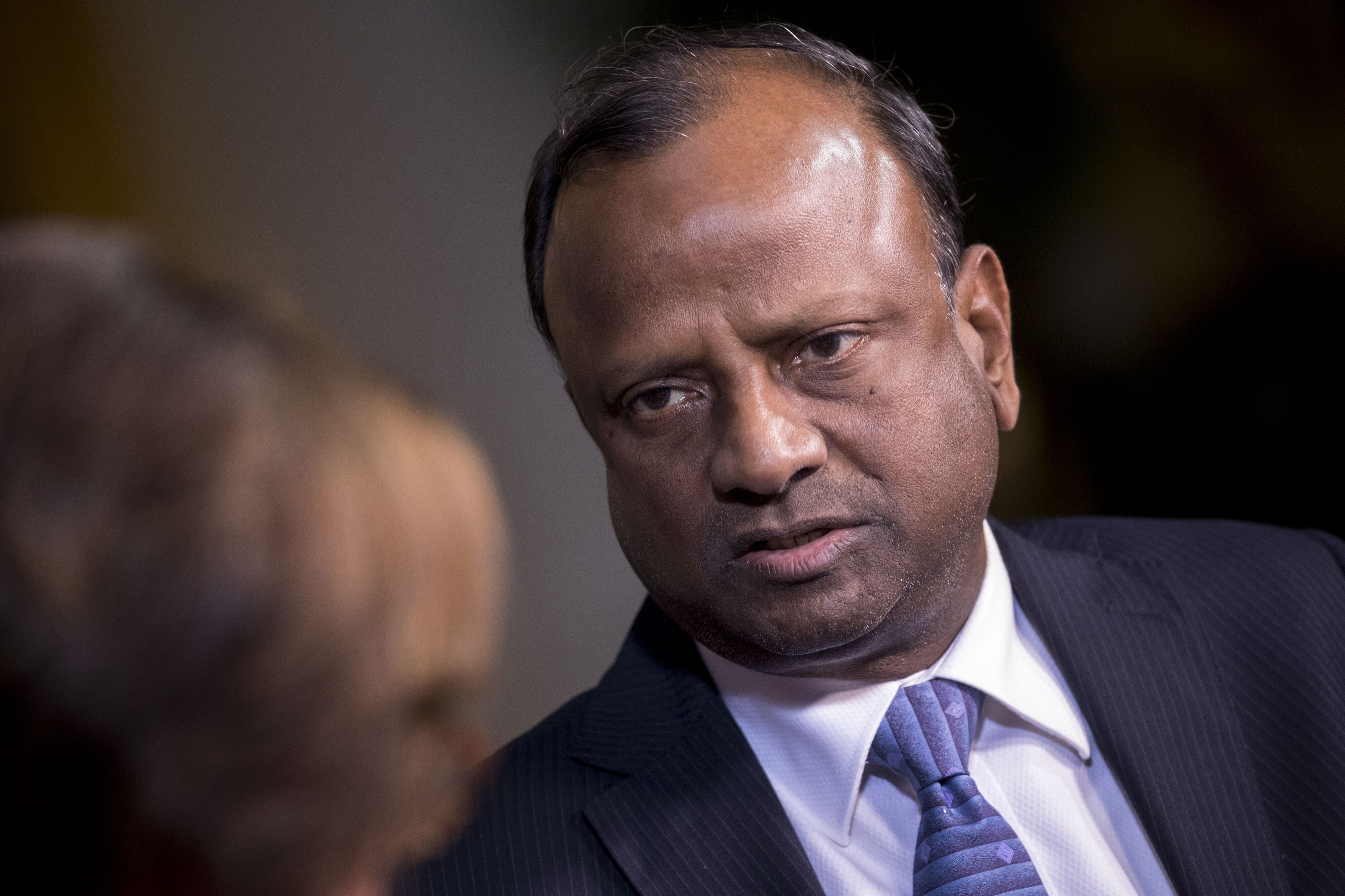
The head of India's largest lender said the banking sector's bad loans will significantly decline this year as resolution of stressed assets under the new bankruptcy law is at an advanced stage.
“The year 2018 will be much better as far as the non-performing assets in the banking system are concerned,” State Bank of India Chairman Rajnish Kumar told Bloomberg on the sidelines of the World Economic Forum at Davos, Switzerland. The process of recognising bad assets will most likely be over by the December quarter and resolution, through the Insolvency and Bankruptcy Code, will pick up pace thereafter, he said.
Also Read: Davos 2018: Uday Kotak Says Allowing 100% Foreign Holding In Banks ‘Not A Great Idea'
The Insolvency and Bankruptcy Code lays down provisions for creditors to initiate a process that may result in resolution or liquidation. The Reserve Bank of India, last year, issued two lists of potentially defaulting companies against which lenders could initiate insolvency proceedings.
As the process gathers momentum, banks will need government support to make up for the gap in their provisioning for bad assets, he said. For that, the government's proposed Rs 2.11-lakh-crore recapitalisation plan is a “positive” move, Kumar said.
Also Read: Don't Know Enough To Call Demonetisation An ‘Epic Failure', Rajan Says
Stable Interest Rates
The SBI chairman expects policy rates to remain stable for at least a year in the backdrop of inflationary pressures.
Our sense is that going forward, the inflation numbers will stabilise and at least for the next six months there will not be an up-move in terms of the central bank's policy rates and the government bond yields.Rajnish Kumar, Chairman, SBI
Assessing Demonetisation
A little over a year after demonetisation was announced, Kumar said it's “still too early” to conclude whether the clampdown on nearly 86 percent of the currency notes in circulation was a success. “People need to first decide the criteria for terming it as a success or failure.”
If the move were aimed at achieving a greater formalisation and digitisation, then the decision was successful, he said.
Also Read: Chandrasekaran Feels Empowered As He Charts Out Future Of Tata Group

-
High US Salaries, No Green Card Certainty: The Financial Calculation Facing Indian H-1B Families

The suspension of PERM processing at eight technology employers does not cancel existing H-1B visas. What it does is force a question many Indian families have been avoiding: is the US salary worth tying your career and family plans to one employer?
-
Unhedged Position: Can India See An Indonesia-Style Time Correction?
The Nifty is trading below levels it first clocked in 2024. Is there, then, as I have suggested in the headline, potential that the current time correction drags on painfully for the next three-five, even ten years?
-
Navigating Friction And Energy Realities: An Analysis Of Marco Rubio's October Visit To India
Occurring at a critical juncture marked by stalled trade negotiations and escalating geopolitical pressures over global energy supplies, the visit offers a profound window into modern US-India relations.
-
India Exports Capital. Why Not Export Trusteeship?
The big question, then, is whether India can build an institution that global borrowers, investors, banks, and lawyers can trust, even without an Indian connection.
-
France's Economy & Politics Are In Crisis | The Reason Why
Let's look at how the French economy and politics evolved under Nicolas Sarkozy, Franois Hollande and Emmanuel Macron.
-
You May Inherit The Business. You Must Earn Its Credibility.
Succession tests the founder's ability to share authority as much as it tests the next generation's readiness to assume it.
-
Signing Deals Is One Thing; Making Them Work Is Another | The Week In Whys
Sometimes, things don't turn out as planned. Indian companies have lost some bids to rivals, some projects won't produce until 2030.
-
FOMC Wall, PERM Suspension, Hospital Stocks | Talking Points This Week
A PERM suspension would directly affect green-card sponsorship rather than H-1B visas, so the near-term earnings impact could remain relatively limited. The key question is whether this marks a new phase in US scrutiny of Indian IT.
-
Everything, Everywhere, All At Once: Dalal Street's Week To Forget | Joining The Dots
Visa curbs, a Starlink spat and cancer drug caps: what connects this week's shocks for Indian markets
-
India Is Going Abroad For Critical Minerals. But It May Take Years To Pay Off | The Reason Why
Although India's steps are in the right direction, they remain modest compared with India's growing dependence.









