RBI To Step Up Supervision Capabilities Through New Division
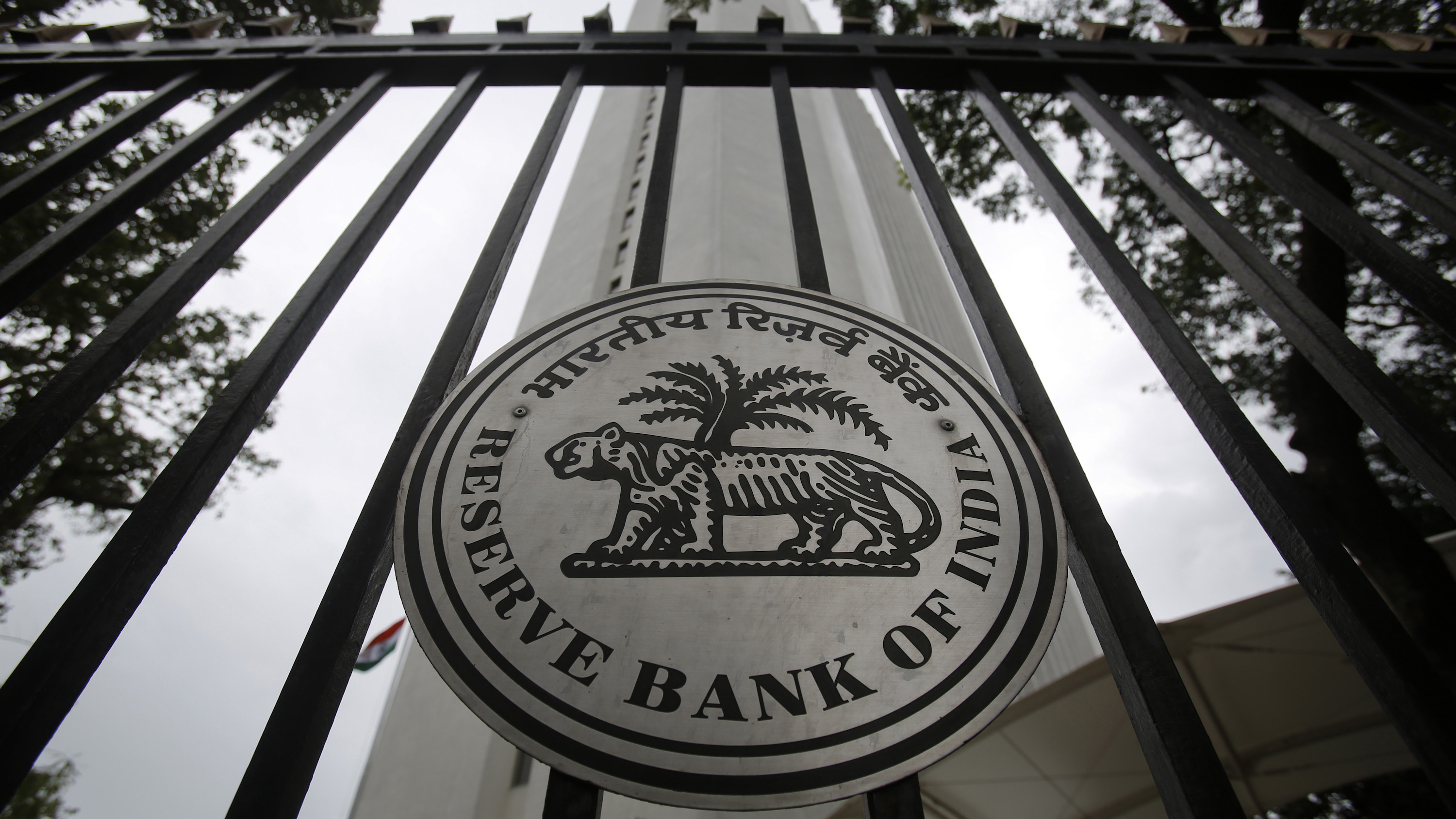
The central board of the Reserve Bank of India, on Tuesday, decided to strengthen its supervisory capabilities by creating a new cadre of officials who will be trained for supervision of banks and non-bank lenders.
The decision comes at a time when the banking regulator has been caught off-guard by troubles erupting in systemically-important institutions like the Infrastructure Leasing and Financial Services Group. The regulator has also been faulted for being unable to catch a build-up of bad loans across banks and liquidity risks across non-bank lenders.
In a statement, the RBI said that its board reviewed the present structure of supervision in the context of the growing diversity, complexities and interconnectedness within the Indian financial sector.
With a view to strengthening the supervision and regulation of commercial banks, urban cooperative banks and non-banking financial companies, the Board decided to create a specialised supervisory and regulatory cadre within the RBI.RBI Board Statement
Currently, the RBI has departments that oversee the regulation and supervision of banks and non-banking finance companies. It also formed an enforcement department in April 2017 to oversee regulatory compliance and violations by banks, NBFCs and other regulated entities.
Risk-Based Supervision
At present, the RBI follows a risk-based supervision approach and assesses financial institutions across a whole host of parameters. These paramters include functioning of the board and board committees, credit appraisal and IT systems, among others. As part of the inspection process, the regulator points out any shortcomings it finds and communicates corrective measures needed to the bank.
Despite these systems being in place, the Indian financial systems has seen a number of accidents in recent years.
In February 2018, Punjab National Bank was hit by a Rs 14,000 crore fraud, which went unnoticed for years. Loopholes in systems that allowed for the fraud were also not caught. In September 2018, AAA-rated IL&FS started defaulting on its dues leading to a credit freeze.
In a conversation with BloombergQuint in October, former RBI deputy governor Rakesh Mohan had said that the growing complexity and size of the Indian financial sector requires the RBI to take a relook at the size of its professional staff as well as their technical competence. Former chief economic adviser Arvind Subramanian had flagged off similar concerns at a book launch in November. The RBI must step its supervisory functions or be willing to pass it on to a new agency, Subramanian had said.
“This was surely a much needed step considering recent events that have occurred. A specialised supervisory and regulatory cadre could be created with some RBI insiders as well as external experts,” Anand Sinha, former RBI deputy governor told BloombergQuint.
If you have some people who stay around in this department for slightly longer than what they usually would, it would also ensure that you have specialisation in the department. There are training programmes for these functions within the RBI already, maybe we could add more to create a stronger base for the cadre.Anand Sinha, Former Deputy Governor, RBI
Another former deputy governor, who spoke on condition of anonymity, shared that view. Since most officials in the RBI move departments every 5-7 years, there is a loss of capacity and the organisation needs to keep training new people. This way there will be continuity and specialisation, this person said while adding that this was a step that was ‘badly needed.'
Other Matters
During its meeting, the RBI's central board also discussed issues around currency management and the role of the banking regulator as the banker to the government.
The statement did not elaborate on the nature of these discussions.
The meeting was chaired by RBI Governor Shaktikanta Das. RBI Deputy Governors NS Vishwanathan, Viral Acharya, MK Jain and BP Kanungo, were also present. The government was represented by Subhash Chandra Garg, secretary, Department of Economic Affairs and Rajiv Kumar, secretary, Department of Financial Services.

-
Where You Live Shapes How You Get To Work | The Reason Why

Two-wheelers are the most popular way to get to work in India, accounting for nearly 43% of workplace commutes.
-
High US Salaries, No Green Card Certainty: The Financial Calculation Facing Indian H-1B Families
The suspension of PERM processing at eight technology employers does not cancel existing H-1B visas. What it does is force a question many Indian families have been avoiding: is the US salary worth tying your career and family plans to one employer?
-
Unhedged Position: Can India See An Indonesia-Style Time Correction?
The Nifty is trading below levels it first clocked in 2024. Is there, then, as I have suggested in the headline, potential that the current time correction drags on painfully for the next three-five, even ten years?
-
Navigating Friction And Energy Realities: An Analysis Of Marco Rubio's October Visit To India
Occurring at a critical juncture marked by stalled trade negotiations and escalating geopolitical pressures over global energy supplies, the visit offers a profound window into modern US-India relations.
-
India Exports Capital. Why Not Export Trusteeship?
The big question, then, is whether India can build an institution that global borrowers, investors, banks, and lawyers can trust, even without an Indian connection.
-
France's Economy & Politics Are In Crisis | The Reason Why
Let's look at how the French economy and politics evolved under Nicolas Sarkozy, Franois Hollande and Emmanuel Macron.
-
You May Inherit The Business. You Must Earn Its Credibility.
Succession tests the founder's ability to share authority as much as it tests the next generation's readiness to assume it.
-
Signing Deals Is One Thing; Making Them Work Is Another | The Week In Whys
Sometimes, things don't turn out as planned. Indian companies have lost some bids to rivals, some projects won't produce until 2030.
-
FOMC Wall, PERM Suspension, Hospital Stocks | Talking Points This Week
A PERM suspension would directly affect green-card sponsorship rather than H-1B visas, so the near-term earnings impact could remain relatively limited. The key question is whether this marks a new phase in US scrutiny of Indian IT.
-
Everything, Everywhere, All At Once: Dalal Street's Week To Forget | Joining The Dots
Visa curbs, a Starlink spat and cancer drug caps: what connects this week's shocks for Indian markets









