RBI Board Was Assured Of Readiness Ahead Of Demonetisation
The minutes of the meeting were obtained under the Right to Information Act by activist Venkatesh Nayak, and hosted on the website of the Commonwealth Human Rights Initiative.
The board of the Reserve Bank of India was assured of adequate preparedness before it signed off on the Government's demonetisation decision, show minutes of a RBI board meet held on Nov. 8, 2016, just before Prime Minister Narendra Modi announced the withdrawal of Rs 500 and Rs 1,000 notes.
The minutes were released following a series of appeals by RTI activist Venkatesh Nayak, after the central bank first denied information under the Right To Information Act.
The suggestion to demonetise, which would have led to the withdrawal of 86 percent of the country's currency in circulation, prompted some directors on the RBI board to raise concerns about the impact on the economy and on certain specific segments, the minutes showed.
In response to those concerns, the board was assured that detailed discussions between the RBI and the government have taken place on the matter.
The board was assured that the matter had been under discussion between the central government and the RBI over the last six months, during which most of these issues have been considered. Apart from the stated objectives, the proposed step also presents a big opportunity to take the process of financial inclusion and incentivising use of electronic modes of payment forward as people see the benefit of bank accounts and electronic means of payment over use of cash.RBI Board Meet Minutes (Obtained By RTI Activist Venkatesh Nayak)
Some of the issues raised by directors on the board included:
- Demonetisation would have a short-term negative effect on the GDP for the current year (2016-17).
- Exemption provided to medical stores could be extended to private medical stores as well.
- Demonetisation would have an adverse impact on tourists; long distance travelers arriving with the high denomination notes would be taken by surprise and "put to hardship".
- The Rs 400 crore of counterfeit notes in circulation is not significant as a percentage of the total money in circulation. However, it mentioned that any incidence of counterfeit is a concern.
- Demonetisation would have an impact on real-sector assets such as gold or real estate since most of the black money was held in those forms instead of cash.
The minutes do not specify which director or directors raised these concerns.
According to the government letter placed before the board, the economy had grown 30 percent between 2011-12 and 2015-16 while the bank notes of Rs 500 and Rs 1,000 denomination had grown by 76.38 percent and 108.98 percent over the same period, the minutes said. This was cited as one of the reasons behind the demonetisation decision.
However, one of the directors on the board pointed out that the difference between growth in currency and growth in real GDP can be explained by inflation. Currency in use is typically determined by nominal GDP, which includes the impact of inflation on the economy.
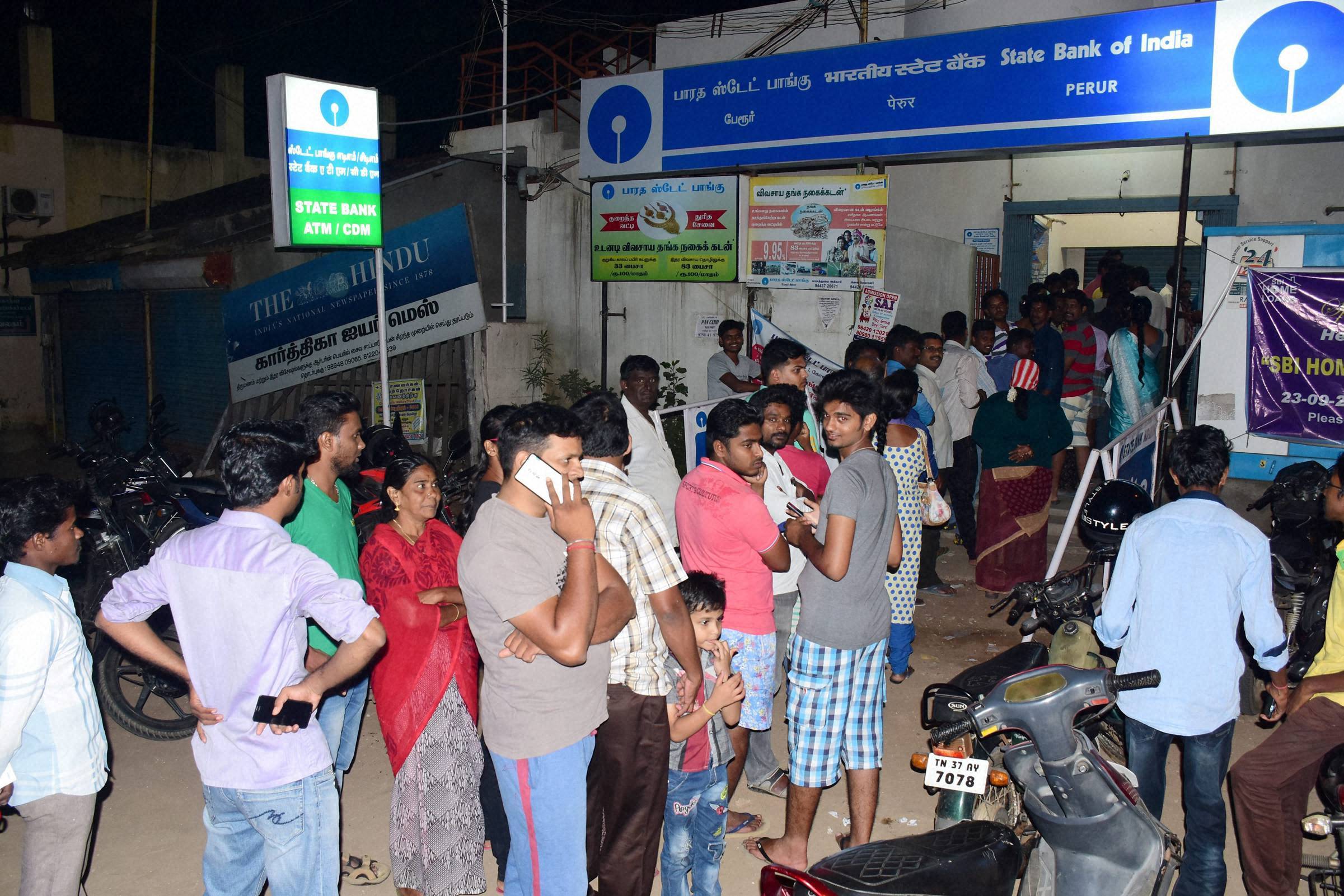
The decision to demonetise, announced on the evening of Nov. 8 2016, led to a sudden shortage in cash and large queues in front of ATMs. The impact of the decision on the economy continues to be debated. While initial estimates showed that the economy had slowed due to the cash ban, recent revisions suggest otherwise.
India's GDP growth in 2016-17, the year demonetisation was announced, was recently revised higher to 8.2 percent compared to an earlier estimate of 7.1 percent. In 2017-18, the Indian economy is now estimated to have growth by 7.2 percent compared to the earlier estimate of 6.7 percent.

-
High US Salaries, No Green Card Certainty: The Financial Calculation Facing Indian H-1B Families

The suspension of PERM processing at eight technology employers does not cancel existing H-1B visas. What it does is force a question many Indian families have been avoiding: is the US salary worth tying your career and family plans to one employer?
-
Unhedged Position: Can India See An Indonesia-Style Time Correction?
The Nifty is trading below levels it first clocked in 2024. Is there, then, as I have suggested in the headline, potential that the current time correction drags on painfully for the next three-five, even ten years?
-
Navigating Friction And Energy Realities: An Analysis Of Marco Rubio's October Visit To India
Occurring at a critical juncture marked by stalled trade negotiations and escalating geopolitical pressures over global energy supplies, the visit offers a profound window into modern US-India relations.
-
India Exports Capital. Why Not Export Trusteeship?
The big question, then, is whether India can build an institution that global borrowers, investors, banks, and lawyers can trust, even without an Indian connection.
-
France's Economy & Politics Are In Crisis | The Reason Why
Let's look at how the French economy and politics evolved under Nicolas Sarkozy, Franois Hollande and Emmanuel Macron.
-
You May Inherit The Business. You Must Earn Its Credibility.
Succession tests the founder's ability to share authority as much as it tests the next generation's readiness to assume it.
-
Signing Deals Is One Thing; Making Them Work Is Another | The Week In Whys
Sometimes, things don't turn out as planned. Indian companies have lost some bids to rivals, some projects won't produce until 2030.
-
FOMC Wall, PERM Suspension, Hospital Stocks | Talking Points This Week
A PERM suspension would directly affect green-card sponsorship rather than H-1B visas, so the near-term earnings impact could remain relatively limited. The key question is whether this marks a new phase in US scrutiny of Indian IT.
-
Everything, Everywhere, All At Once: Dalal Street's Week To Forget | Joining The Dots
Visa curbs, a Starlink spat and cancer drug caps: what connects this week's shocks for Indian markets
-
India Is Going Abroad For Critical Minerals. But It May Take Years To Pay Off | The Reason Why
Although India's steps are in the right direction, they remain modest compared with India's growing dependence.









