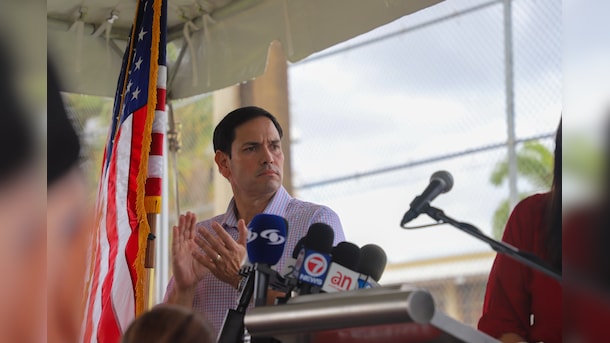
Rajan Says No To Politics, Also Says No ‘Hidden Hand’ In His Departure
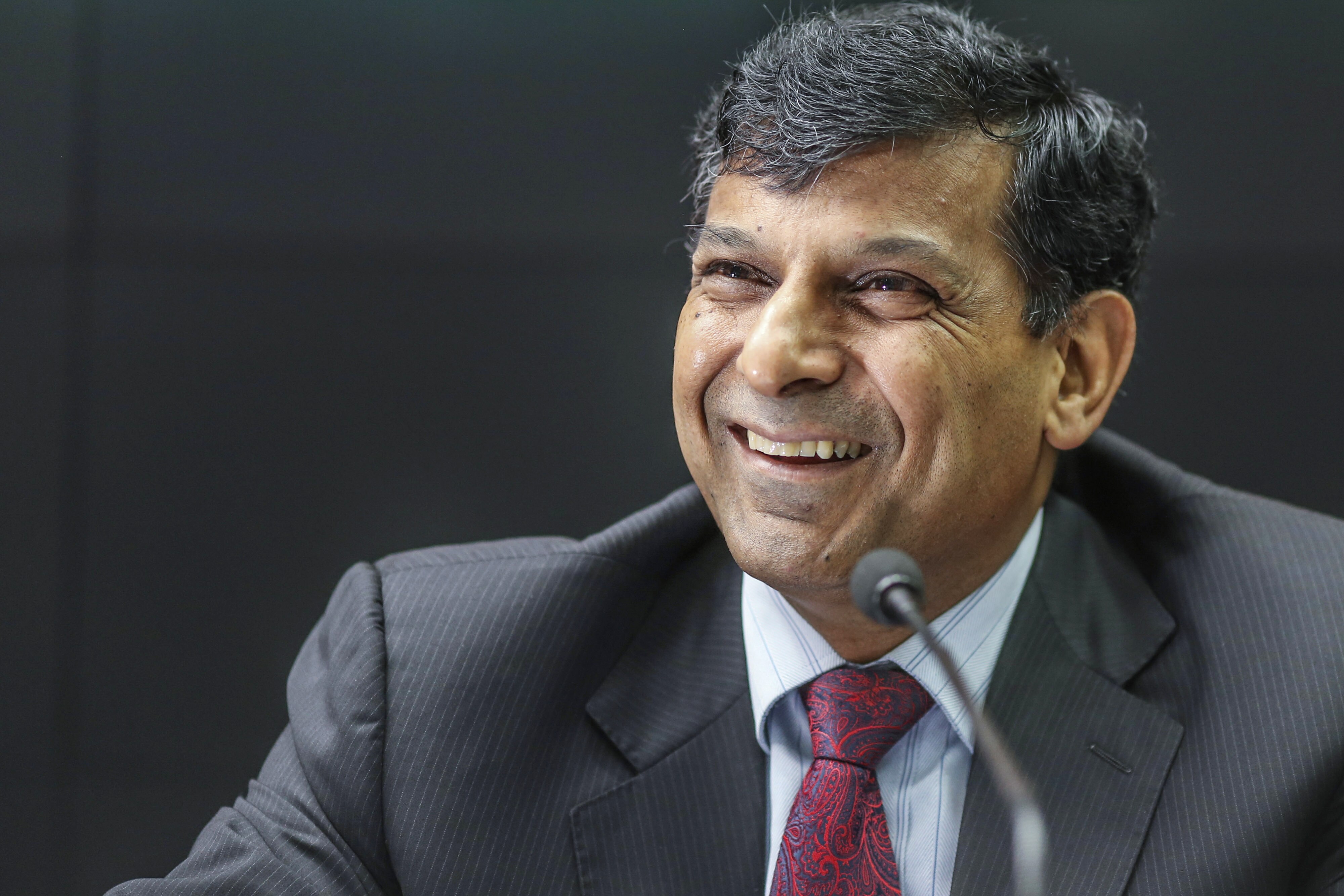
A day after his final monetary policy announcement as Reserve Bank of India Governor, Raghuram Rajan, when explaining his decision to step down, said “There was a process of dialogue with the government and dialogue eventually didn't reach a place where we could agree that I would stay on. That is essentially what happened. So, given that there is no point talking about what could have happened and what would have happened.”
He reiterated his preference for academia. “I have said again and again that I am fundamentally an academic. This (RBI Governor) is my side job,” he said in an interview with CNBC TV18. It is customary for the Governor to speak to media, on rotation, after the policy announcement. He was also interviewed by BBC.
Rajan said, when he was appointed governor in 2013, his immediate goals were stability, reforms to build a more resilient market, a more competitive banking system, more access to financing especially for small and medium enterprises as well as the poor, and stability in the bad loan resolution process.
“If you are going to invest in large mega projects, you have to have some confidence of return on capital,” he said to CNBC TV18.
When asked about the factors that led to his exit, Rajan dismissed all notions of political conspiracy involved in his exit.
I don't think you should attribute this to some hidden hand or something. I feel I have done what was needed to be done. If they had such power, they would have stopped me in what was needed. I have absolutely no hesitation in saying that what I wanted to do I have had absolute freedom in doing. Obviously, this requires a lot of work behind the scenes, with government, persuading government. So, when people say you have been fighting all the time, absolutely not -- great relationships both with the previous government as well as people who matter in this government.
When asked about his unfinished agenda, Rajan identified a few key areas of desired change. Tighter regulation of Non-Banking Finance Companies (NBFCs), mis-selling of insurance and mal-functioning ATMs.
NBFCs
As far as the NBFCs go, we have been lighter touch for the very reason that they don't take deposits and we have sort of been very careful with the deposit-taking NBFCs. Now, what we do want to ensure is the bigger NBFCs are inspected regularly and that their asset portfolios are seen with the same kind of caution we see banks, noting however that because they finance usually with longer-term money, that they have a different capital requirement, that we can be a little more liberal on the risk that they take. Now remember, if we did not allow a little more risk taking, those risks would somehow find their way back to the bank. For example, loans to developers.
Insurance
A big area of concern and it something where we have had consumer advocates come to us with mystery shopping exercises that suggest and we have sent mystery shoppers into banks and we find that there are issues about full information, so that is an area we are going to take very seriously.
ATMs: Out of Order
If 30 percent of ATMs that you have don't function, what kind of efficient system are you running?
Global Economy
Rajan said he was worried about continued monetary easing by central banks and the wide prevalence of negative yields.
I worry because I don't think we understand fully what is going on. On the one hand, the notion that these very low real interest rates are here because of low growth, low productivity etc, but why do we have such low productivity, what is going on, are we mis-measuring it or is it truly real low? Where is all this technology, innovation, this healthcare innovation, where is it getting counted, where is it getting absorbed?
I do think that exit from the current policy is going to be difficult. You have asset prices that are priced for a combination of -- on the one hand -- great depression levels of interest rates and -- on the other hand -- equities are priced as if earnings are going to be strong. Of course, the discount rate is also low, but earnings are also expected to be quite strong. The two again don't fit together, so there is a disconnect in the way the things are priced and the only way you can explain it is with we have distortions and distortions perhaps created by policy and that is why I do worry.
Rajan also ruled out a career in politics, saying, “that's one place my wife overrides everything and her answer is no.”, in an interview to the BBC.
-
Where You Live Shapes How You Get To Work | The Reason Why

Two-wheelers are the most popular way to get to work in India, accounting for nearly 43% of workplace commutes.
-
High US Salaries, No Green Card Certainty: The Financial Calculation Facing Indian H-1B Families
The suspension of PERM processing at eight technology employers does not cancel existing H-1B visas. What it does is force a question many Indian families have been avoiding: is the US salary worth tying your career and family plans to one employer?
-
Unhedged Position: Can India See An Indonesia-Style Time Correction?
The Nifty is trading below levels it first clocked in 2024. Is there, then, as I have suggested in the headline, potential that the current time correction drags on painfully for the next three-five, even ten years?
-
Navigating Friction And Energy Realities: An Analysis Of Marco Rubio's October Visit To India
Occurring at a critical juncture marked by stalled trade negotiations and escalating geopolitical pressures over global energy supplies, the visit offers a profound window into modern US-India relations.
-
India Exports Capital. Why Not Export Trusteeship?
The big question, then, is whether India can build an institution that global borrowers, investors, banks, and lawyers can trust, even without an Indian connection.
-
France's Economy & Politics Are In Crisis | The Reason Why
Let's look at how the French economy and politics evolved under Nicolas Sarkozy, Franois Hollande and Emmanuel Macron.
-
You May Inherit The Business. You Must Earn Its Credibility.
Succession tests the founder's ability to share authority as much as it tests the next generation's readiness to assume it.
-
Signing Deals Is One Thing; Making Them Work Is Another | The Week In Whys
Sometimes, things don't turn out as planned. Indian companies have lost some bids to rivals, some projects won't produce until 2030.
-
FOMC Wall, PERM Suspension, Hospital Stocks | Talking Points This Week
A PERM suspension would directly affect green-card sponsorship rather than H-1B visas, so the near-term earnings impact could remain relatively limited. The key question is whether this marks a new phase in US scrutiny of Indian IT.
-
Everything, Everywhere, All At Once: Dalal Street's Week To Forget | Joining The Dots
Visa curbs, a Starlink spat and cancer drug caps: what connects this week's shocks for Indian markets