Putin May Announce Run For New Term In November, Kommersant Says
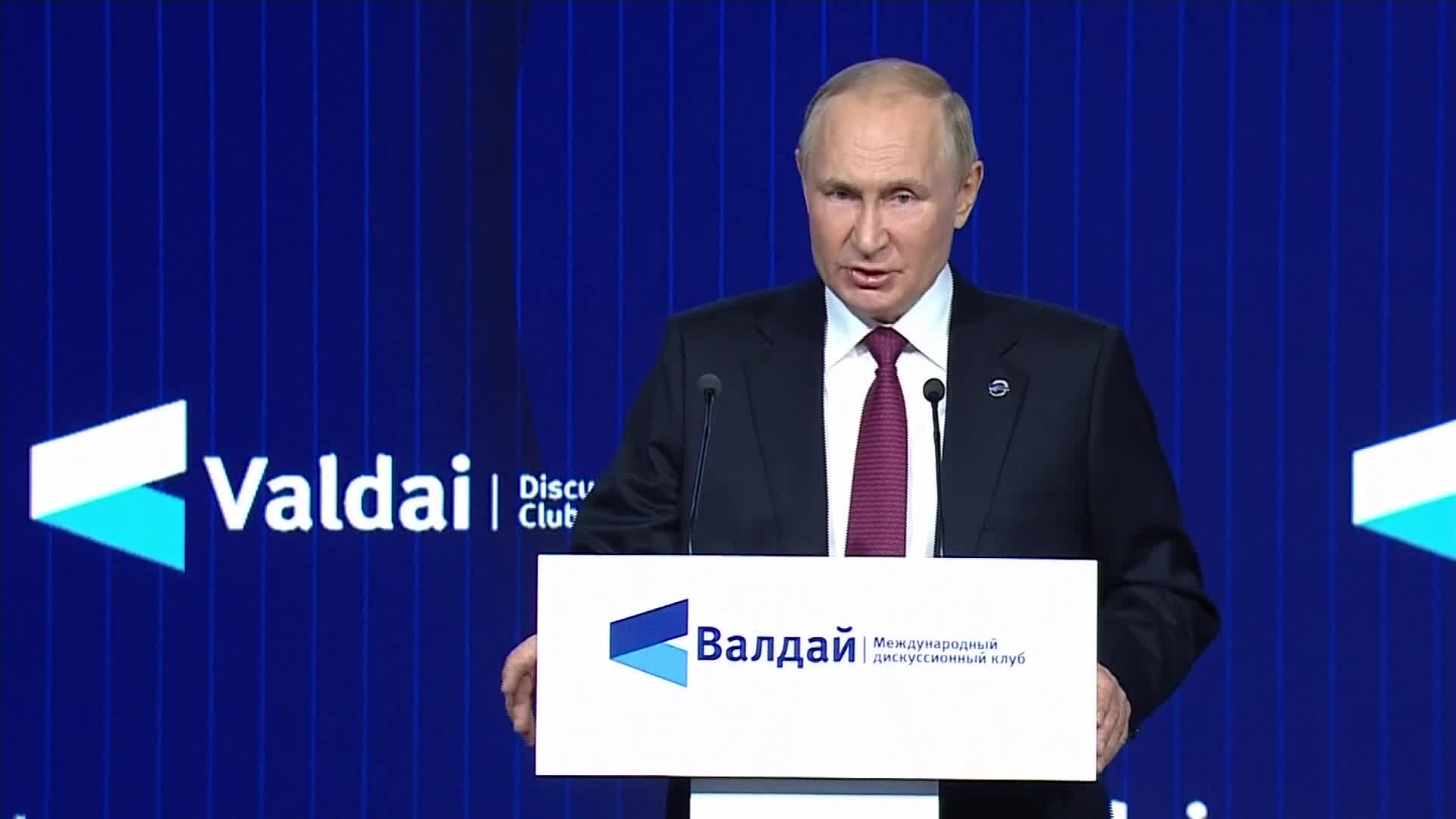
(Bloomberg) -- Russian President Vladimir Putin may announce he's running for reelection as soon as November, launching his widely expected bid for a fifth term as president.
The informal kick-off for his campaign could come at an international exhibition in Moscow where each of Russia's regions will be represented, Kommersant newspaper reported, citing unidentified people close to the Kremlin. There are other options for the announcement under consideration, and Putin alone will make the final decision on how it will come, the report said.
The event, called Russia Expo, starts on Nov. 4 at a venue that was first opened in 1935 by the Soviet state. It will aim to showcase Russia, its regions and various economic achievements.
Putin's campaign will seek to portray Russia as a separate civilization with traditional values at its center, but under attack by enemies, Kommersant said.
Read more: Putin Turns to Ruble and Ballot to Shore Up Shaken Authority
The Kremlin has been preparing for the presidential elections that are scheduled for March as it seeks to deliver Putin a decisive victory to demonstrate he retains the full support of Russians amid the ongoing war in Ukraine.
Putin has been president, with only one interruption when he served as prime minister for a term, since December 1999, when the country's first post-Soviet president, Boris Yeltsin, stepped down. Already the longest-serving Kremlin ruler since Soviet leader Josef Stalin, he could remain as president until 2036 after revising the constitution to allow himself two more terms.
Read more: Russia's Ruling Party Sweeps Local Votes Seen as Putin's Dry Run
Putin gained a record 77% support to win a fourth six-year term in 2018 even as he barely campaigned before the election in which he faced no real challenger. The Kremlin has waged a relentless crackdown on opposition activists, particularly since beginning the invasion of Ukraine, to crush any prospect of protests against his rule.
His approval rating in September stood at 80%, according to the Moscow-based Levada center.
More stories like this are available on bloomberg.com
©2023 Bloomberg L.P.

-
Ten Things I Learnt This Samvat

Patience can be a trap. Cheap stocks can stay cheap. Leverage can wipe you out. What did Samvat 2082 teach us? Niraj Shah writes on 10 lessons from the year gone by.
-
Talking Points This Week: Tech Nerves, FII Buying, And A Faraway Banking Shock
The global markets are not shining this Diwali. The exception in the large markets is, India.
-
Midterm Rally Lasted A Day. The Hard Reality Of A Divided US May Last Two Years | Opinion
Between a contested AI boom, a debt ceiling that arrives in 2027 and a president with every incentive to act alone, the next two years may prove more volatile than the first day's rally suggests.
-
Blue Wave Will Derail the AI Trade but Won't Dismantle the AI Era | Unhedged Position
The Democrats' sweep of the US Congress will see politics collide with economic forces both over the long and short term.
-
It's Time To Take The GST Council's Bet On Trust Global
Payment records can prove India's services exports, and clear, proportionate rules can bring foreign digital sellers into the tax net.
-
Opinion | India at 38: From Innovation Overperformer to Innovation Powerhouse
India now has 453 VC-backed deep science startups, 18 of them late-stage, after 117 percent growth since 2020. Laurus Labs, at USD 9.3 billion, is the most valuable deep science company in any middle-income economy outside China.
-
Navigating Energy Crossroads: S Jaishankar's Call For Diversified Supply Chains At G20 Ministerial Meeting
As geopolitical fault lines continue to test maritime trade routes and commodity flows, Jaishankar's message remains pertinent: true economic resilience requires open markets, protected transit lines, and a genuine commitment to multilateral cooperation rather than coercion.
-
Indians Are Travelling, But Not Every Journey Is A Holiday | The Week In Whys
Pilgrims, patients and working women are the real travellers, and the system hasn't quite caught up with them.
-
Getting To Work Costs Women More | The Reason Why
It is not just about women paying more than men. It is about women paying much more in cities than in villages.









