‘Payment Shock’ Looms For Millions With US Student-Loan Restart
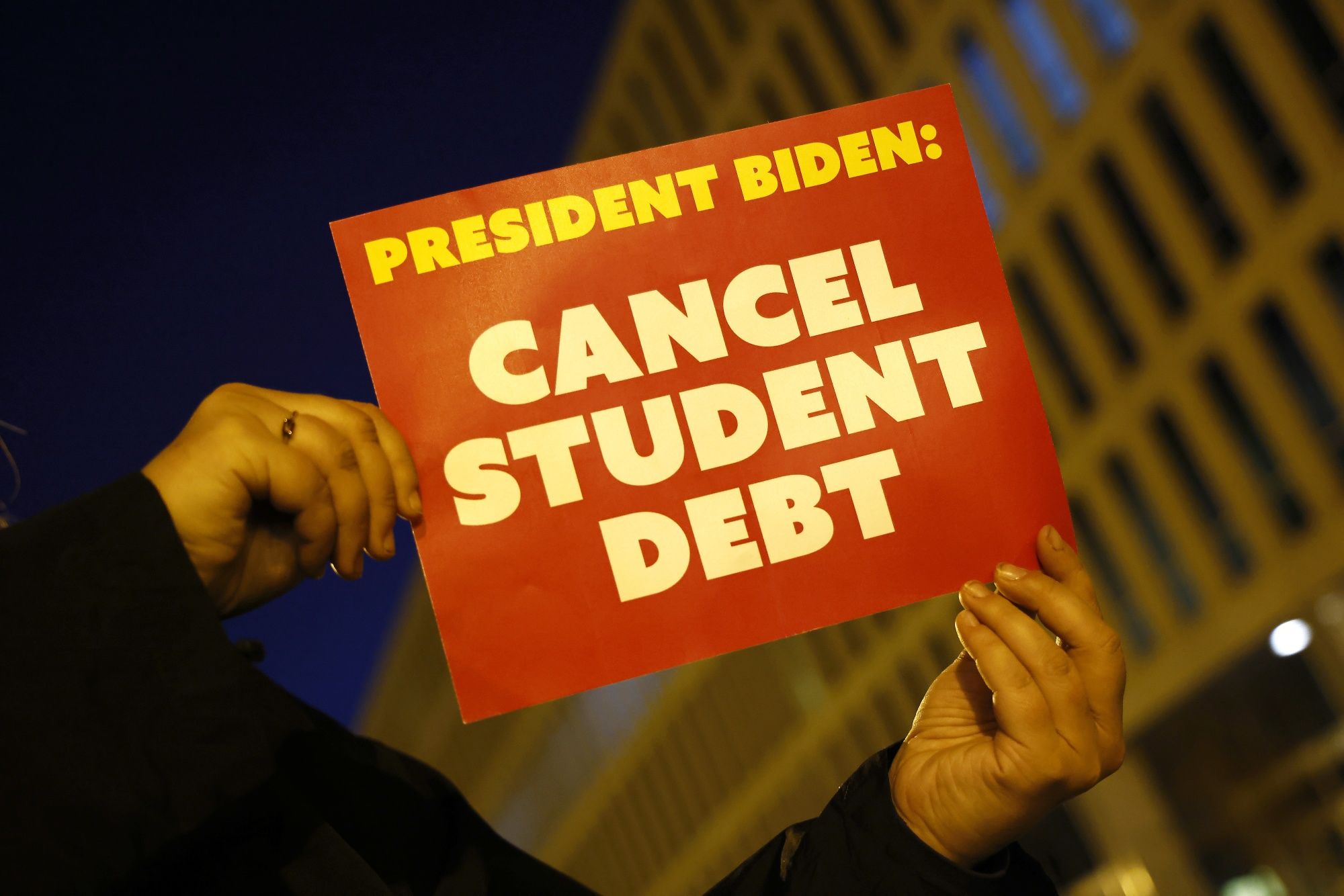
(Bloomberg) -- Millions of Americans face a hit of at least $500 a month to their household budgets from the restart of federal student loan payments in September, according to a new study by TransUnion.
The credit reporting agency examined the impact on some 27 million student-debt holders who are due to start paying again in September, after a pandemic freeze that lasted more than three years. For many who graduated since 2020, it'll be the first time they've ever had to make the payments.
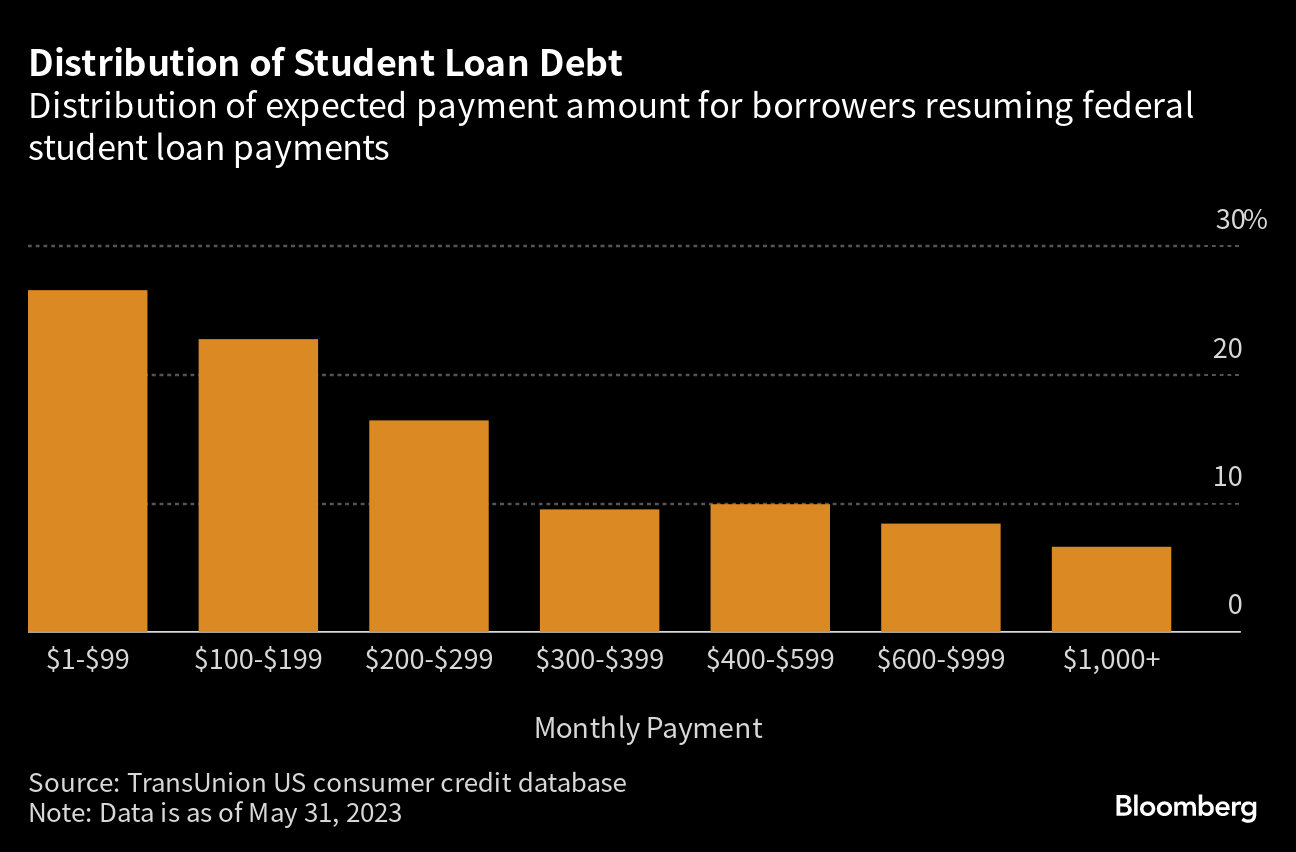
For about half of the affected student-debt holders, the monthly payment will be above $200 a month, while for about one in five it will be more than $500, the report found. “Borrowers will experience a payment shock as they attempt to recalibrate their monthly budgets to accommodate this new payment,” TransUnion said.
Read More: Americans Face Tighter Budgets as Student Loan Payments Resume
The student-debt restart is another headwind for US consumers, whose resilient spending has helped keep the economy expanding even after more than a year of interest-rate increases by the Federal Reserve.
Compounding the strain, many of the student-loan borrowers have taken on other kinds of debt during the pandemic, likely at a higher cost as rates went up, the TransUnion study found.
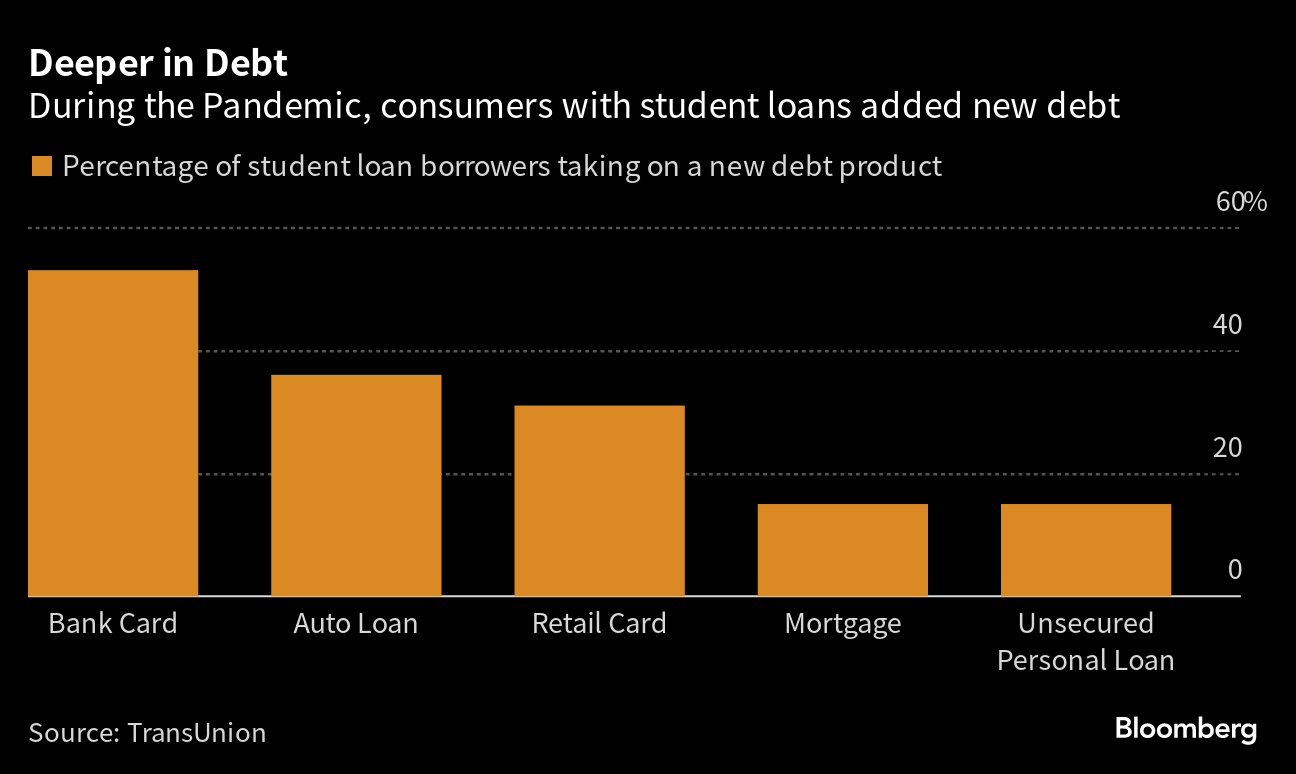
Those additional debts “may pose added challenges for households attempting to reintegrate student loan payments into their monthly budget,” said Liz Pagel, head of TransUnion's consumer lending business. “It's important for both lenders and consumers to be prepared for this new payment shock.”
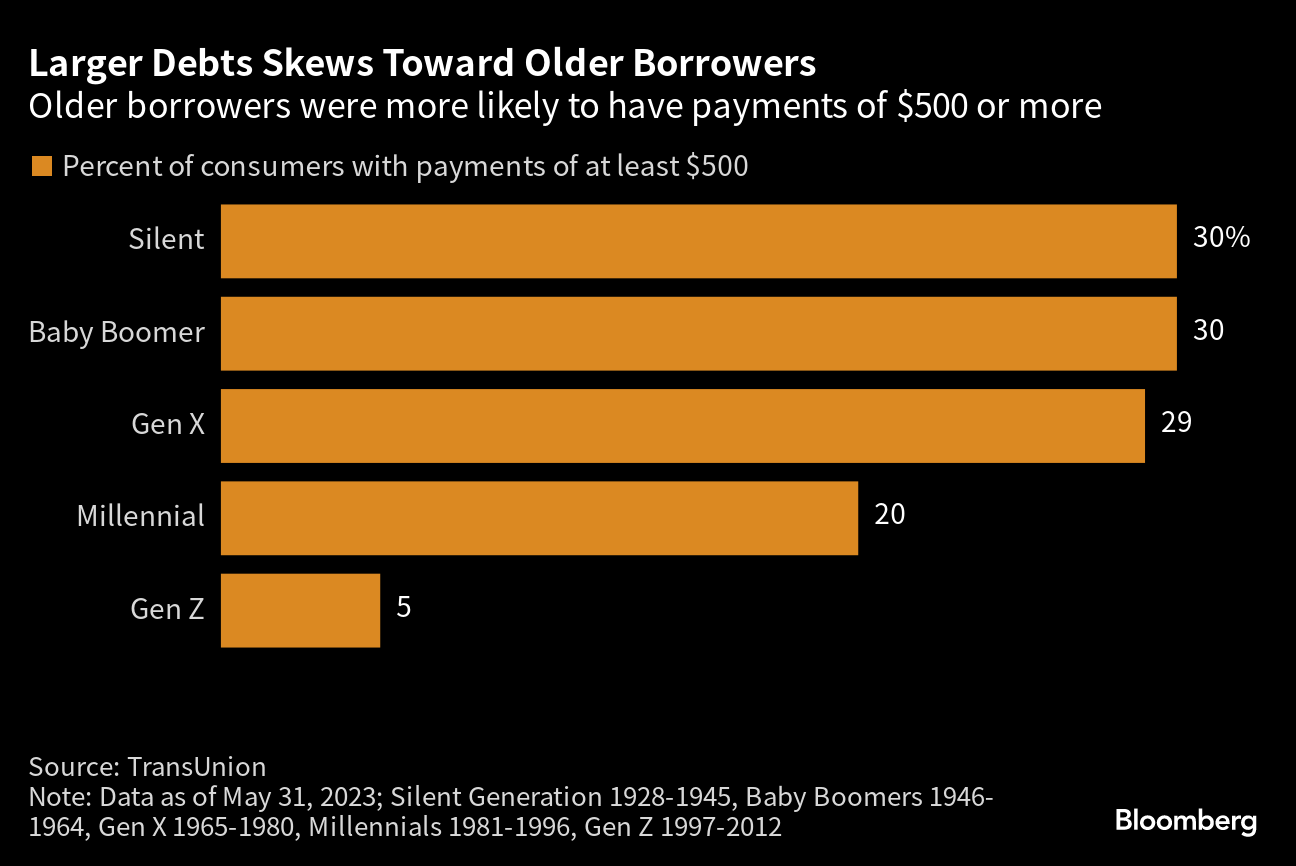
Older borrowers, many who have taken on debt to pay for the education of their children, tend to have larger student loan debts and bigger monthly payments.
The Biden administration's effort to ease the debt burden for some borrowers with loan forgiveness was blocked by the Supreme Court last month. After that ruling, the White House announced a 12-month program to cushion the blow of payment resumption.
Through the end of September 2024, borrowers who fail to make monthly payments will not be considered delinquent, and the missed instalment will not be reported to credit bureaus, placed in default or referred to debt collection agencies, although interest will continue to accrue.
More stories like this are available on bloomberg.com
©2023 Bloomberg L.P.

-
Talking Points This Week: Tech Nerves, FII Buying, And A Faraway Banking Shock

The global markets are not shining this Diwali. The exception in the large markets is, India.
-
Midterm Rally Lasted A Day. The Hard Reality Of A Divided US May Last Two Years | Opinion
Between a contested AI boom, a debt ceiling that arrives in 2027 and a president with every incentive to act alone, the next two years may prove more volatile than the first day's rally suggests.
-
Blue Wave Will Derail the AI Trade but Won't Dismantle the AI Era | Unhedged Position
The Democrats' sweep of the US Congress will see politics collide with economic forces both over the long and short term.
-
It's Time To Take The GST Council's Bet On Trust Global
Payment records can prove India's services exports, and clear, proportionate rules can bring foreign digital sellers into the tax net.
-
Opinion | India at 38: From Innovation Overperformer to Innovation Powerhouse
India now has 453 VC-backed deep science startups, 18 of them late-stage, after 117 percent growth since 2020. Laurus Labs, at USD 9.3 billion, is the most valuable deep science company in any middle-income economy outside China.
-
Navigating Energy Crossroads: S Jaishankar's Call For Diversified Supply Chains At G20 Ministerial Meeting
As geopolitical fault lines continue to test maritime trade routes and commodity flows, Jaishankar's message remains pertinent: true economic resilience requires open markets, protected transit lines, and a genuine commitment to multilateral cooperation rather than coercion.
-
Indians Are Travelling, But Not Every Journey Is A Holiday | The Week In Whys
Pilgrims, patients and working women are the real travellers, and the system hasn't quite caught up with them.
-
Getting To Work Costs Women More | The Reason Why
It is not just about women paying more than men. It is about women paying much more in cities than in villages.
-
AI Bias In Investing Cannot Be Eliminated, But It Can Be Governed
Framing is a particularly important example as identical financial information presented in terms of gains rather than losses can lead an LLM to reach a different assessment.









