Pakistan To Boost US Imports And Investments, Says Finance Minister
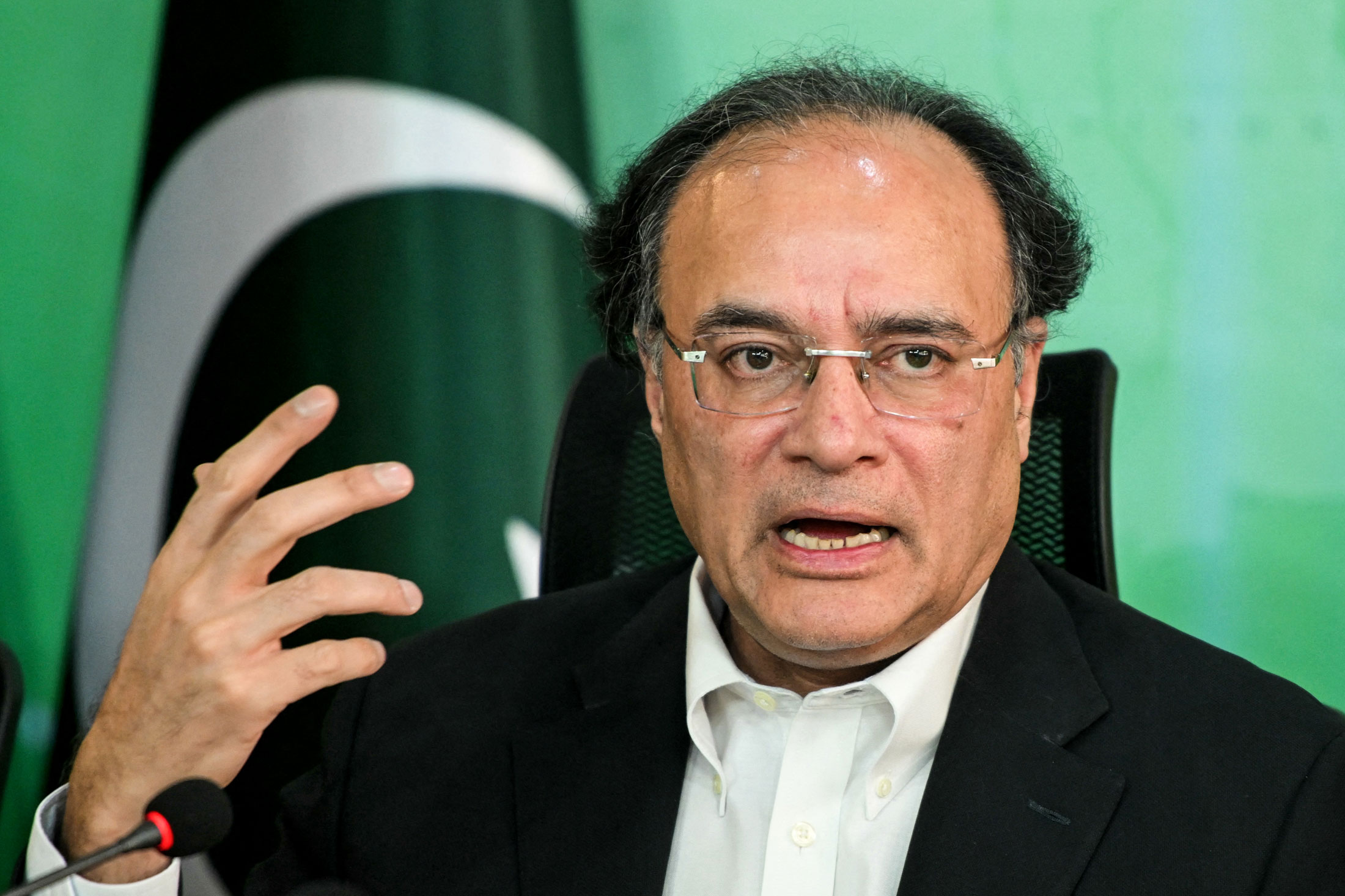
Pakistan Finance Minister Muhammad Aurangzeb said the South Asian nation is looking to buy more goods from the US and remove non-tariffs barriers to escape President Donald Trump's high tariffs.
“It's a bigger canvas that we are looking at in terms of engaging the US,” Aurangzeb said in an interview with Bloomberg News on Monday. “We will constructively engage, and we will have a formal delegation coming in,” he said.
Pakistan is looking to buy more cotton and soybean from the US, the finance chief said, adding that it is also in talks to tear down non-trade barriers to open its markets to more US products.
“We can also look at if there are any issues with respect to non-tariff discussion, whether there any onerous inspections at our end for US products, we can obviously view that,” he said.
Islamabad is trying to appease the US to seek reprieve from the 29% reciprocal tariffs imposed by President Donald Trump. While those levies are on hold until July, Pakistan has said it will send a trade delegation to Washington in the coming months to bridge the trade gap. The US is Pakistan's largest export market with over $5 billion in annual exports as of 2024, while Pakistan's imports from the US are about $2.1 billion.
The minister said the country is also open to foreign direct investments from US firms in its recently opened minerals and mining sectors.
Aurangzeb, a close aide of Prime Minister Shehbaz Sharif, is in the US for a nearly week-long trip to participate in the Spring Meetings of the International Monetary Fund and the World Bank. The former JPMorgan Chase & Co. banker said that the crisis-ridden nation will tap the international capital markets to secure more funds for a sustainable growth.
“What we are looking for is how we get away from a boom and bust cycle which Pakistan has gone through and get on to a sustainable growth path,” he said.
Pakistan is preparing to debut its first-ever Panda bond in the range of $200 million to $250 million that will likely take place in the fourth quarter of this year, the minister added.
Authorities are trying the rebuild the Pakistan's tattered economy after it came close to a default in 2023. Last month, the South Asian nation won an initial nod for a $2.3 billion IMF loan that will give it funding visibility until 2027. Last week, Fitch upgraded Pakistan's credit rating, citing confidence that the South Asian country will be able to sustain reforms under the IMF loan program.

-
High US Salaries, No Green Card Certainty: The Financial Calculation Facing Indian H-1B Families

The suspension of PERM processing at eight technology employers does not cancel existing H-1B visas. What it does is force a question many Indian families have been avoiding: is the US salary worth tying your career and family plans to one employer?
-
Unhedged Position: Can India See An Indonesia-Style Time Correction?
The Nifty is trading below levels it first clocked in 2024. Is there, then, as I have suggested in the headline, potential that the current time correction drags on painfully for the next three-five, even ten years?
-
Navigating Friction And Energy Realities: An Analysis Of Marco Rubio's October Visit To India
Occurring at a critical juncture marked by stalled trade negotiations and escalating geopolitical pressures over global energy supplies, the visit offers a profound window into modern US-India relations.
-
India Exports Capital. Why Not Export Trusteeship?
The big question, then, is whether India can build an institution that global borrowers, investors, banks, and lawyers can trust, even without an Indian connection.
-
France's Economy & Politics Are In Crisis | The Reason Why
Let's look at how the French economy and politics evolved under Nicolas Sarkozy, Franois Hollande and Emmanuel Macron.
-
You May Inherit The Business. You Must Earn Its Credibility.
Succession tests the founder's ability to share authority as much as it tests the next generation's readiness to assume it.
-
Signing Deals Is One Thing; Making Them Work Is Another | The Week In Whys
Sometimes, things don't turn out as planned. Indian companies have lost some bids to rivals, some projects won't produce until 2030.
-
FOMC Wall, PERM Suspension, Hospital Stocks | Talking Points This Week
A PERM suspension would directly affect green-card sponsorship rather than H-1B visas, so the near-term earnings impact could remain relatively limited. The key question is whether this marks a new phase in US scrutiny of Indian IT.
-
Everything, Everywhere, All At Once: Dalal Street's Week To Forget | Joining The Dots
Visa curbs, a Starlink spat and cancer drug caps: what connects this week's shocks for Indian markets
-
India Is Going Abroad For Critical Minerals. But It May Take Years To Pay Off | The Reason Why
Although India's steps are in the right direction, they remain modest compared with India's growing dependence.









