Oil Tankers U-Turn and Buyers Go Elsewhere as Russia Sanctions Bite
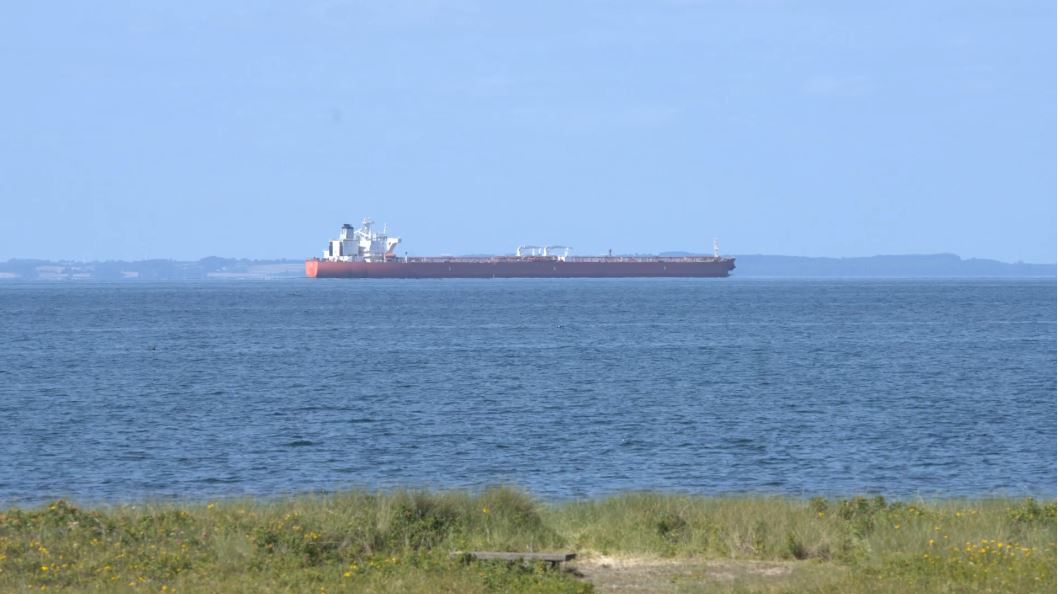
The most aggressive Western sanctions imposed on Russia's oil sector since Moscow's 2022 invasion of Ukraine threaten to disrupt global supply as buyers — led by China and India — scour the Middle East for alternative suppliers. Some estimates suggest the measures could halve Russian oil exports and their introduction has driven up Brent futures by as much as $5 a barrel in recent days.
On Jan. 10 the US Treasury's Office of Foreign Assets Control sanctioned 161 tankers and traders involved in about 2,000 shipments since the invasion began. It also acted against Moscow-based ship insurers and two companies — Surgutneftgas and Gazpromneft — which in the first 10 months of last year accounted for almost 30% of Russia's oil exports.
Some vessels have already come to a standstill while others are turning away from the Russian ports they were supposed to collect cargoes from, according to vessel tracking data from Bloomberg News. These erratic movements over the past week are an indication of the impact of the latest round of sanctions, said Edward Fishman, senior research scholar at Columbia University and author of an upcoming book on the use of sanctions as a form of economic warfare.

“It's even likelier that there will be a sustained market disruption,” Fishman added. “We could see a meaningful drop in Russian exports.”
Oil traders are now asking how meaningful the fall might be?
The 161 tankers affected by the Jan. 10 measures could transport about 1.4 million barrels a day of oil according to an estimate from the London-based EA Gibson Shipbrokers Ltd. That equates to almost half of Russia's seaborne crude exports, vessel tracking by Bloomberg shows. Macquarie Group estimates the impact could be even greater with as many as 2.15 million barrels a day of oil exports potentially lost, driving up prices. The Macquarie figure's almost three times bigger than the global supply surplus predicted by the International Energy Agency for this year.
Additionally, oil grades that require specialist vessels are at risk of a near shutdown if Moscow can't find workarounds, Bloomberg tracking of the sanctioned ships' prior movements shows.
Russia has previously confounded expectations of disruption to its supply. There were widespread predictions that its flows would plunge shortly after the invasion of Ukraine as traditional buyers stepped back. Instead, flows largely held up and despite some fluctuations have done so ever since, partly due to the limited nature of the earlier rounds of sanctions which have been criticized by some.

To carry on trading Moscow has employed a collection of so-called shadow-fleet tankers: aging vessels that often operate without known owners and insurers, flying the flags of countries deemed less-safe by the shipping industry. But the Jan. 10 measures almost doubled the number of vessels sanctioned by either the US, European Union or UK increasing it from 143 to 265.
China and India — which have bought 81% of Russia's seaborne crude exports since the invasion of Ukraine — have always been careful to avoid breaching US sanctions up to now.
Lars Barstad, the chief executive officer of Frontline Management AS, operator of one of the world's largest supertanker fleets, said Russia will be confronted with a months-long logistical challenge.
“This is a major disruption,” he said. “Temporarily, they will have a logistical issue, especially as China and India appear to be adhering to US OFAC listings.”
China and India go Shopping for Oil
Buyers in both Asian nations have been asking producers in the Middle East including Saudi Arabia, Iraq, the United Arab Emirates and Kuwait to provide more oil, according to officials in those countries. But finding additional barrels would be difficult given that these countries have made commitments to OPEC+ — in which Moscow is a leading force — to keep supply restrained.
In a sign of a more-urgent need for barrels, China's state owned refiners and larger independents have been frantically seeking out crude and selected so-called prompt barrels for more-immediate loading, according to traders. It's been a similar picture for India's state-owned plants, a critical source of buying of seaborne Russian cargoes, they said.
Sanctioned tankers were still delivering to ports in both China and India this week but New Delhi has warned that any designated vessels will only be allowed to deliver cargoes if they were loaded before Jan. 10 and discharged no later than March 12. After that, the ships will be off limits.
Some vessels heading to collect fresh loads are starting to abandon their voyages. At least five of the 77 ocean-going crude carriers — excluding the shuttle tankers tied to specific projects — sanctioned by OFAC have abandoned the journeys they were on at the time. The Atlas, Heng Tai and Venture were all heading to the Baltic when they made U-turns off the western coast of Europe and headed toward the Mediterranean.
In the Pacific, the Himalayan and the Salty Wolf both stopped journeys to the Russian port of Kozmino on Jan. 12. The Himalayan moved to waters off China's Shandong province where it anchored. The Salty Wolf was last seen on Wednesday heading toward Singapore.
The measures have also made tankers not targeted by OFAC wary: two unsanctioned vessels heading toward the Arctic port of Murmansk — where both storage ships and all the shuttle tankers that fill them have been designated — turned round close to the Norwegian city of Tromso shortly after the measures were announced. They are now heading for the Baltic.
The Trump Effect
Amid speculation that the incoming Trump administration could dilute the Russian measures, Scott Bessent, the nominee for Treasury secretary, said Jan. 16 that he supported dialing up the sanctions on the Russian oil industry to help bring an end to the Ukraine conflict.
“I will be a 100% on-board for taking sanctions up,” especially on Russian oil majors, he said at a senate hearing. “I believe that the sanctions were not fulsome enough.”
What will matter for oil supply is implementation and enforcement. If the measures force Russia to sell its oil at deep discounts, then the incentive to work around the sanctions will increase.
Adi Imsirovic, a veteran oil trader who has been critical of the effectiveness of Western sanctions on Russia, said the Jan. 10 measures showed that the outgoing administration had finally taken action to hurt the Kremlin.
“Biden allowed the Russians to work around the problem for two years,” said Imsirovic, who is now the director of Surrey Clean Energy. The impact of these “sanctions will depend on implementation, but they can be fairly effective.”

-
Opinion | India at 38: From Innovation Overperformer to Innovation Powerhouse

India now has 453 VC-backed deep science startups, 18 of them late-stage, after 117 percent growth since 2020. Laurus Labs, at USD 9.3 billion, is the most valuable deep science company in any middle-income economy outside China.
-
Navigating Energy Crossroads: S Jaishankar's Call For Diversified Supply Chains At G20 Ministerial Meeting
As geopolitical fault lines continue to test maritime trade routes and commodity flows, Jaishankar's message remains pertinent: true economic resilience requires open markets, protected transit lines, and a genuine commitment to multilateral cooperation rather than coercion.
-
Indians Are Travelling, But Not Every Journey Is A Holiday | The Week In Whys
Pilgrims, patients and working women are the real travellers, and the system hasn't quite caught up with them.
-
Getting To Work Costs Women More | The Reason Why
It is not just about women paying more than men. It is about women paying much more in cities than in villages.
-
AI Bias In Investing Cannot Be Eliminated, But It Can Be Governed
Framing is a particularly important example as identical financial information presented in terms of gains rather than losses can lead an LLM to reach a different assessment.
-
Joining The Dots | Dark Skies, Steady Diya: Why Hope Holds This Diwali
With war, a weak rupee and foreign outflows weighing on sentiment, policymakers at the NDTV World Summit and market veterans at NDTV Profit Ignite: Diwali Edition offered the same advice: stay invested and filter out the noise.
-
The Curious Case of Equitas Small Finance Bank And A CEO Who Quit For Stock
PN Vasudevan believes persistent investor concerns over a perceived conflict of interest had become a governance overhang on Equitas Small Finance Bank's stock, even as the lender improved profitability and asset quality.
-
Talking Points This Week: AI Cash Burn, A Tiger Comeback And An India That Still Finds Its Own Path
India is not immune to higher oil or tighter global liquidity, yet its earnings base is broader, its domestic policy levers are still available.
-
Foreign Investors Own Half Of HDFC Bank and ICICI Bank. An LTCG Cut Could Matter Most Here
Foreign portfolio investors have US$115 billion parked in HDFC Bank, ICICI Bank. If the government cuts long-term capital gains tax, Jefferies says returning foreign money could land here first.










