Oil Crash Sends Speculators Fleeing at Fastest Pace in Six Weeks
(Bloomberg) -- Speculators are once again fleeing the oil market, setting the stage for more extreme price swings.
Money managers dumped their net-bullish oil holdings by 19%, the biggest drop in six weeks. The positions are now at the lowest seasonal level in more than a decade.
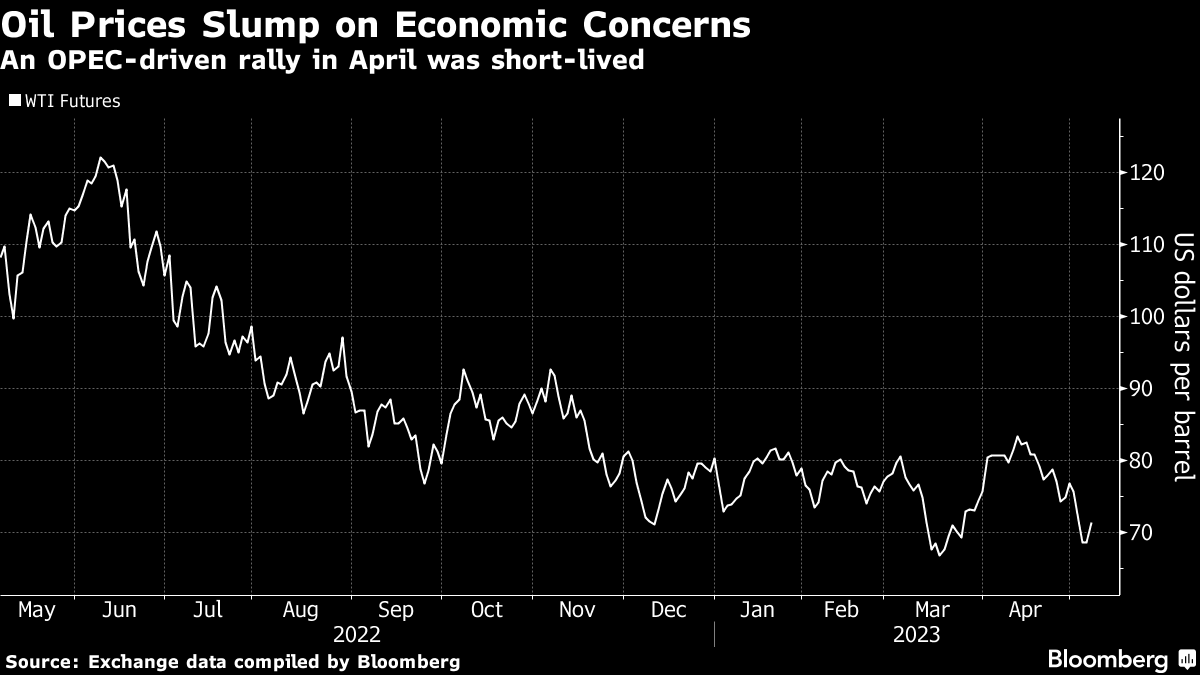
The exodus comes amid another crash for oil, driven by concerns over the economy. West Texas Intermediate futures have tumbled for three straight weeks, even briefly plunging to the lowest level since late 2021.
With investors rushing for the exit, it's drying up liquidity and leaving the markets largely in the hands of algorithm or momentum-based traders — a scenario that often creates even more volatility, said Michael Tran, managing director at RBC Capital Markets LLC.
“In short, the oil market needs more players on the field,” he said.
Money managers' WTI net-long position, or the difference between bearish and bullish bets, dropped to 157,047 contracts in the week ended May 2, according to data released Friday by the U.S. Commodity Futures Trading Commission. The speculators' share of open interest, a measure of market participation, is near the lowest level in three years.
Without speculators, prices can become disconnected from supply and demand drivers. That can create pain for hedgers, merchants and producers who can't walk away from the market even when its moving counter to what physical fundamentals dictate. Implied volatility already recently climbed to the highest in more than a month.
This kind of exodus has driven extreme price swings in the past.
Last year, a combination of higher collateral requirements and rising interest rates dented demand from speculators who sometimes use oil as a hedge against inflation. The sapping liquidity caused increasingly erratic intraday price moves. By the end of the year, more than $120 billion poured out of global commodity markets.
Part of the reason oil speculators are staying on the sidelines is that they have been repeatedly burned. For example in early April, they were holding a very large short position, or bets on falling prices. But Saudi Arabia and allies, known as OPEC+, announced surprise production cuts that sent prices surging, leaving many investors wrong-footed. Instead of buying back into the market with long holdings or new short bets, the money managers have decided to instead stay on the sidelines.
WTI settled on Friday at $71.34 a barrel. Earlier in the week, the price touched $63.64, the lowest since 2021.
For bulls to return, it will likely take both signs of a meaningful slowdown in Russian output along with a sustained recovery in Chinese demand.
Ultimately, when the oil market struggles, it can also pull other commodities lower as traders get margin calls across the sector, said Carley Garner, a Commodity Broker and Strategist at DeCarley Trading.
“We're not there yet, but if oil drops below $63, it will cascade in other markets — even stocks,” she said. “Oil lures speculators when prices move higher. They need to see a more rational market.”
--With assistance from Natalia Kniazhevich and Gerson Freitas Jr..
More stories like this are available on bloomberg.com
©2023 Bloomberg L.P.

-
Ten Things I Learnt This Samvat

Patience can be a trap. Cheap stocks can stay cheap. Leverage can wipe you out. What did Samvat 2082 teach us? Niraj Shah writes on 10 lessons from the year gone by.
-
Talking Points This Week: Tech Nerves, FII Buying, And A Faraway Banking Shock
The global markets are not shining this Diwali. The exception in the large markets is, India.
-
Midterm Rally Lasted A Day. The Hard Reality Of A Divided US May Last Two Years | Opinion
Between a contested AI boom, a debt ceiling that arrives in 2027 and a president with every incentive to act alone, the next two years may prove more volatile than the first day's rally suggests.
-
Blue Wave Will Derail the AI Trade but Won't Dismantle the AI Era | Unhedged Position
The Democrats' sweep of the US Congress will see politics collide with economic forces both over the long and short term.
-
It's Time To Take The GST Council's Bet On Trust Global
Payment records can prove India's services exports, and clear, proportionate rules can bring foreign digital sellers into the tax net.
-
Opinion | India at 38: From Innovation Overperformer to Innovation Powerhouse
India now has 453 VC-backed deep science startups, 18 of them late-stage, after 117 percent growth since 2020. Laurus Labs, at USD 9.3 billion, is the most valuable deep science company in any middle-income economy outside China.
-
Navigating Energy Crossroads: S Jaishankar's Call For Diversified Supply Chains At G20 Ministerial Meeting
As geopolitical fault lines continue to test maritime trade routes and commodity flows, Jaishankar's message remains pertinent: true economic resilience requires open markets, protected transit lines, and a genuine commitment to multilateral cooperation rather than coercion.
-
Indians Are Travelling, But Not Every Journey Is A Holiday | The Week In Whys
Pilgrims, patients and working women are the real travellers, and the system hasn't quite caught up with them.
-
Getting To Work Costs Women More | The Reason Why
It is not just about women paying more than men. It is about women paying much more in cities than in villages.









