North Korea Fires Cruise Missiles as US-South Korea End Drills
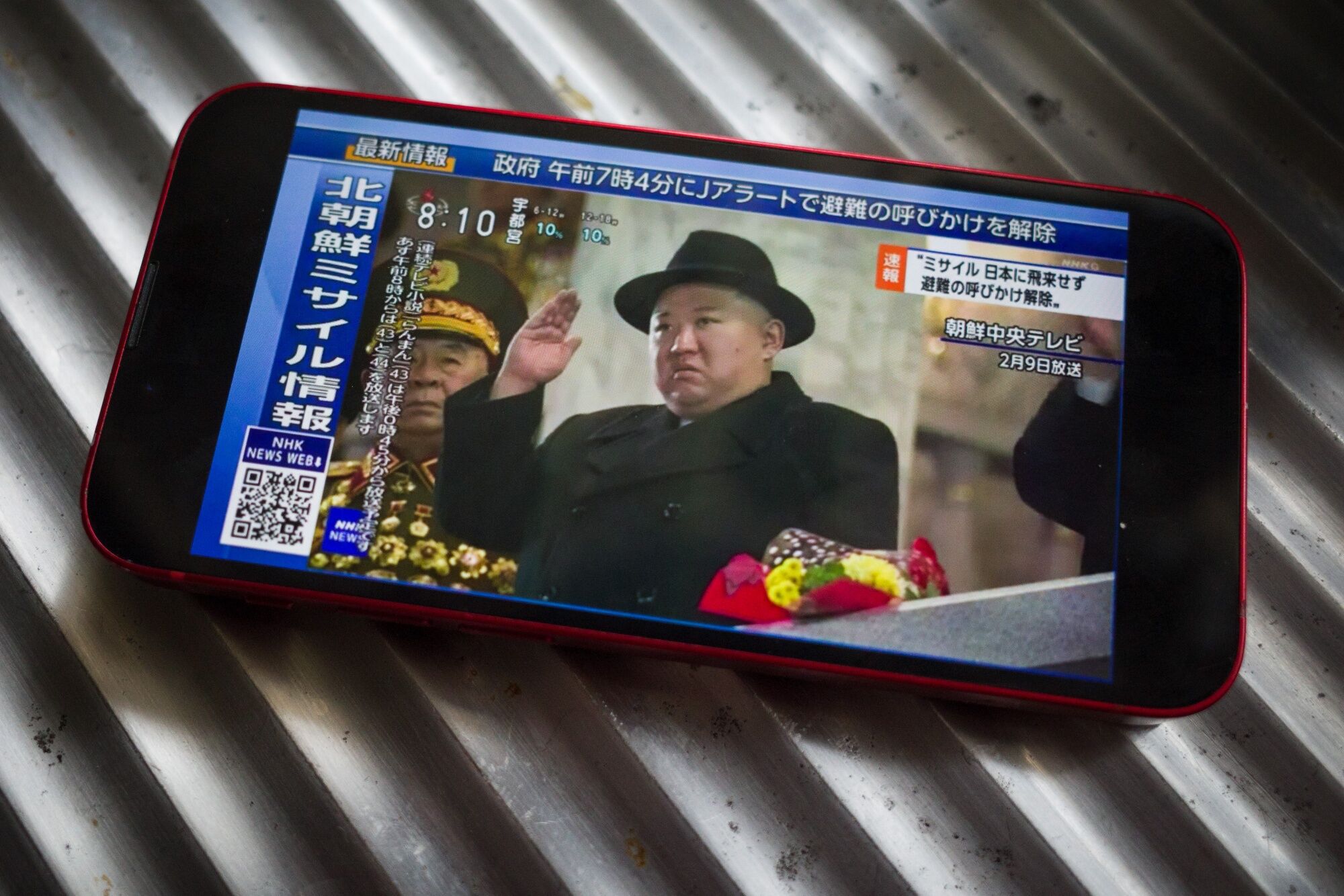
(Bloomberg) -- North Korea fired several cruise missiles Saturday into the Yellow Sea, just days after it shot off a pair of nuclear-capable ballistic missiles in a show of anger against US-South Korea joint military drills.
The missiles were fired from about 4 a.m. and the launch is being analyzed by US and South Korean intelligence agencies, South Korea's Joint Chiefs of Staff said in a statement to reporters. Pyongyang had threatened punishment for US and South Korean military drills, which ran for 11 days until the end of August.
North Korea on Aug. 30 test-fired two suspected short-range ballistic missiles for simulated nuclear strikes, saying it wouldn't bow down to threats after the US sent a B-1B strategic bomber to airspace off the peninsula for joint drills. After that missile launch, South Korea and US mobilized about 30 aircraft including F-35 stealth fighters for exercises that including air-to-ground live-fire training.
Read: North Korea Holds ‘Scorched Earth' Missile Test to Defy US
North Korea has bristled at joint military exercises for decades, calling them a prelude to an invasion and nuclear war. Although North Korea is barred by United Nations Security Council resolutions from testing ballistic missiles, it faces no such prohibitions on cruise missiles.
Ballistic missiles fly in an arched trajectory at supersonic speeds and are unpowered on descent. Cruise missiles travel at subsonic speeds and can fly at low altitudes. They are maneuverable, making them harder to detect and intercept.
Pyongyang had already fired 26 ballistic missiles and two space rockets so far this year. They included four intercontinental ballistic missiles that could hit the US mainland. Kim Jong Un's regime launched more than 70 ballistic missiles last year, a record for the state.
Kim has ignored US calls to return to long-stalled nuclear disarmament talks. But he has been busy modernizing his arsenal of missiles and conducting tests of systems to attack South Korea and Japan, which host the bulk of US military personnel in the region.

North Korea launched two short-range ballistic missiles into waters off its east coast on July 19 after the USS Kentucky stopped in Busan, in the first visit to a port in South Korea in about four decades by a submarine capable of firing nuclear ballistic missiles. Pyongyang fired two more a few days later when another nuclear-powered US sub arrived at a separate South Korean port to replenish supplies.
Those launches came after North Korea in July tested its Hwasong-18 solid-fuel ICBM. It flew longer than any of its other ICBMs and appeared designed to carry a multiple nuclear weapons payload, which increases the chances that at least one bomb could slip past interceptors and make its way to a target.
A solid-fuel missile could be deployed quickly and fired with little warning. Liquid-fuel missiles in general take more time to prepare as propellant is added to their tanks, making them vulnerable to attack before taking off.
--With assistance from Sangmi Cha.
(Updates with details on launch.)
More stories like this are available on bloomberg.com
©2023 Bloomberg L.P.

-
Navigating Energy Crossroads: S Jaishankar's Call For Diversified Supply Chains At G20 Ministerial Meeting

As geopolitical fault lines continue to test maritime trade routes and commodity flows, Jaishankar's message remains pertinent: true economic resilience requires open markets, protected transit lines, and a genuine commitment to multilateral cooperation rather than coercion.
-
Indians Are Travelling, But Not Every Journey Is A Holiday | The Week In Whys
Pilgrims, patients and working women are the real travellers, and the system hasn't quite caught up with them.
-
Getting To Work Costs Women More | The Reason Why
It is not just about women paying more than men. It is about women paying much more in cities than in villages.
-
AI Bias In Investing Cannot Be Eliminated, But It Can Be Governed
Framing is a particularly important example as identical financial information presented in terms of gains rather than losses can lead an LLM to reach a different assessment.
-
Joining The Dots | Dark Skies, Steady Diya: Why Hope Holds This Diwali
With war, a weak rupee and foreign outflows weighing on sentiment, policymakers at the NDTV World Summit and market veterans at NDTV Profit Ignite: Diwali Edition offered the same advice: stay invested and filter out the noise.
-
The Curious Case of Equitas Small Finance Bank And A CEO Who Quit For Stock
PN Vasudevan believes persistent investor concerns over a perceived conflict of interest had become a governance overhang on Equitas Small Finance Bank's stock, even as the lender improved profitability and asset quality.
-
Talking Points This Week: AI Cash Burn, A Tiger Comeback And An India That Still Finds Its Own Path
India is not immune to higher oil or tighter global liquidity, yet its earnings base is broader, its domestic policy levers are still available.
-
Foreign Investors Own Half Of HDFC Bank and ICICI Bank. An LTCG Cut Could Matter Most Here
Foreign portfolio investors have US$115 billion parked in HDFC Bank, ICICI Bank. If the government cuts long-term capital gains tax, Jefferies says returning foreign money could land here first.
-
'Never Seen This Level Of Negativity': Sandeep Tandon Says The Next Rally May Be Closer Than You Think
Veteran investor Sandeep Tandon says foreign selling is easing, large-caps are due a comeback and mid-caps are crowded, while he turns positive on gold, power and pharma this Diwali.
-
Indians Stay With Family, Not In Hotels | The Reason Why
India still lacks enough clean, reliable and affordable hotels for budget-conscious travellers.










