Mohamed Al Fayed, Tycoon Who Clashed With Royals, Dies at 94
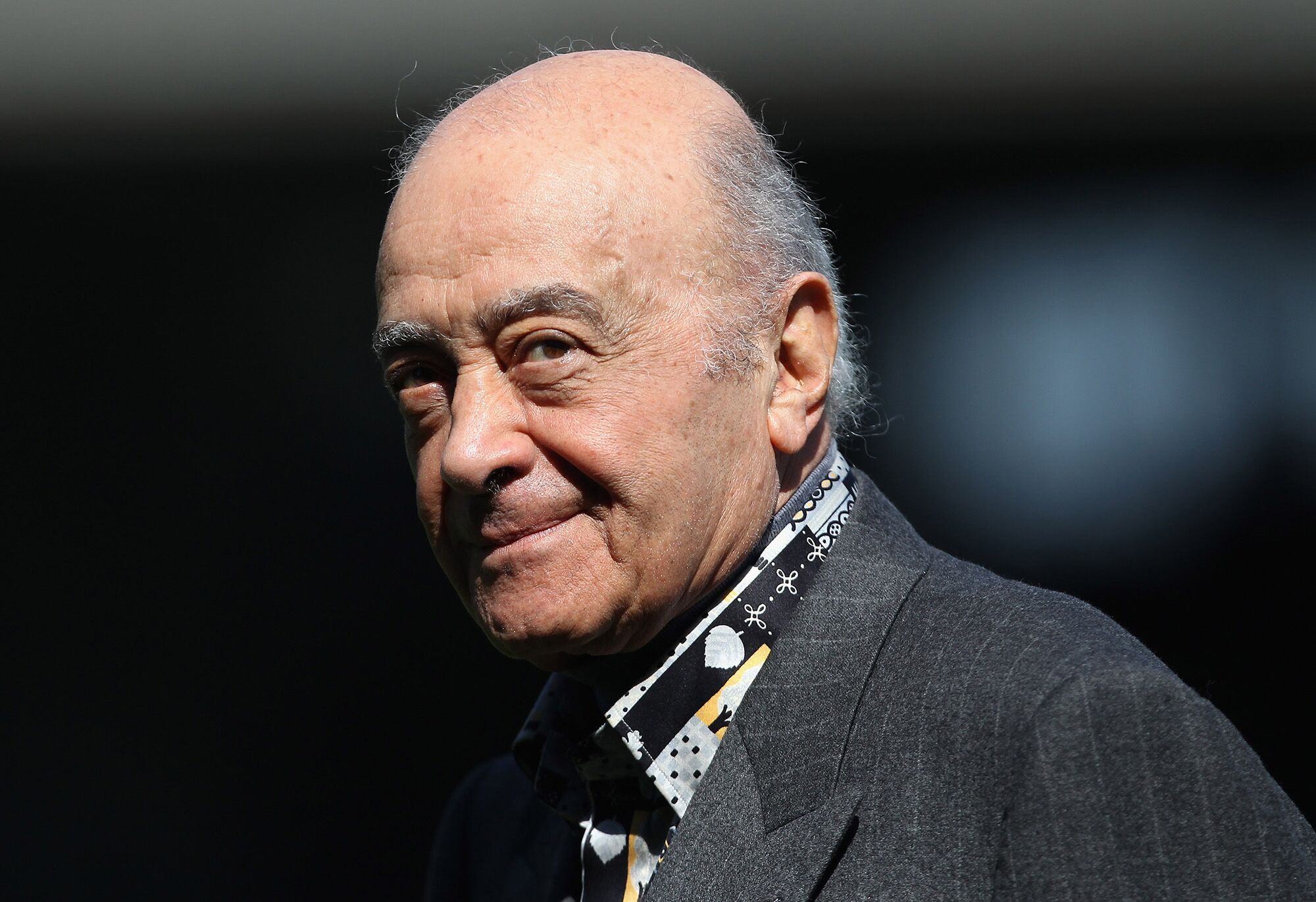
(Bloomberg) -- Mohamed Al Fayed, the Egyptian businessman who began his career selling drinks on the streets of Alexandria and amassed a fortune that included some of Britain's most storied assets, has died. He was 94.
His family said in a statement that Al Fayed died on Aug. 30 following “a long and fulfilled retirement surrounded by his loved ones.” The statement, reported by the Associated Press, was released by Fulham Football Club in London, which was once owned by Al Fayed.

Al Fayed stormed the British establishment and its institutions after arriving in the country in the 1970s with ample funds and a hunger for respectability, repeatedly overcoming questions about the source of his fortune to acquire stakes in prized assets including Harrods, Fulham Football Club and the Ritz hotel in Paris.

He became known for bitter clashes with Britain's royal family following the death of Princess Diana in a car crash in Paris in 1997. Al Fayed's beloved son, Dodi, whom Diana was dating, and the driver also perished.
It was an abrupt reversal for Al Fayed, a onetime royalist of sorts who craved the respect of the British aristocracy. He accused the royal family of wanting to “get rid” of Diana and maintained for years a conspiracy that the crash was instigated by the Duke of Edinburgh and other royals to murder her. His claims were dismissed after an 11-year inquest concluded with a 2008 jury ruling that the accident was caused by grossly negligent driving.
The tycoon's career was defined by flashy purchases and frequent spats with old-guard institutions in both London and Paris. His deal-making ruffled feathers in business circles that were long dominated by a clubby elite from an entrenched upper class. Al Fayed made no secret of his resentment over his outsider status.
“I live in a country where I feel sorry for the ordinary people,” he told CNN in a 2004 interview. “Their destiny and their human rights are kidnapped by gangsters and people who call themselves the establishment, who are still racist to the core.”
Harrods Battle
Al Fayed's dealings in the UK were characterized by mutual suspicion due in part to the hazy origins of his fortune.
He began investing in UK companies in the 1960s after relocating a shipping company he'd founded with his brother from Egypt to Europe. He served as a financial adviser to the Sultan of Brunei and once attempted to cut oil deals with Haitian dictator Jean-Claude “Papa Doc” Duvalier. He was married for a time to Samira Khashoggi, the sister of Saudi arms dealer Adnan Khashoggi, for whom he once worked negotiating contracts.
With his two brothers, Al Fayed fended off rival investor Roland Walter “Tiny” Rowland in 1985 to land the winning bid for iconic London department store Harrods for £615 million ($669 million at the time). Rowland later complained that the Al Fayeds had misrepresented their wealth and background to secure the deal, achieved through a takeover of Harrods' parent company, House of Fraser.
The accusations were later found to be true by a parliamentary inquiry that determined, among other things, that Al Fayed and his brothers had furnished fake birth certificates and lied about their family history, education and net worth to inspectors from the government's trade department who were doing reconnaissance ahead of the Harrods acquisition. By then, Al Fayed's check had long cleared and his control of Harrods was cemented. It was his most valuable asset by far, and the one that would go on to make him a billionaire.
He invested in restaurants at the luxury emporium, opened other Harrods-brand stores including at London's Heathrow airport and created an Egyptian room in which two statues of himself were displayed alongside memorials to Dodi and Diana. He also introduced a dress code, leading the store to turn shoppers away for wearing shorts, flip flops or scruffy clothing.
He sold Harrods to a Qatari sovereign wealth fund in 2010 for £1.5 billion.
As owner of Fulham FC from 1997 to 2013, he was credited with turning around the Premier League football club's fortunes. He also owned tens of thousands of acres of land in the Scottish highlands.
Global Hustle
Mohamed Fayed — he started using the “Al” prefix after his move to England — was born on Jan. 27, 1929. The parliamentary inquiry into his past concluded that Al Fayed “came from respectable but humble origins” as one of five children of a school teacher in Alexandria named Aly Aly Fayed.
Ambitious from a young age, Al Fayed frequently skipped school to do odd jobs, selling soft drinks in the streets or sewing machines door-to-door. An introduction to the arms dealer Khashoggi elevated his hustle to a global scale and instilled in him the importance of projecting an image of wealth through things like private jets and tailored suits.
Al Fayed's efforts to climb Britain's social ladder, largely through his association with the royal family, was a story line in the fifth season of the Netflix series . Actor Salim Dauportrayed Al Fayed
Owning Harrods brought Al Fayed both national celebrity and increased public scrutiny. Dozens of women who worked for him reported being sexually harassed by the billionaire and claimed they were retaliated against if they rebuffed him. Al Fayed denied the accusations, including one allegation of rape, and prosecutors never pressed charges.
Al Fayed's love-hate relationship with the establishment carried through to Parliament, where he courted a number of politicians — relationships that proved career-ending for some MPs after Al Fayed disclosed the names of those he'd paid to ask questions in the assembly on his behalf. He battled repeatedly with the tax authorities and, despite his voiced distaste for the UK government, applied twice for British citizenship. Both times he was rejected.
Al Fayed had his only child, Dodi, from his two-year marriage to Samira Khashoggi during the 1950s. He married Finnish former model Heini Wathen in 1985 and they had four children: Jasmine, Karim, Camilla and Omar.
--With assistance from Katie Linsell.
(Adds AP report that he died on Aug. 30 in second paragraph.)
More stories like this are available on bloomberg.com
©2023 Bloomberg L.P.

-
Navigating Energy Crossroads: S Jaishankar's Call For Diversified Supply Chains At G20 Ministerial Meeting

As geopolitical fault lines continue to test maritime trade routes and commodity flows, Jaishankar's message remains pertinent: true economic resilience requires open markets, protected transit lines, and a genuine commitment to multilateral cooperation rather than coercion.
-
Indians Are Travelling, But Not Every Journey Is A Holiday | The Week In Whys
Pilgrims, patients and working women are the real travellers, and the system hasn't quite caught up with them.
-
Getting To Work Costs Women More | The Reason Why
It is not just about women paying more than men. It is about women paying much more in cities than in villages.
-
AI Bias In Investing Cannot Be Eliminated, But It Can Be Governed
Framing is a particularly important example as identical financial information presented in terms of gains rather than losses can lead an LLM to reach a different assessment.
-
Joining The Dots | Dark Skies, Steady Diya: Why Hope Holds This Diwali
With war, a weak rupee and foreign outflows weighing on sentiment, policymakers at the NDTV World Summit and market veterans at NDTV Profit Ignite: Diwali Edition offered the same advice: stay invested and filter out the noise.
-
The Curious Case of Equitas Small Finance Bank And A CEO Who Quit For Stock
PN Vasudevan believes persistent investor concerns over a perceived conflict of interest had become a governance overhang on Equitas Small Finance Bank's stock, even as the lender improved profitability and asset quality.
-
Talking Points This Week: AI Cash Burn, A Tiger Comeback And An India That Still Finds Its Own Path
India is not immune to higher oil or tighter global liquidity, yet its earnings base is broader, its domestic policy levers are still available.
-
Foreign Investors Own Half Of HDFC Bank and ICICI Bank. An LTCG Cut Could Matter Most Here
Foreign portfolio investors have US$115 billion parked in HDFC Bank, ICICI Bank. If the government cuts long-term capital gains tax, Jefferies says returning foreign money could land here first.
-
'Never Seen This Level Of Negativity': Sandeep Tandon Says The Next Rally May Be Closer Than You Think
Veteran investor Sandeep Tandon says foreign selling is easing, large-caps are due a comeback and mid-caps are crowded, while he turns positive on gold, power and pharma this Diwali.
-
Indians Stay With Family, Not In Hotels | The Reason Why
India still lacks enough clean, reliable and affordable hotels for budget-conscious travellers.










