Mexico Sure It Will Strike Deal With US To Skirt Tariffs
Mexico is projecting confidence that it will fend off a new set of 30% tariffs that President Donald Trump threatened Saturday to impose next month, with talks already underway to avert the worst.
After Trump went public with his plan by posting on social media, Mexican President Claudia Sheinbaum noted in speeches near the northern border that every country has been getting a letter from Trump as he implements global protectionist policies. Her team had already begun discussions with the US on Friday and she was confident Mexico would get a deal.
“We've had some experience with these things for several months now,” Sheinbaum said at a clinic opening in Ensenada, Baja California. “And I think we're going to reach an agreement with the United States government.”
Mexico-US relations have taken a bumpy turn since June, with increasing roundups of migrants by US agents, the border shuttered to livestock due to a screwworm infestation in Mexico, US Attorney General Pam Bondi's reference to the neighboring country as an adversary, and the financial strike by the US Treasury on three Mexican financial firms accused of aiding fentanyl traffickers. Trump's letter threatened new tariffs on Mexico due to a lack of progress in challenging the country's drug cartels.
But behind the scenes, work has been advancing between the Sheinbaum and Trump administrations. Mexico is still in a favorable position relative to the rest of the world and its poised to benefit from protectionist US policies over the medium term, according to Bloomberg Economic's Felipe Hernandez.
That outlook assumes the US doesn't apply the 30% rate to goods that are compliant with the US-Mexico-Canada free trade agreement. That exception is part of the plan, but the situation remains fluid, a US official cautioned.
Continuing the exclusion for both Mexico and Canada narrows the scope of Trump's continental tariffs and would be a lifeline to sectors like the auto industry that rely heavily on the USMCA pact, which was renegotiated under Trump's first term.
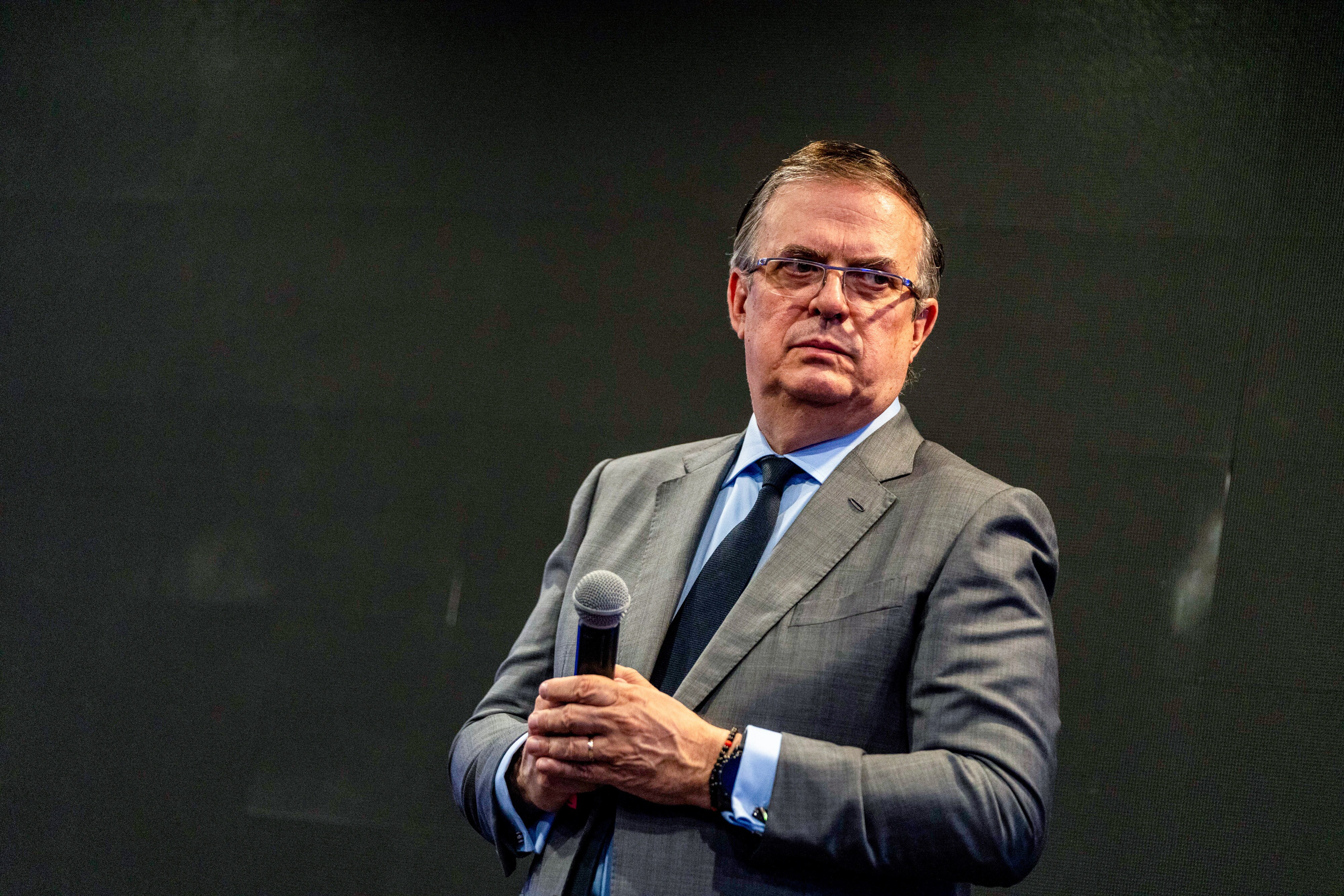
Mexico and the US established a new binational working group on Friday to address security, migration and economic issues, according to a statement posted on Saturday by Mexican Economy Minister Marcelo Ebrard on X. The first major task of the group will be to find an alternative to the tariffs and “protect jobs on both sides of the border,” the statement read.
“We told the group that this treatment is unfair and that we're not in agreement,” read the statement, jointly signed by the Economy and the Foreign Affairs ministries.
Comunicado relevante sobre aranceles de Estados Unidos : pic.twitter.com/V5HtSsNzyg
July 12, 2025The US president said the 30% tariffs are separate from sectoral ones and could be raised if Mexico retaliates.
“Mexico still has not stopped the Cartels who are trying to turn all of North America into a Narco-Trafficking Playground,” Trump wrote. “If Mexico is successful in challenging the Cartels and stopping the flow of Fentanyl, we will consider an adjustment to this letter.”
On Friday, the son of Sinaloa drug cartel kingpin Joaquin “El Chapo” Guzman Loera pleaded guilty to federal drug-trafficking charges and agreed to cooperate with US prosecutors. The US has blamed the Sinaloa Cartel for leading the fentanyl trade, importing chemicals from China to make pills in Mexico and smuggle them into the US.
Last Wednesday, US Treasury extended a deadline that will cut off three Mexican financial firms from the US financial system for potentially aiding in money laundering from the fentanyl trade. The US praised Mexico's cooperation in the move.

-
High US Salaries, No Green Card Certainty: The Financial Calculation Facing Indian H-1B Families

The suspension of PERM processing at eight technology employers does not cancel existing H-1B visas. What it does is force a question many Indian families have been avoiding: is the US salary worth tying your career and family plans to one employer?
-
Unhedged Position: Can India See An Indonesia-Style Time Correction?
The Nifty is trading below levels it first clocked in 2024. Is there, then, as I have suggested in the headline, potential that the current time correction drags on painfully for the next three-five, even ten years?
-
Navigating Friction And Energy Realities: An Analysis Of Marco Rubio's October Visit To India
Occurring at a critical juncture marked by stalled trade negotiations and escalating geopolitical pressures over global energy supplies, the visit offers a profound window into modern US-India relations.
-
India Exports Capital. Why Not Export Trusteeship?
The big question, then, is whether India can build an institution that global borrowers, investors, banks, and lawyers can trust, even without an Indian connection.
-
France's Economy & Politics Are In Crisis | The Reason Why
Let's look at how the French economy and politics evolved under Nicolas Sarkozy, Franois Hollande and Emmanuel Macron.
-
You May Inherit The Business. You Must Earn Its Credibility.
Succession tests the founder's ability to share authority as much as it tests the next generation's readiness to assume it.
-
Signing Deals Is One Thing; Making Them Work Is Another | The Week In Whys
Sometimes, things don't turn out as planned. Indian companies have lost some bids to rivals, some projects won't produce until 2030.
-
FOMC Wall, PERM Suspension, Hospital Stocks | Talking Points This Week
A PERM suspension would directly affect green-card sponsorship rather than H-1B visas, so the near-term earnings impact could remain relatively limited. The key question is whether this marks a new phase in US scrutiny of Indian IT.
-
Everything, Everywhere, All At Once: Dalal Street's Week To Forget | Joining The Dots
Visa curbs, a Starlink spat and cancer drug caps: what connects this week's shocks for Indian markets
-
India Is Going Abroad For Critical Minerals. But It May Take Years To Pay Off | The Reason Why
Although India's steps are in the right direction, they remain modest compared with India's growing dependence.









