US Lawmakers Strike Deal to Avoid Imminent Government Shutdown
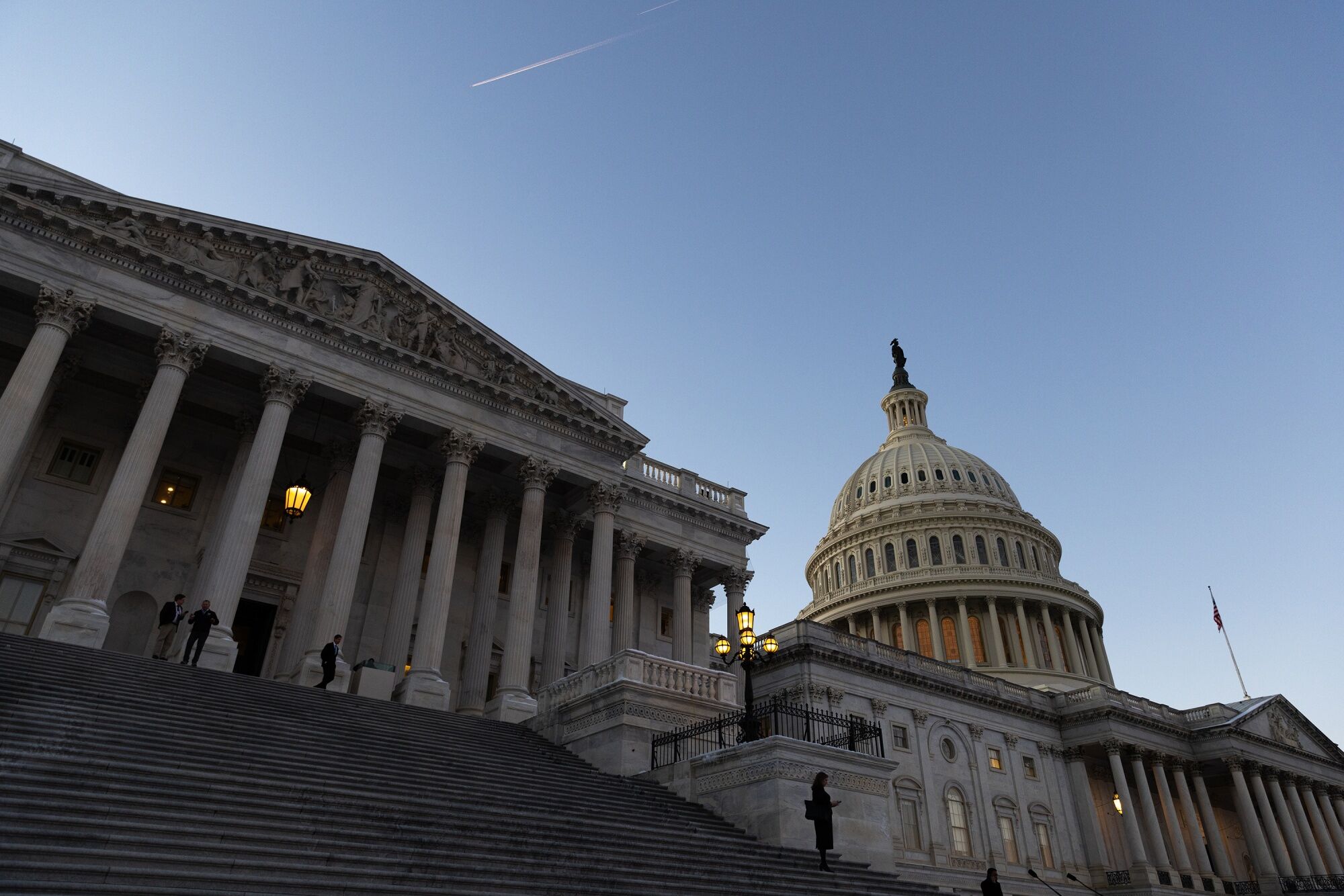
(Bloomberg) -- Congressional leaders reached a last-minute deal to avoid a disruptive US government shutdown, setting up another clash with ultra-conservatives who swiftly blasted the agreement.
The deal would provide one week of temporary funding to avert a March 2 partial shutdown and fund parts of the government through Sept. 30. The remainder of the US government, including the Defense and Homeland Security departments, would still face a potential March 23 shutdown.
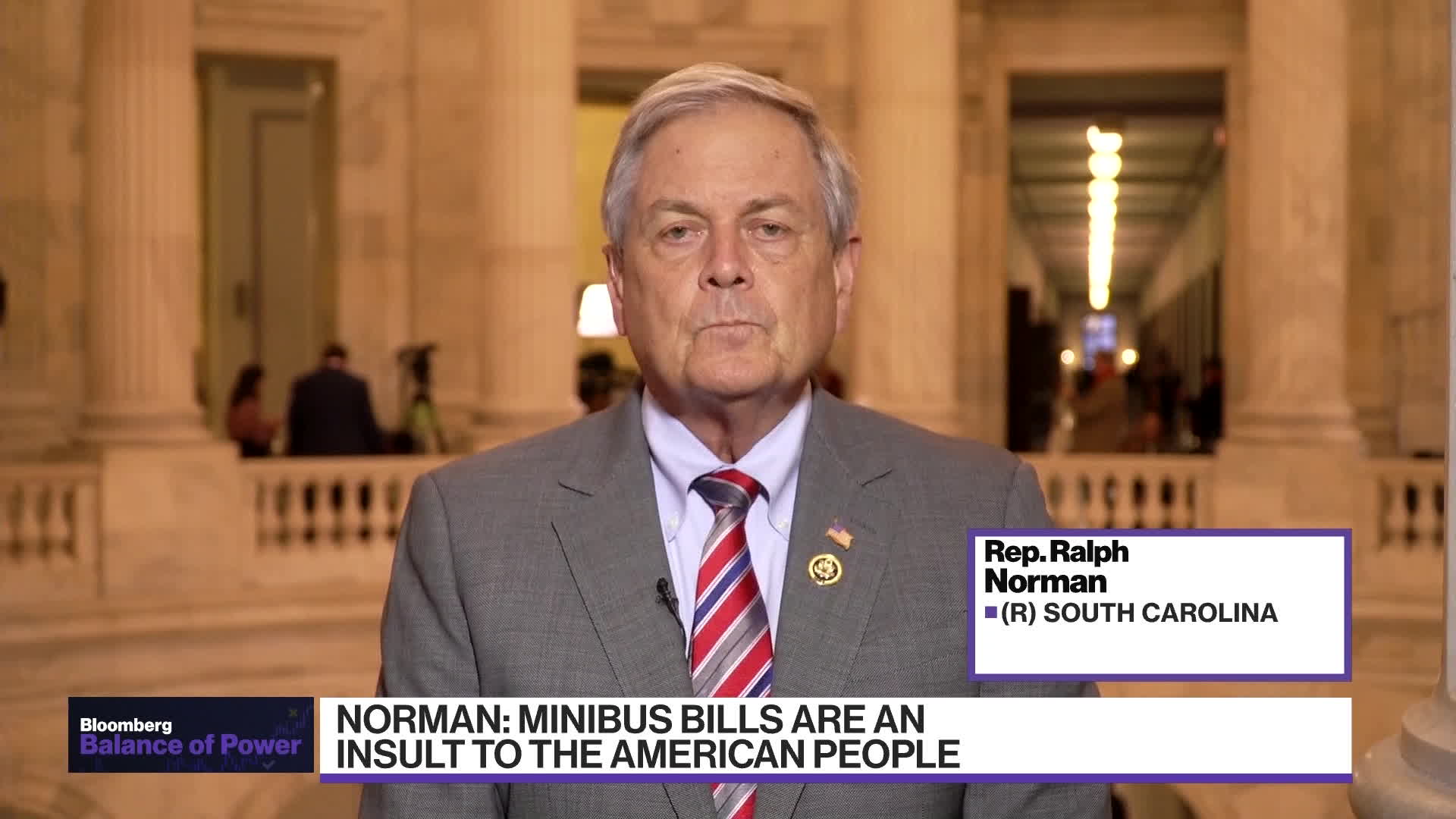
Hardline Republicans condemned the deal, with Representative Ralph Norman of South Carolina telling Bloomberg TV's “Balance of Power” that it is “an insult to the American people.” But all signs point to Speaker Mike Johnson ultimately defying his right flank and compromising to keep the government open.
The White House backed the agreement. Press Secretary Karine Jean-Pierre said it “would help prevent a needless shutdown while providing more time to work on bipartisan appropriations bills.”
Financial markets had shrugged of the risk of a shutdown, with many investors assuming Congress would once again reach a last-minute deal.
Read More: How Looming US Government Shutdowns Became Routine
House and Senate leaders said in a joint statement that Congress would vote in coming days on one week of temporary funding to avoid a Saturday shutdown of parts of the US government. The House plans to go first, with a floor vote Thursday.
It will be the fourth time since the Oct. 1 start of the federal fiscal year Congress has turned to interim spending.
That short-term funding is needed because technical work remains on the package, which has been agreed to in principle. While negotiators haven't yet agreed on spending for the remainder of the government, the temporary funding also covers those parts of government through March 22.
Johnson's office had said that, without an agreement on full-year spending bills, he was prepared to allow a shutdown.
Republican leaders are backing the deal despite a risk of backlash among conservatives who have demanded new immigration restrictions to avoid a government shutdown. GOP congressional leaders have instead chosen to hold up emergency funding for Ukraine assistance to wring concessions from President Joe Biden.
“It seems we are just doing what the Democrats want,” said Virginia Republican Bob Good, who leads the ultraconservative House Freedom Caucus.
The agreement includes funds for the departments of Agriculture, Transportation, Housing and Urban Development, Veterans Affairs and Energy, along with the Food and Drug Administration. The deal also includes full-year funding for the the Environmental Protection Agency and departments of Commerce, Justice and Interior, removing the possibility national parks will close.
The inclusion of the Justice Department funding is a surprise given a push by conservatives to use it to defund investigations into Donald Trump.
The agreement is in line with a $1.59 trillion overall spending level for fiscal 2024 that Republican and Democratic negotiators agreed to in January.
Funding for the remainder of the government, including the Homeland Security Department, will be tougher to negotiate due to disputes over asylum policies at the US southern border.
--With assistance from Jordan Fabian, Kailey Leinz and Joe Mathieu.
(Updates throughout)
More stories like this are available on bloomberg.com
©2024 Bloomberg L.P.

-
A New Samvat Wishlist: Inclusive Prosperity And Human Development

India has strengthened its economic foundations through infrastructure, digital access and enterprise. Its next growth chapter must deepen productivity, create better livelihoods and widen participation in prosperity.
-
Love, Sex Aur Dhokha: The Audacious Plot To Spy On Jensen Huang
A Taipei dinner, a Singapore chip buyer and a suspected Chinese asset: inside the alleged spy operation that got close to NVIDIA's Jensen Huang.
-
Ten Things I Learnt This Samvat
Patience can be a trap. Cheap stocks can stay cheap. Leverage can wipe you out. What did Samvat 2082 teach us? Niraj Shah writes on 10 lessons from the year gone by.
-
Talking Points This Week: Tech Nerves, FII Buying, And A Faraway Banking Shock
The global markets are not shining this Diwali. The exception in the large markets is, India.
-
Midterm Rally Lasted A Day. The Hard Reality Of A Divided US May Last Two Years | Opinion
Between a contested AI boom, a debt ceiling that arrives in 2027 and a president with every incentive to act alone, the next two years may prove more volatile than the first day's rally suggests.
-
Blue Wave Will Derail the AI Trade but Won't Dismantle the AI Era | Unhedged Position
The Democrats' sweep of the US Congress will see politics collide with economic forces both over the long and short term.
-
It's Time To Take The GST Council's Bet On Trust Global
Payment records can prove India's services exports, and clear, proportionate rules can bring foreign digital sellers into the tax net.
-
Opinion | India at 38: From Innovation Overperformer to Innovation Powerhouse
India now has 453 VC-backed deep science startups, 18 of them late-stage, after 117 percent growth since 2020. Laurus Labs, at USD 9.3 billion, is the most valuable deep science company in any middle-income economy outside China.
-
Navigating Energy Crossroads: S Jaishankar's Call For Diversified Supply Chains At G20 Ministerial Meeting
As geopolitical fault lines continue to test maritime trade routes and commodity flows, Jaishankar's message remains pertinent: true economic resilience requires open markets, protected transit lines, and a genuine commitment to multilateral cooperation rather than coercion.









