Kim Jong Un Threatens Nuclear Use Anytime As US Carrier Arrives
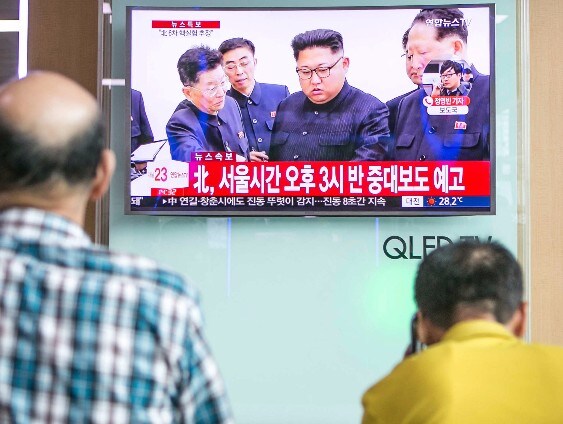
(Bloomberg) -- Leader Kim Jong Un said North Korea is ready to use nuclear weapons “anytime and anywhere,” delivering a new threat as a US aircraft carrier group arrives in South Korea.
Kim made the comments while visiting a facility producing nuclear bombs, the official Korean Central News Agency reported on Tuesday. State media released images of Kim standing with military officials among his arsenal of warheads.
Kim reiterated his call to exponentially increase North Korea's nuclear arsenal, which “is aimed to defend the eternal security of the state and the regional peace and stability from A to Z.” The visit to the facility came as North Korea has rolled out new weapons to deliver nuclear strikes in recent weeks and pledged an unprecedented response to joint military drills between the US and South Korea.
“This is a significant size improvement over prior North Korean nuclear weapons, and possibly design advance,” George William Herbert, an adjunct professor at the Middlebury Institute of International Studies, said on Twitter about the warheads shown in the photographs.
North Korea is estimated to have about 80 to 90 warheads, the Seoul-based Korea Institute for Defense Analyses said in a paper released in January, adding Kim was looking to have between 100 to 300 over the long term.

The USS Nimitz aircraft carrier group is due to arrive in Busan on Tuesday as part of efforts to strengthen the combined military posture of the allies, South Korea's Defense Ministry has said. North Korea raised tensions to new levels the last time a US Navy carrier group was in South Korea about six months ago, which included firing its first missile over Japan in five years.
That visit by the USS Ronald Reagan carrier group included anti-missile drills that also involved South Korea and Japan, which raised the ire of Pyongyang.
Although there have been no announcements of joint drills again among the three for this visit by the USS Nimitz, the carrier group conducted exercises with South Korea's navy Monday as part of field training known as Warrior Shield.
North Korea test-launched two short-range ballistic missiles Monday, adding to its barrage in recent weeks that has included two intercontinental ballistic missiles designed to deliver a nuclear warhead to the US mainland and about a dozen rockets that could be used in nuclear strikes against South Korea and Japan. Those two nations host the bulk of America's military personnel in the region.
Among the new weapons rolled out by Kim's regime have been an underwater drone it says can deliver a nuclear strike capable of causing a “radioactive tsunami.” South Korea's Defense Ministry on Monday said it doubted the claims by North Korea.
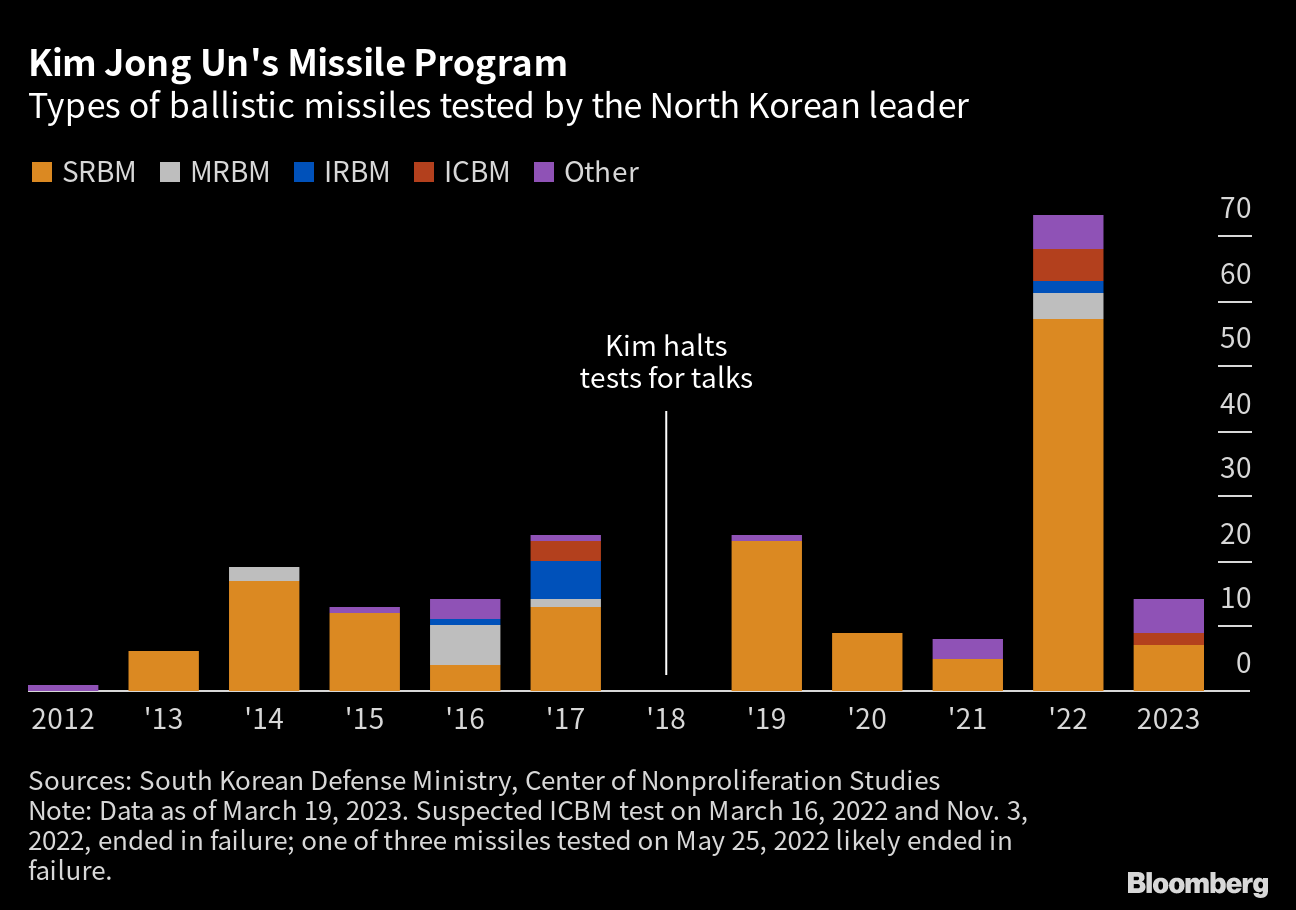
North Korea, which had fired 15 ballistic missiles from Feb. 18, has for years called joint drills a prelude to an invasion and nuclear war. The US and South Korea in January announced plans to step up the scale of their military exercises. Japan, which North Korea regards as mortal enemy, has also joined some of the drills in recent months.
The drills were scaled back or halted under former President Donald Trump to facilitate his talks with Kim. North Korea's nuclear weapons arsenal only grow larger and more potent as the talks sputtered.
More stories like this are available on bloomberg.com
©2023 Bloomberg L.P.

-
Navigating Friction And Energy Realities: An Analysis Of Marco Rubio's October Visit To India

Occurring at a critical juncture marked by stalled trade negotiations and escalating geopolitical pressures over global energy supplies, the visit offers a profound window into modern US-India relations.
-
India Exports Capital. Why Not Export Trusteeship?
The big question, then, is whether India can build an institution that global borrowers, investors, banks, and lawyers can trust, even without an Indian connection.
-
France's Economy & Politics Are In Crisis | The Reason Why
Let's look at how the French economy and politics evolved under Nicolas Sarkozy, Franois Hollande and Emmanuel Macron.
-
You May Inherit The Business. You Must Earn Its Credibility.
Succession tests the founder's ability to share authority as much as it tests the next generation's readiness to assume it.
-
Signing Deals Is One Thing; Making Them Work Is Another | The Week In Whys
Sometimes, things don't turn out as planned. Indian companies have lost some bids to rivals, some projects won't produce until 2030.
-
FOMC Wall, PERM Suspension, Hospital Stocks | Talking Points This Week
A PERM suspension would directly affect green-card sponsorship rather than H-1B visas, so the near-term earnings impact could remain relatively limited. The key question is whether this marks a new phase in US scrutiny of Indian IT.
-
Everything, Everywhere, All At Once: Dalal Street's Week To Forget | Joining The Dots
Visa curbs, a Starlink spat and cancer drug caps: what connects this week's shocks for Indian markets
-
India Is Going Abroad For Critical Minerals. But It May Take Years To Pay Off | The Reason Why
Although India's steps are in the right direction, they remain modest compared with India's growing dependence.
-
When Everyone Has AI, What Gives You An Edge?
India's young workforce is entering an uncertain world of work where powerful AI tools are becoming widely accessible. The advantage will belong to those who combine deep expertise with digital fluency, and the distinctly human capabilities that technology cannot manufacture.
-
Wrong Labels, High Pesticide Residues Holding Back Agri Exports | The Reason Why
India needs stronger domestic food-safety and labelling standards, with best practices becoming part of everyday business for farmers, traders and food companies.










