Japan To Get Priority In Trade Talks After Trump-Ishiba Call
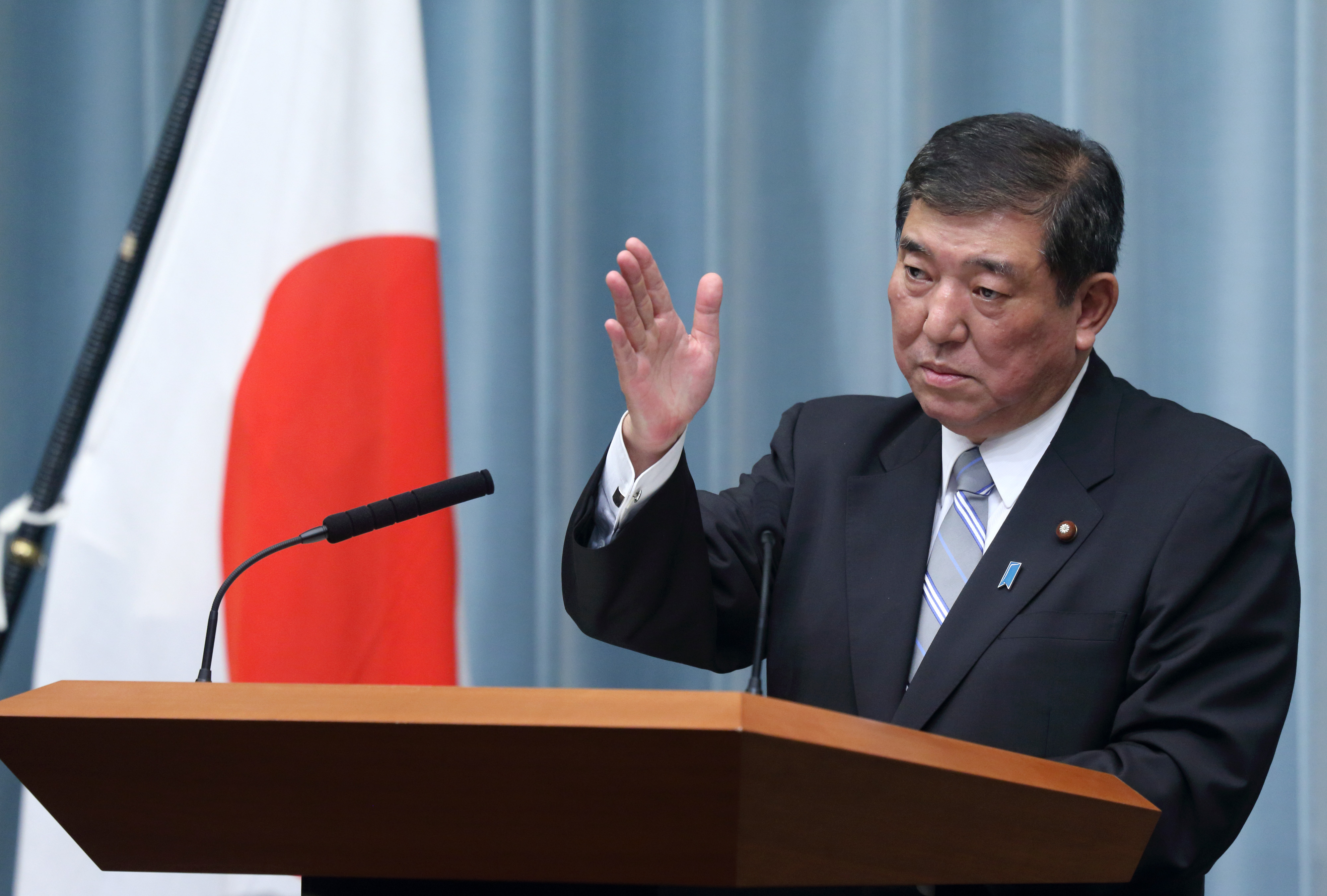
Japan looks set to get priority in US tariff talks, moving to the front of a long line of countries seeking to roll back President Donald Trump's so-called reciprocal duties, which are scheduled to kick in on Wednesday.
Treasury Secretary Scott Bessent, who along with US Trade Representative Jamieson Greer will lead the American side of the negotiations, said: “I would expect that Japan is going to get priority” among trading partners for coming forward very quickly.
The push to hold bilateral trade talks comes as Japanese Prime Minister Shigeru Ishiba convened a full-cabinet meeting on Tuesday morning to discuss the tariffs. Later, his administration selected Economic Revitalization Minister Ryosei Akazawa to lead Japan's delegation in the tariff talks.
Ahead of the meeting, Ishiba reiterated that the US tariffs are regrettable and voiced concerns over the impact they would have on Japan's huge auto industry.
“The auto industry is the very pillar of our economy. These tariffs could also leave a deep impact across various industries,” Ishiba said ahead of the meeting.
Trump slapped Japan with a 24% across-the-board reciprocal tariff in addition to a 25% auto duty that took effect last week.
“I have very serious misgivings over the compatibility of the tariffs imposed by the US government with the WTO agreement and the Japan-US Trade Agreement,” Ishiba added.
The auto tariff is inconsistent with the Ishiba administration's thinking with regards to the bilateral trade deal reached during Trump's first term. That pact gave Tokyo the right to negotiate for the elimination of any tariffs on cars and auto parts imported into the US.
At that time, Trump and former Prime Minister Shinzo Abe struck a trade deal that gave US farmers greater access to the Japanese market while Tokyo was able to dodge extra tariffs on its auto exports to the US.
Abe's close personal ties to Trump enabled Tokyo to smooth over any friction in its relations with Washington, analysts say. Ishiba doesn't have that sort of relationship with the president. Akazawa, a former state minister of finance, largely lacks diplomatic experience.
Shares in Japan jumped Tuesday on optimism the duties might be eased back. The broader Topix rose 6.3%, while the Nikkei 225 Stock Average that entered a bear market on Tuesday rebounded 6%. Futures for the S&P 500 and the Nasdaq 100 also rose.
What Bloomberg Economics Says...
“Whether Japan can secure concessions, and at what cost if so, is obviously very uncertain. We'll take one development at a time. The 24% reciprocal tariff on Japan and the 25% on automobiles will be extremely painful for the economy — and could disrupt the Bank of Japan's efforts to normalize monetary policy.”— Taro Kimura, economist.
The meeting followed a call between Trump and Ishiba on Monday, in which Ishiba said that the tariff measures would reduce the capabilities of Japanese companies to invest in the US. Trump has vowed his tariffs would encourage companies to move manufacturing to America.
Bessent, speaking on Fox Business, said that Japan maintains “quite high” non-tariff barriers, but expected a very productive set of negotiations with Japan. As for the timing, the Treasury chief said “there are 50, 60, maybe almost 70 countries now who have approached us. So it's going to be a busy April, May, maybe into June.”
“Japan is a very important military ally,” he said. “They are very important economic ally and the US has a lot of history with them. So I would expect that Japan's going to get priority just because they came forward very quickly.”
While Japan appears to be getting fast-tracked for trade talks, China is facing a dramatically different approach.
Trump has threatened to pile on an additional 50% tariff on top of existing duties if Beijing doesn't back down from what he called “long-term trading abuses.” The move could have a seismic effect on the price of imports from the US's third-largest trading partner.

-
High US Salaries, No Green Card Certainty: The Financial Calculation Facing Indian H-1B Families

The suspension of PERM processing at eight technology employers does not cancel existing H-1B visas. What it does is force a question many Indian families have been avoiding: is the US salary worth tying your career and family plans to one employer?
-
Swiggy vs Eternal: Food Delivery's Two Rivals Are No Longer In The Same Race
Eternal is building a private AI assistant, dark.ai. Swiggy is still working out how to make Instamart pay, with an operating loss of Rs 895 crore in the July-September quarter while Blinkit stayed profitable.
-
Where You Live Shapes How You Get To Work | The Reason Why
Two-wheelers are the most popular way to get to work in India, accounting for nearly 43% of workplace commutes.
-
Unhedged Position: Can India See An Indonesia-Style Time Correction?
The Nifty is trading below levels it first clocked in 2024. Is there, then, as I have suggested in the headline, potential that the current time correction drags on painfully for the next three-five, even ten years?
-
Navigating Friction And Energy Realities: An Analysis Of Marco Rubio's October Visit To India
Occurring at a critical juncture marked by stalled trade negotiations and escalating geopolitical pressures over global energy supplies, the visit offers a profound window into modern US-India relations.
-
India Exports Capital. Why Not Export Trusteeship?
The big question, then, is whether India can build an institution that global borrowers, investors, banks, and lawyers can trust, even without an Indian connection.
-
France's Economy & Politics Are In Crisis | The Reason Why
Let's look at how the French economy and politics evolved under Nicolas Sarkozy, Franois Hollande and Emmanuel Macron.
-
You May Inherit The Business. You Must Earn Its Credibility.
Succession tests the founder's ability to share authority as much as it tests the next generation's readiness to assume it.
-
Signing Deals Is One Thing; Making Them Work Is Another | The Week In Whys
Sometimes, things don't turn out as planned. Indian companies have lost some bids to rivals, some projects won't produce until 2030.
-
FOMC Wall, PERM Suspension, Hospital Stocks | Talking Points This Week
A PERM suspension would directly affect green-card sponsorship rather than H-1B visas, so the near-term earnings impact could remain relatively limited. The key question is whether this marks a new phase in US scrutiny of Indian IT.









