Israel Orders Strikes On Gaza In Fresh Threat To Ceasefire
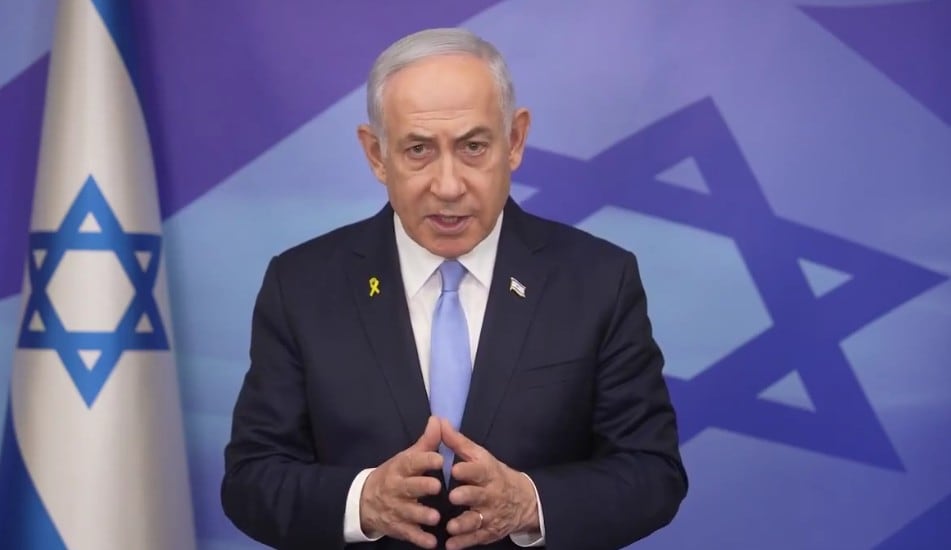
Prime Minister Benjamin Netanyahu ordered “forceful strikes” against Hamas in response to attacks on Israeli soldiers in Gaza, jeopardizing a US-brokered ceasefire that's held for just over two weeks.
The order to strike in the Palestinian territory came after security consultations, the Israeli leader's office said Tuesday in a post on X. Defense Minister Israel Katz later said Hamas will “pay a heavy price” for attacking Israeli troops and violating a promise to return the bodies of dead hostages.
The Hamas attack “is a crossing of a red line to which the IDF will respond with great force,” Katz said in a statement. An Israeli military official added that Hamas militants had attacked Israeli forces in Rafah, an area in southern Gaza controlled by Israel as part of the truce agreement.
Israeli strikes in the territory killed at least 20 people late Tuesday, the official Palestinian news agency WAFA said, citing medical sources. The Associated Press reported that the sound of tank fire and explosions could be heard in Gaza City and elsewhere in the territory. Israel notified the US in advance of the strikes, the AP said.
In a post on Telegram, Hamas denied it had anything to do with the shooting and reiterated its commitment to the ceasefire. The group had said earlier it would postpone the handing over of the remains of one dead hostage due to previous Israeli violations of the agreement.
Earlier, the Israel Defense Forces had called out Hamas for refusing to release the remains of hostages in violation of the agreement. Hamas, designated a terrorist organization by the US and European Union, rejected accusations that it's prolonging the search operations, accusing Israel of “hindering” efforts to locate the hostage bodies.
Israel's decision to step up strikes calls into question the ceasefire deal announced with great fanfare by US President Donald Trump in mid October. That deal paved the way for Hamas to return the last living hostages taken during the 2023 attacks that triggered the two-year conflict. The end to hostilities was accompanied by an increase in humanitarian aid flows and is meant to lead to talks on governance and reconstruction of the war-ravaged territory.
US Vice President JD Vance, speaking to reporters on Capitol Hill, said the deal remained intact.
“We know that Hamas or somebody else within Gaza attacked an IDF soldier,” Vance said. “We expect the Israelis are going to respond, but I think the President's peace is going to hold despite that.”
Israel's shekel touched session lows, falling as much as 0.4% against the dollar.
A ceasefire collapse would be a major blow for Trump, who has taken credit for the deal, boasted that it ended hundreds of years of conflict in the region, and repeatedly said it will hold up.
Since the ceasefire took hold, the Hamas-run health ministry said 94 Palestinians have been killed by Israeli fire. Several US officials including Vance, Secretary of State Marco Rubio and Trump envoy Steve Witkoff have traveled to the region in a bid to shore up the pact.
Those officials have said violations are to be expected in the painstaking move toward peace. In the region last week, Trump's son-in-law Jared Kushner downplayed one round of fighting, saying “a lot of people are getting a little hysterical about different incursions.”

-
A New Samvat Wishlist: Inclusive Prosperity And Human Development

India has strengthened its economic foundations through infrastructure, digital access and enterprise. Its next growth chapter must deepen productivity, create better livelihoods and widen participation in prosperity.
-
Love, Sex Aur Dhokha: The Audacious Plot To Spy On Jensen Huang
A Taipei dinner, a Singapore chip buyer and a suspected Chinese asset: inside the alleged spy operation that got close to NVIDIA's Jensen Huang.
-
Ten Things I Learnt This Samvat
Patience can be a trap. Cheap stocks can stay cheap. Leverage can wipe you out. What did Samvat 2082 teach us? Niraj Shah writes on 10 lessons from the year gone by.
-
Talking Points This Week: Tech Nerves, FII Buying, And A Faraway Banking Shock
The global markets are not shining this Diwali. The exception in the large markets is, India.
-
Midterm Rally Lasted A Day. The Hard Reality Of A Divided US May Last Two Years | Opinion
Between a contested AI boom, a debt ceiling that arrives in 2027 and a president with every incentive to act alone, the next two years may prove more volatile than the first day's rally suggests.
-
Blue Wave Will Derail the AI Trade but Won't Dismantle the AI Era | Unhedged Position
The Democrats' sweep of the US Congress will see politics collide with economic forces both over the long and short term.
-
It's Time To Take The GST Council's Bet On Trust Global
Payment records can prove India's services exports, and clear, proportionate rules can bring foreign digital sellers into the tax net.
-
Opinion | India at 38: From Innovation Overperformer to Innovation Powerhouse
India now has 453 VC-backed deep science startups, 18 of them late-stage, after 117 percent growth since 2020. Laurus Labs, at USD 9.3 billion, is the most valuable deep science company in any middle-income economy outside China.
-
Navigating Energy Crossroads: S Jaishankar's Call For Diversified Supply Chains At G20 Ministerial Meeting
As geopolitical fault lines continue to test maritime trade routes and commodity flows, Jaishankar's message remains pertinent: true economic resilience requires open markets, protected transit lines, and a genuine commitment to multilateral cooperation rather than coercion.









