India Needs More Reforms To Achieve 8-9% Growth: Nouriel Roubini
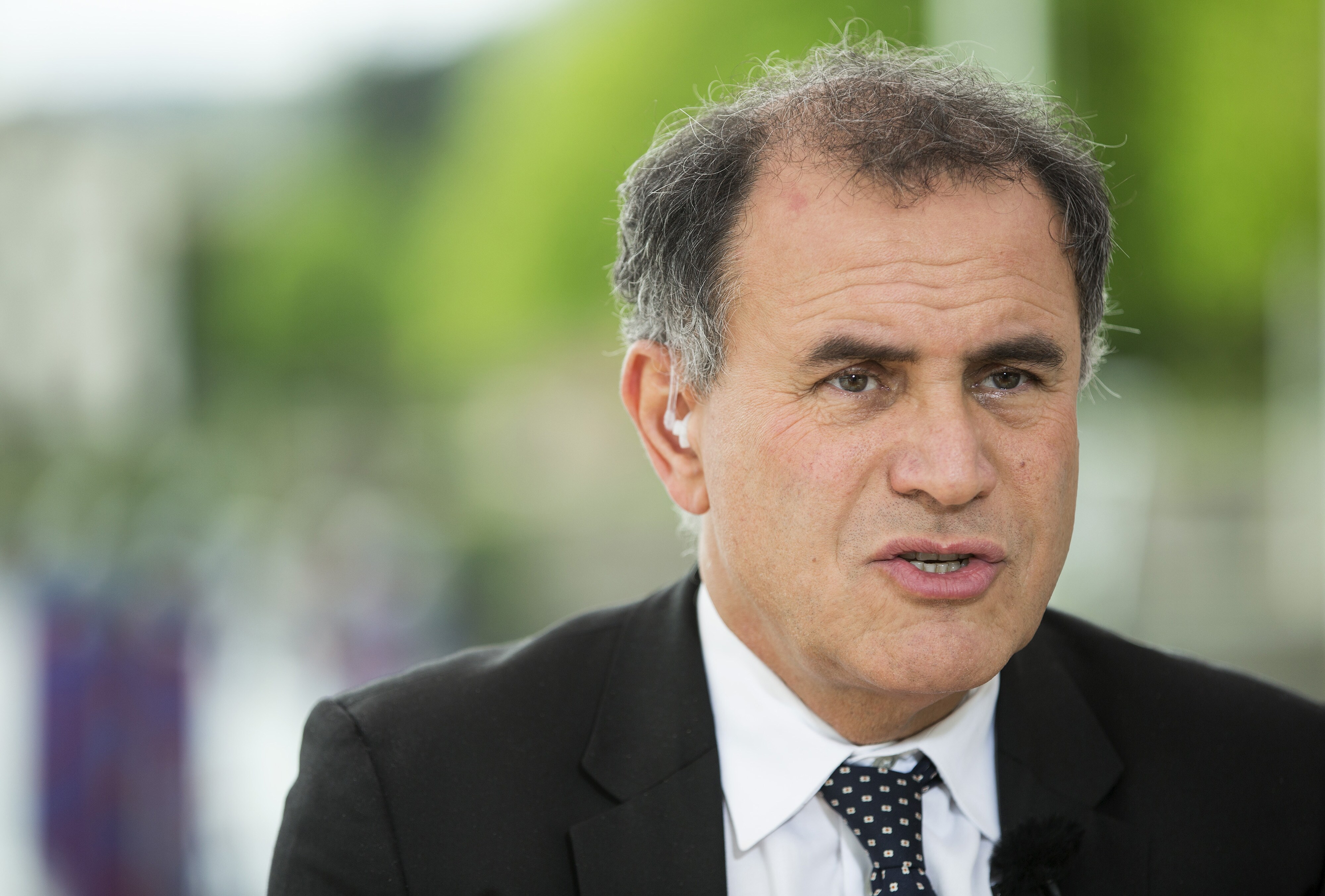
India needs more economic reforms to achieve its potential growth rate of 8-9 percent, Nouriel Roubini said today.
The noted economist also cautioned against rising oil prices in the international market, saying it could create problems for inflation as well as trade and fiscal balance.
My observation about India is that India has bright long term economic future... India should do more economic reform and more macro stabilisation to be able to increase its potential growth to well above 7 percent and to 8-9 percent.Nouriel Roubini, Chairman, Roubini Global Economics (At India Economic Conclave)
The Indian economy is estimated to grow at 6.6 percent in the current fiscal, lower than 7.1 percent growth recorded in 2016-17.
Also Read: India Investment Rebound Hinges on This Growth Engine of Economy
For 2018-19 beginning April 1, GDP growth has been projected to be between 7 to 7.5 percent.
Referring to oil prices, which have breached the $70 per barrel mark recently, Roubini said this is a "temporary factor" triggered by global and political developments.
However, he added that India, which heavily depends on oil imports, could see an impact on core inflation in short term.
"In short run oil prices could go higher especially if some supply risk materialise. However, medium and long term the theory that oil is going to be lower for longer, I think is true," Roubini said.
Also Read: Oil's Back to Posting a Monthly Gain as Geopolitical Risks Rise
He said shale gas reserves in the United States and a gradual shift to renewable energy could lead to lower dependence on oil.
"In medium and long term, these two trend (shale gas and renewable energy) implies that the price of energy should be falling largely in the horizon of next 5-20 years. It's not that what you have in next 12 months where short term factors will keep oil prices higher," he said.
On his suggestions for India to deal with banking sector challenges, Roubini said stressed assets should be adequately provisioned for by the banks or a separate asset management company could be created for taking over these bad loans.
Asked if privatising public sector banks would help, he said, "Well there are two views. One says that to improve governance is to reduce the direct state role and privatise them. The other one is if you give the right incentive to bank managers...".
Roubini said the risks of trade war signal a rising backlash against globalisation.
"On trade side, India is a less open economy. Protectionism in the world can have negative impact on India, for example - U.S. can pose restriction on H1B visa," he said.
Also Read: Anti-H-1B Poster In Silicon Valley's Train Station Targets Foreign Workers
Correction: An earlier version of this story incorrectly identified Roubini as a Nobel laureate.

-
Ten Things I Learnt This Samvat

Patience can be a trap. Cheap stocks can stay cheap. Leverage can wipe you out. What did Samvat 2082 teach us? Niraj Shah writes on 10 lessons from the year gone by.
-
Talking Points This Week: Tech Nerves, FII Buying, And A Faraway Banking Shock
The global markets are not shining this Diwali. The exception in the large markets is, India.
-
Midterm Rally Lasted A Day. The Hard Reality Of A Divided US May Last Two Years | Opinion
Between a contested AI boom, a debt ceiling that arrives in 2027 and a president with every incentive to act alone, the next two years may prove more volatile than the first day's rally suggests.
-
Blue Wave Will Derail the AI Trade but Won't Dismantle the AI Era | Unhedged Position
The Democrats' sweep of the US Congress will see politics collide with economic forces both over the long and short term.
-
It's Time To Take The GST Council's Bet On Trust Global
Payment records can prove India's services exports, and clear, proportionate rules can bring foreign digital sellers into the tax net.
-
Opinion | India at 38: From Innovation Overperformer to Innovation Powerhouse
India now has 453 VC-backed deep science startups, 18 of them late-stage, after 117 percent growth since 2020. Laurus Labs, at USD 9.3 billion, is the most valuable deep science company in any middle-income economy outside China.
-
Navigating Energy Crossroads: S Jaishankar's Call For Diversified Supply Chains At G20 Ministerial Meeting
As geopolitical fault lines continue to test maritime trade routes and commodity flows, Jaishankar's message remains pertinent: true economic resilience requires open markets, protected transit lines, and a genuine commitment to multilateral cooperation rather than coercion.
-
Indians Are Travelling, But Not Every Journey Is A Holiday | The Week In Whys
Pilgrims, patients and working women are the real travellers, and the system hasn't quite caught up with them.
-
Getting To Work Costs Women More | The Reason Why
It is not just about women paying more than men. It is about women paying much more in cities than in villages.









