Beryl Becomes Earliest Ever Category 5 Hurricane In Atlantic
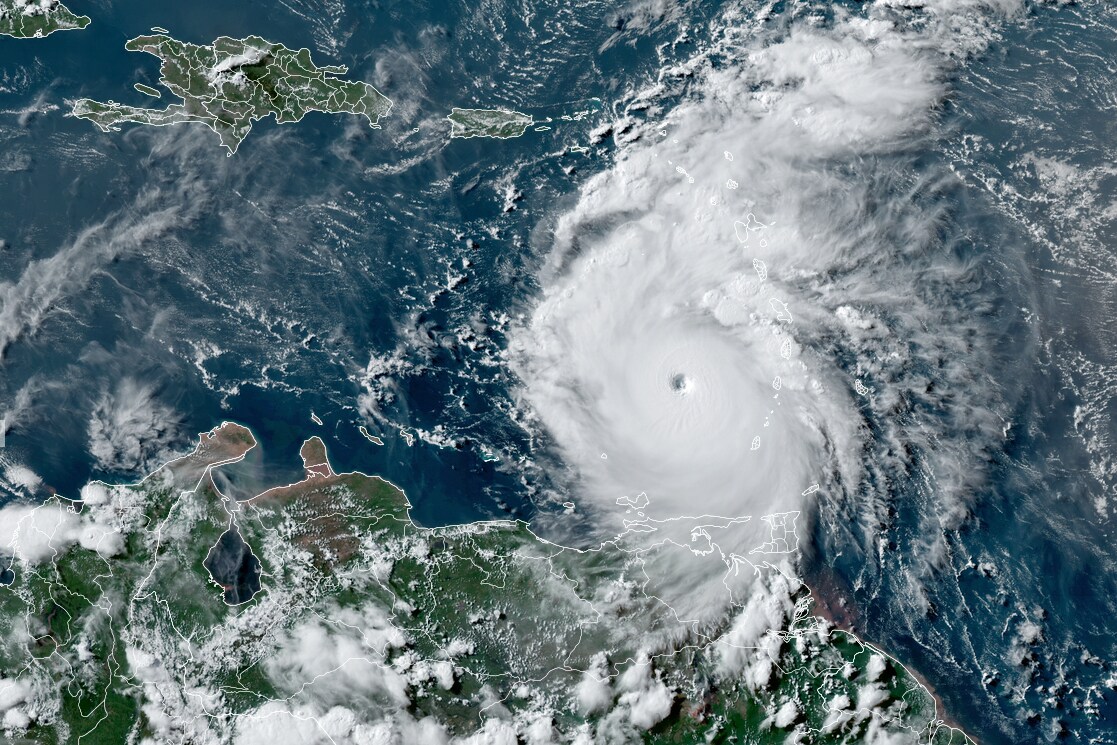
(Bloomberg) -- Hurricane Beryl has strengthened after becoming the earliest ever Category 5 storm in the Atlantic, with the system heading toward Jamaica with life-threatening winds and heavy rainfall.
Maximum sustained winds increased to 165 miles (270 kilometers) per hour with higher gusts, the US National Hurricane Center said. Category 5 is the highest level on the Saffir-Simpson scale, and Beryl is only the second storm on record to reach the threshold in July, according to the agency.
The Atlantic Hurricane season is running ahead of the pace usually seen at this time of the year, with three storms already in the books. Beryl formed between the Caribbean and the Cabo Verde Islands — a stretch of ocean called the main development region — that doesn't usually become active until late August.
Fluctuations in strength are likely, but Beryl is expected to still be near major hurricane intensity as its moves into the central Caribbean and passes near Jamaica on Wednesday, the weather agency said. The other Category 5 system to occur in the Atlantic basin during July was Emily in 2005.
“Unfortunately, Beryl is breaking records that were set in 1933 and 2005 – two of the busiest Atlantic hurricane seasons on record,” said Phil Klotzbach, a senior research scientist at Colorado State University. It likely points to a hyper-active season, he added.
Hurricane-force winds extend outward up to 40 miles from the center, and storm surge could raise water levels by as much as 3-to-5 feet above normal tide levels in areas along the coast of Jamaica, the agency said.
Beryl made landfall earlier on Carriacou Island, the second-largest of Grenada's islands. Authorities reported widespread damage and one death, but Prime Minister Dickon Mitchell said the port and international airport will be able to resume operations Tuesday. Power was being partially restored.
“To some extent we dodged a bazooka,” Mitchell said. “We have to count our blessings.”
A Category 5 storm can result in total roof failure and wall collapse, and power outages that can last for weeks to possibly months, according to the US agency. Typically the first hurricane arrives in the Atlantic by Aug. 11 and the first major storm — Category 3 or stronger on the Saffir-Simpson scale — comes by Sept. 1, according to the hurricane center.
--With assistance from Jim Wyss and Kevin Dharmawan.
(Updates with higher wind speed in second paragraph.)
More stories like this are available on bloomberg.com
©2024 Bloomberg L.P.

-
Talking Points This Week: Tech Nerves, FII Buying, And A Faraway Banking Shock

The global markets are not shining this Diwali. The exception in the large markets is, India.
-
Midterm Rally Lasted A Day. The Hard Reality Of A Divided US May Last Two Years | Opinion
Between a contested AI boom, a debt ceiling that arrives in 2027 and a president with every incentive to act alone, the next two years may prove more volatile than the first day's rally suggests.
-
Blue Wave Will Derail the AI Trade but Won't Dismantle the AI Era | Unhedged Position
The Democrats' sweep of the US Congress will see politics collide with economic forces both over the long and short term.
-
It's Time To Take The GST Council's Bet On Trust Global
Payment records can prove India's services exports, and clear, proportionate rules can bring foreign digital sellers into the tax net.
-
Opinion | India at 38: From Innovation Overperformer to Innovation Powerhouse
India now has 453 VC-backed deep science startups, 18 of them late-stage, after 117 percent growth since 2020. Laurus Labs, at USD 9.3 billion, is the most valuable deep science company in any middle-income economy outside China.
-
Navigating Energy Crossroads: S Jaishankar's Call For Diversified Supply Chains At G20 Ministerial Meeting
As geopolitical fault lines continue to test maritime trade routes and commodity flows, Jaishankar's message remains pertinent: true economic resilience requires open markets, protected transit lines, and a genuine commitment to multilateral cooperation rather than coercion.
-
Indians Are Travelling, But Not Every Journey Is A Holiday | The Week In Whys
Pilgrims, patients and working women are the real travellers, and the system hasn't quite caught up with them.
-
Getting To Work Costs Women More | The Reason Why
It is not just about women paying more than men. It is about women paying much more in cities than in villages.
-
AI Bias In Investing Cannot Be Eliminated, But It Can Be Governed
Framing is a particularly important example as identical financial information presented in terms of gains rather than losses can lead an LLM to reach a different assessment.









