Hong Kong Should Reduce Fiscal Deficit Gradually, IMF Says
(Bloomberg) -- Hong Kong should focus on reducing its fiscal deficit at a gradual pace rather than over two years to ensure a balanced recovery now that its economy is returning to normal after the pandemic, the International Monetary Fund said.
“Gradual fiscal consolidation would help secure a sustained and inclusive recovery,” the IMF said in a statement Friday after staff met with Hong Kong officials as part of their annual Article IV discussions. The IMF staff noted that despite an “ongoing strong recovery, there remains large slack in the economy” as real gross domestic product last year remained 6% below 2018 levels.
Fiscal space remains ample, the IMF staff said, adding that reserves were 27.4% of GDP as of the end of last year.
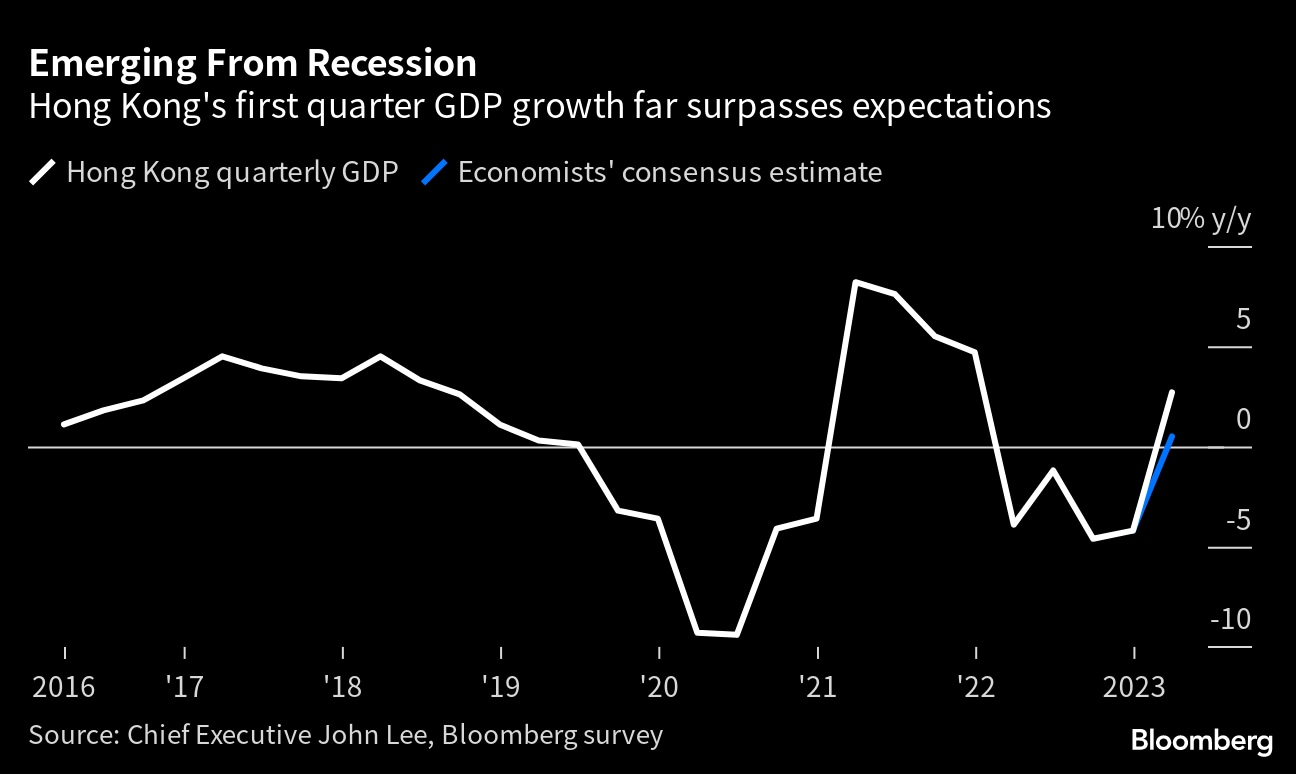
Hong Kong's economy expanded 2.7% in the first quarter from a year earlier, topping economists' estimates and marking the first quarterly gain in GDP in more than a year. That was enough to pull the economy out of recession, driven by a big spending boom as tourists returned.
Challenges remain, though, as the city navigates its rebound amid a slowing global economy and after a prolonged period of economic contraction. Hong Kong's fiscal deficit ballooned during its isolation, with the budget shortfall for the 2022-2023 fiscal year hitting a whopping HK$140 billion ($17.8 billion), Financial Secretary Paul Chan said earlier this year.
Pandemic-era measures to support vulnerable households and affected small and medium-sized enterprises “could be unwound gradually to help promote an inclusive growth,” the IMF staff said, adding that additional household support “should be more targeted to low-income households to increase the effectiveness of fiscal policy in stimulating growth, especially private consumption.”
The IMF said a further adjustment in the property market could still pose risks for the economy after housing prices fell last year. While financial stability risks are limited, “a further market adjustment in the face of rising mortgage rates could suppress private consumption through higher debt servicing burden and negative wealth effects,” it said.
So-called macro-prudential measures in the housing market should be maintained, the IMF said, and could be revised if there's financial stress in the system. Some stamp duties on property could also be phased out if speculative demand in the market eases, it added.
The IMF projects Hong Kong's real GDP to grow by 3.5% in 2023 and 3.1% in 2024, adding that exports of tourism services and domestic economic activity are expected to normalize.
More stories like this are available on bloomberg.com
©2023 Bloomberg L.P.

-
Ten Things I Learnt This Samvat

Patience can be a trap. Cheap stocks can stay cheap. Leverage can wipe you out. What did Samvat 2082 teach us? Niraj Shah writes on 10 lessons from the year gone by.
-
Talking Points This Week: Tech Nerves, FII Buying, And A Faraway Banking Shock
The global markets are not shining this Diwali. The exception in the large markets is, India.
-
Midterm Rally Lasted A Day. The Hard Reality Of A Divided US May Last Two Years | Opinion
Between a contested AI boom, a debt ceiling that arrives in 2027 and a president with every incentive to act alone, the next two years may prove more volatile than the first day's rally suggests.
-
Blue Wave Will Derail the AI Trade but Won't Dismantle the AI Era | Unhedged Position
The Democrats' sweep of the US Congress will see politics collide with economic forces both over the long and short term.
-
It's Time To Take The GST Council's Bet On Trust Global
Payment records can prove India's services exports, and clear, proportionate rules can bring foreign digital sellers into the tax net.
-
Opinion | India at 38: From Innovation Overperformer to Innovation Powerhouse
India now has 453 VC-backed deep science startups, 18 of them late-stage, after 117 percent growth since 2020. Laurus Labs, at USD 9.3 billion, is the most valuable deep science company in any middle-income economy outside China.
-
Navigating Energy Crossroads: S Jaishankar's Call For Diversified Supply Chains At G20 Ministerial Meeting
As geopolitical fault lines continue to test maritime trade routes and commodity flows, Jaishankar's message remains pertinent: true economic resilience requires open markets, protected transit lines, and a genuine commitment to multilateral cooperation rather than coercion.
-
Indians Are Travelling, But Not Every Journey Is A Holiday | The Week In Whys
Pilgrims, patients and working women are the real travellers, and the system hasn't quite caught up with them.
-
Getting To Work Costs Women More | The Reason Why
It is not just about women paying more than men. It is about women paying much more in cities than in villages.









