Hong Kong’s Worst Office Slump Squeezes Real Estate Funds
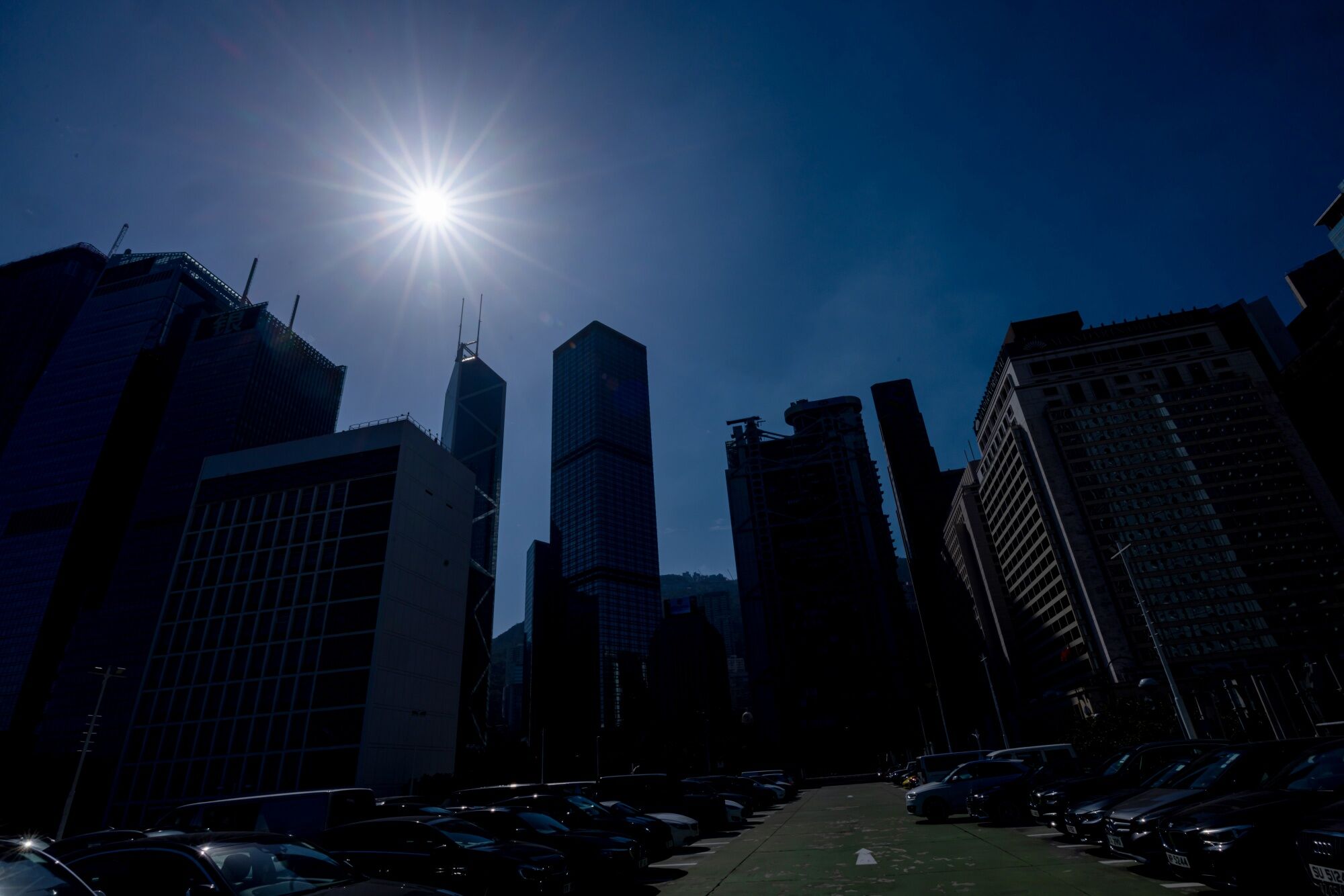
(Bloomberg) -- Real estate funds are getting caught in Hong Kong's worst commercial property slump after making ill-timed investments when the market peaked just a few years ago.
Funds are increasingly trying to sell once-prized office towers at significant discounts as they rush to exit to avoid mounting interest payments on loans. Those holding onto assets are having to endure record-high vacancies along with rising borrowing costs.
Selling an office property in Hong Kong now is no easy feat, with rents falling and space emptying after the financial hub lost its luster during the pandemic. Buyers are hard to come by even after office prices tumbled 35% from their peak in 2018.
“There are few investors looking to buy offices because the yield is low while rents may drop further,” said Oscar Chan, head of Hong Kong capital markets at Jones Lang LaSalle. “Owners have to cut their prices.”
Some office owners including Chinese companies and funds have stopped repaying their mortgages or are considering doing so because rents no longer cover costs, said Chan. The trend is more common in Kowloon where vacancies are higher, he added.
Even though recent disposals were able to break even or achieve a profit, it's only a matter of time before funds have to realize the earlier investments they made, according to Benjamin Chow, head of Asia real assets research at MSCI Inc. Domestic and overseas funds bought a combined $16.1 billion worth of commercial real estate in Hong Kong from 2016 to 2019, but only sold $1.2 billion between 2020 and 2023, data from MSCI show.

“With the deteriorating macroeconomic outlook and the prospect of a ‘higher-for-longer' interest-rate environment, fund managers will have to choose between selling at a hefty discount today, versus lengthening the investment horizon with more expensive financing and at the cost of diluting their IRR,” or internal rate of return, Chow said.
KaiLong Group, a Chinese fund manager, has been trying to sell an office building in the Sheung Wan area that's also held by Goldman Sachs Group Inc. The Shanghai-based firm was still struggling to find a buyer after cutting its asking price by at least one-third, Bloomberg News reported in November.
The downturn is hurting larger players as well. In 2019 and 2020, Gaw Capital purchased three towers from Swire Properties Ltd. for a combined HK$25 billion ($3.2 billion) — landmark deals at the time. The buildings have vacancy rates of 14%, 19% and 28%, according to the firm. That compares with a 13.5% vacancy rate in the district, JLL data show.
Gaw Capital declined to comment further. KaiLong Group didn't respond to a request for comment.
Hong Kong's vacancy rate citywide rose to an unprecedented 16.4% by the end of 2023, according to CBRE Group Inc. That's put pressure on Grade A office rents, which slipped 6% last year. CBRE expects rental costs to drop as much as 10% in 2024. Office values could fall between 10% and 15%, it forecasts.
The market was booming until a few years ago. Office prices started to surge in 2016, rising 50% over the next two years to reach an all-time high in 2018, Colliers International Group Inc. figures show. That was before global financial firms cut space as business prospects dwindled and workers left the city amid tightening restrictions from Beijing.
To be sure, the situation for investors in Hong Kong isn't as grim as the US, where the value of distressed commercial real estate neared $80 billion in the third quarter, the highest in a decade.
Hong Kong has seen few enforced sales even as banks watch out for a potential increase in loan defaults, said Jasmine Chiu, real estate partner at law firm Mayer Brown. “There are other options available to banks, which include offloading non-performing loans to the private market or loan restructuring with borrowers.”
Still, the pressure to sell remains, particularly for closed-end funds that need to protect returns, according to Chow.
“Delaying divestments would ultimately impact performance if measured in terms of the IRR,” he said.
(Updates with CBRE's office value forecasts in the 11th paragraph)
More stories like this are available on bloomberg.com
©2024 Bloomberg L.P.

-
Where You Live Shapes How You Get To Work | The Reason Why

Two-wheelers are the most popular way to get to work in India, accounting for nearly 43% of workplace commutes.
-
High US Salaries, No Green Card Certainty: The Financial Calculation Facing Indian H-1B Families
The suspension of PERM processing at eight technology employers does not cancel existing H-1B visas. What it does is force a question many Indian families have been avoiding: is the US salary worth tying your career and family plans to one employer?
-
Unhedged Position: Can India See An Indonesia-Style Time Correction?
The Nifty is trading below levels it first clocked in 2024. Is there, then, as I have suggested in the headline, potential that the current time correction drags on painfully for the next three-five, even ten years?
-
Navigating Friction And Energy Realities: An Analysis Of Marco Rubio's October Visit To India
Occurring at a critical juncture marked by stalled trade negotiations and escalating geopolitical pressures over global energy supplies, the visit offers a profound window into modern US-India relations.
-
India Exports Capital. Why Not Export Trusteeship?
The big question, then, is whether India can build an institution that global borrowers, investors, banks, and lawyers can trust, even without an Indian connection.
-
France's Economy & Politics Are In Crisis | The Reason Why
Let's look at how the French economy and politics evolved under Nicolas Sarkozy, Franois Hollande and Emmanuel Macron.
-
You May Inherit The Business. You Must Earn Its Credibility.
Succession tests the founder's ability to share authority as much as it tests the next generation's readiness to assume it.
-
Signing Deals Is One Thing; Making Them Work Is Another | The Week In Whys
Sometimes, things don't turn out as planned. Indian companies have lost some bids to rivals, some projects won't produce until 2030.
-
FOMC Wall, PERM Suspension, Hospital Stocks | Talking Points This Week
A PERM suspension would directly affect green-card sponsorship rather than H-1B visas, so the near-term earnings impact could remain relatively limited. The key question is whether this marks a new phase in US scrutiny of Indian IT.
-
Everything, Everywhere, All At Once: Dalal Street's Week To Forget | Joining The Dots
Visa curbs, a Starlink spat and cancer drug caps: what connects this week's shocks for Indian markets









