Germany's Olaf Scholz Fights Economic Slump And Tag Of 'Worst Chancellor In 60 Years'
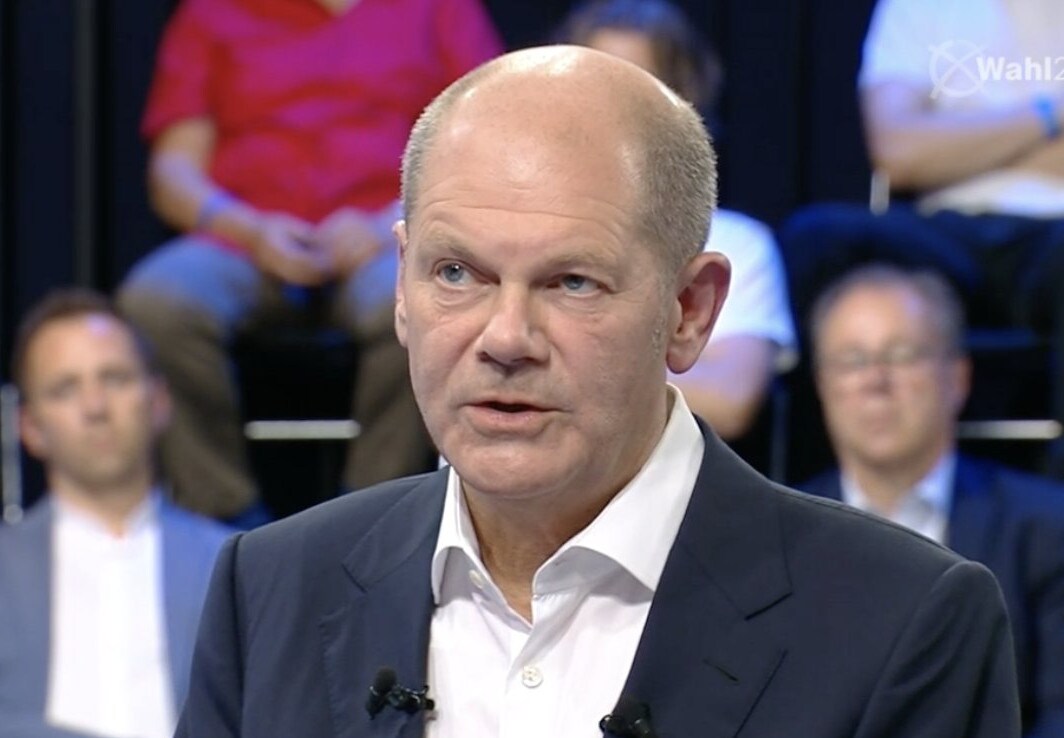
The German public's trust in Chancellor Olaf Scholz is on shaky ground halfway through his term. In recent elections in Bavaria and Hesse, home to the nation's financial hub Frankfurt, the ‘traffic light coalition'—of Scholz's Social Democrats, the Free Democrats, and the Greens—saw significant losses.
There is "no growth in Germany any more", according to Birger Schäfermeier, a well-known stock trader and author. “You can see it in the economic data. It is the worst chancellor we have (had) in the last 60 years.
Scholz problem is mirrored in European Commission's recent estimate of 0.4% contraction in the German economy for the year, a downward revision from the previous projection of 0.2% growth. The gloomy projection isn't without basis as Germany grapples with high energy prices and slowing trade.
“The German economy had faced a series of shocks, and the most recent and prominent of course is the rapture of Russian gas supplies last year,” said Christian Schulz, deputy chief European economist at Citi Research. This not only caused a spike in energy prices, impacting the manufacturing sector, but also established a weak economic foundation from which recovery has been a struggle. “Other economies weren't affected as much and that makes Germany the underperformer this year.”
Schulz said, “The government has done a remarkable job given the fiscal rules in Germany.” But “the political capital that Scholz had at the beginning (of his term) is more or less exhausted”, he said, pointing out the lack of supply-side reforms.
Scholz downplayed concerns by suggesting that the nation's economic frailty is cyclical and not structural. Many experts, however, recall that during Angela Merkel's term, where Scholz served as finance minister in her fourth cabinet, Germany witnessed minimal big-ticket public investments.
Schäfermeier remains critical of the current government's ability to enact reforms due to its tripartite coalition. “From the government, you cannot expect anything. We have a combination of three parties ruling, it's too much.”
Others also criticised the government's indecisiveness and bureaucratic hurdles.
“Everything in Germany takes very long,” said Stefan Risse, capital market strategist at ACATIS Investment. "This government has the will to make the change which is needed but I think the problem is to turn that into reality through all the levels of bureaucracy and people.”
“Chancellor Scholz has one problem, he is not a leader…,” said Risse. He cited the ideological differences within the coalition, particularly on issues such as nuclear power and emissions reduction. These have hindered coordination on vital policies, causing delays and inefficiencies.
The China Problem
Externally, Germany's deep-seated reliance on exports, especially with China, has become a point of vulnerability—even Scholz acknowledged it. CEIC data shows Germany's total exports to China between January 2000 to July 2023 averaged at around $6.52 billion per month, positioning Beijing as one of Berlin's primary trade allies.
According to data from the Observatory of Economic Complexity, in the year through May 2023, German exports decreased by $2.28 billion to $130 billion; while imports reduced by $13 billion to $118 billion.
Citi's Schulz identifies a potential way forward. “Germany needs to rely less on foreign demand and more on domestic demand,” he said, adding that the government must take the initiative to promote investment and consumption. Schulz said the German economy suffers from volatility generated by external trade, especially given the slowdown in China.
Salah-Eddine Bouhmidi, head of markets-Germany, Austria and Netherlands at IG, highlighted the need for policies that bolster economic growth and recovery. “It is a tough environment of course, the difficulty in Germany right now is too many discussions and fighting different political ideals.”
The government must prioritise key policies, he said. “Growth is the most crucial, and important factor right now is to get rid of recession and to fight against inflation." Bouhmidi recognises Scholz's “competence and knowledge” to rejuvenate the economy yet acknowledges barriers to effective execution.
Sebastian Müller, founder of Wellen-Trading, said the government is “behind the curve” when it comes to addressing economic challenges. “For me, it's a complete disaster. I think in Germany, the situation is changing… I think people are getting more worried about the economic situation.” He expressed scepticism about the efficacy of the current political system.
Chancellor Scholz's journey ahead is fraught with economic challenges and dwindling public trust. The recent electoral outcomes and economic indicators suggest an urgent need for recalibration. While Scholz may possess the necessary expertise, the looming question is whether he can navigate the complex political, bureaucratic, and external challenges to usher in economic resurgence.

-
High US Salaries, No Green Card Certainty: The Financial Calculation Facing Indian H-1B Families

The suspension of PERM processing at eight technology employers does not cancel existing H-1B visas. What it does is force a question many Indian families have been avoiding: is the US salary worth tying your career and family plans to one employer?
-
Swiggy vs Eternal: Food Delivery's Two Rivals Are No Longer In The Same Race
Eternal is building a private AI assistant, dark.ai. Swiggy is still working out how to make Instamart pay, with an operating loss of Rs 895 crore in the July-September quarter while Blinkit stayed profitable.
-
Where You Live Shapes How You Get To Work | The Reason Why
Two-wheelers are the most popular way to get to work in India, accounting for nearly 43% of workplace commutes.
-
Unhedged Position: Can India See An Indonesia-Style Time Correction?
The Nifty is trading below levels it first clocked in 2024. Is there, then, as I have suggested in the headline, potential that the current time correction drags on painfully for the next three-five, even ten years?
-
Navigating Friction And Energy Realities: An Analysis Of Marco Rubio's October Visit To India
Occurring at a critical juncture marked by stalled trade negotiations and escalating geopolitical pressures over global energy supplies, the visit offers a profound window into modern US-India relations.
-
India Exports Capital. Why Not Export Trusteeship?
The big question, then, is whether India can build an institution that global borrowers, investors, banks, and lawyers can trust, even without an Indian connection.
-
France's Economy & Politics Are In Crisis | The Reason Why
Let's look at how the French economy and politics evolved under Nicolas Sarkozy, Franois Hollande and Emmanuel Macron.
-
You May Inherit The Business. You Must Earn Its Credibility.
Succession tests the founder's ability to share authority as much as it tests the next generation's readiness to assume it.
-
Signing Deals Is One Thing; Making Them Work Is Another | The Week In Whys
Sometimes, things don't turn out as planned. Indian companies have lost some bids to rivals, some projects won't produce until 2030.
-
FOMC Wall, PERM Suspension, Hospital Stocks | Talking Points This Week
A PERM suspension would directly affect green-card sponsorship rather than H-1B visas, so the near-term earnings impact could remain relatively limited. The key question is whether this marks a new phase in US scrutiny of Indian IT.









