Friedrich Merz Confirmed As German Chancellor After Second Parliament Vote
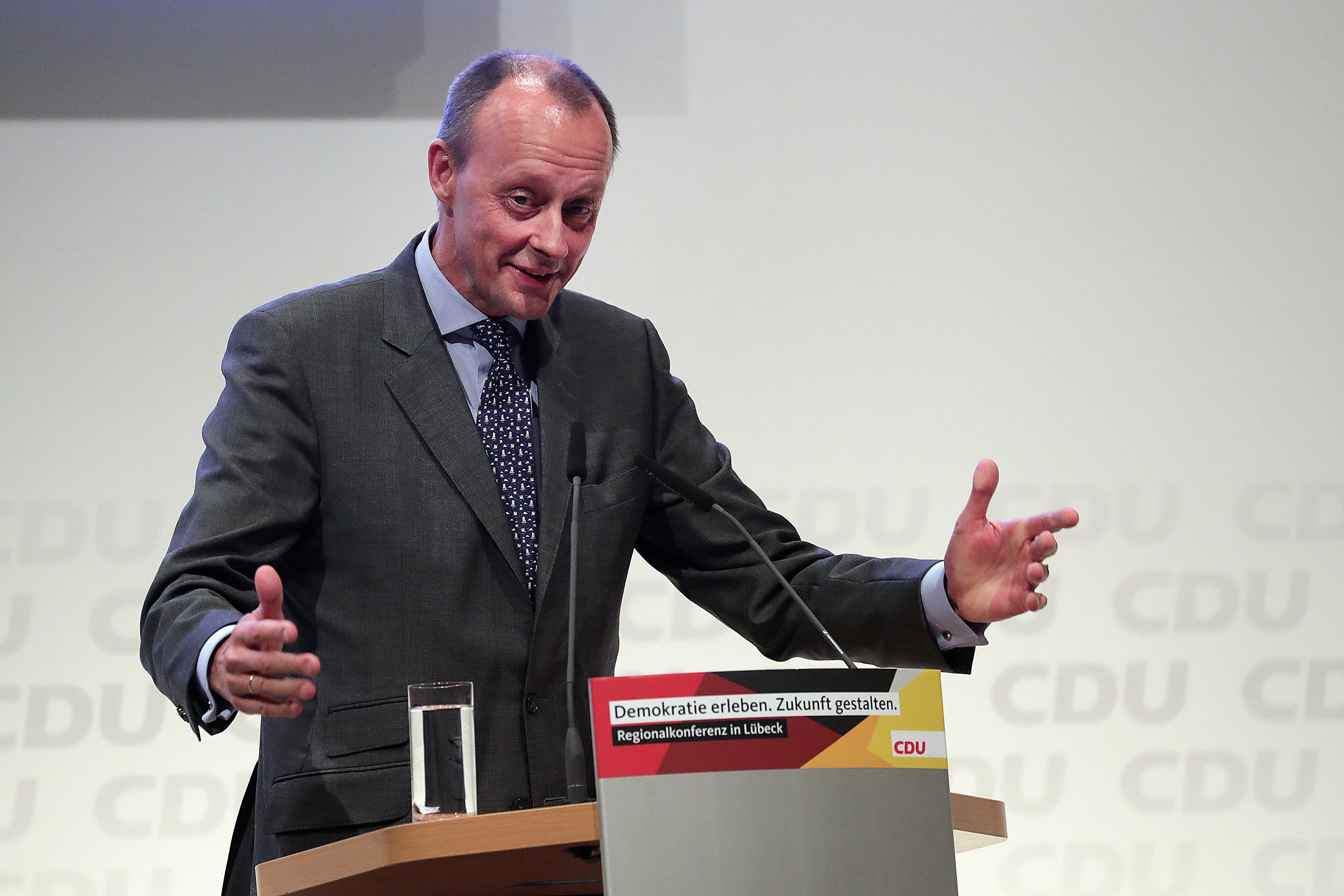
Friedrich Merz secured parliamentary backing as Germany's new chancellor only on the second attempt, paving the way for the conservative leader to take charge of Europe's biggest economy but with considerably diminished authority.
In a repeat Bundestag ballot on Tuesday in Berlin, Merz got 325 votes, more than the required 316 out of 630 lawmakers. He had earlier managed only 310 in an initial tally that was meant to rubber stamp him as the head of an alliance of his center-right CDU/CSU bloc and the center-left Social Democrats, even though the coalition partners have 328 seats between them.
It was the first time since World War II that an incoming chancellor had failed to secure enough support in a first round of voting, leaving lawmakers stunned and disrupting the usual serene pageantry of a handover of government.
It prompted several hours of frantic consultations among parliamentarians and constitutional experts before a second ballot was arranged and delayed Merz from taking over from outgoing SPD Chancellor Olaf Scholz.
Given that voting is secret, the identities of those who didn't back Merz may never be known. Conspiracy theories were already swirling about who might have been responsible and what their motives were.
After his confirmation, Merz was formally appointed by President Frank-Walter Steinmeier and will then sworn in by the Bundestag speaker before a handover ceremony with Scholz.
He'll make his first trip abroad on Wednesday — to Paris for talks with French President Emmanuel Macron and on to Warsaw to meet Polish counterpart Donald Tusk.
He'll be keen to quickly put Tuesday's debacle behind him and get down to work but the shock reverse in parliament represents a huge embarrassment for the 69-year-old, already suffering from low approval ratings, and stoked concerns that his ability to steer government business will be compromised.
Tuesday's votes were also a reminder of how the fragility of the ruling coalition's Bundestag majority, raising the prospect of difficulties in getting laws approved.
Merz is taking charge at a critical moment for Germany. The economy is stagnating after two years of recession, Russia's war on Ukraine is still raging to the east and support for the far-right Alternative for Germany is strengthening, especially in the former communist eastern regions.
The anti-immigrant party, which was formally classified as right-wing extremist last week by the domestic security service, has overtaken Merz's bloc in some polls and is now the main opposition force in the Bundestag.

On the plus side, his government is empowered to immediately ramp up much-needed investment in the country's highways, rail network and bridges after the conservatives and the Social Democrats partnered with the Greens in March to create a €500 billion ($567 billion) investment fund for infrastructure.
They also pushed through changes to Germany's constitutional borrowing restrictions that effectively exempt defense spending, paving the way for a sweeping overhaul of the armed forces after years of underinvestment.
AfD lawmakers celebrated Merz's stumble, with co-leader Alice Weidel saying in a post on social media after the initial vote that “this demonstrates what a weak foundation” his coalition was built on.
In a subsequent TV interview, Weidel said her party, which finished second in the Feb. 23 national ballot, is ready to join a coalition government.
“We can only demand that common sense prevails, Mr. Merz withdraws and the path is opened for a fresh election,” she added.
Merz's confirmation as chancellor fulfills a decades-long ambition. He interrupted his political career between 2009 and 2021 after clashing with former conservative Chancellor Angela Merkel — who was in the Bundestag on Tuesday — and failed in two attempts to win the CDU leadership on his return before finally succeeding in late 2021.
Andrea Roemmele, a professor of communication in politics at the Hertie School in Berlin, said Merz is starting his term in office “with two black eyes and weak knees.”
“You could see that he was very shaken and that he will have to fight for his majority in his own coalition,” Roemmele told public broadcaster ARD. “The parliamentary group leaders will have to work hard to ensure that their factions remain united.”

-
Talking Points This Week: Tech Nerves, FII Buying, And A Faraway Banking Shock

The global markets are not shining this Diwali. The exception in the large markets is, India.
-
Midterm Rally Lasted A Day. The Hard Reality Of A Divided US May Last Two Years | Opinion
Between a contested AI boom, a debt ceiling that arrives in 2027 and a president with every incentive to act alone, the next two years may prove more volatile than the first day's rally suggests.
-
Blue Wave Will Derail the AI Trade but Won't Dismantle the AI Era | Unhedged Position
The Democrats' sweep of the US Congress will see politics collide with economic forces both over the long and short term.
-
It's Time To Take The GST Council's Bet On Trust Global
Payment records can prove India's services exports, and clear, proportionate rules can bring foreign digital sellers into the tax net.
-
Opinion | India at 38: From Innovation Overperformer to Innovation Powerhouse
India now has 453 VC-backed deep science startups, 18 of them late-stage, after 117 percent growth since 2020. Laurus Labs, at USD 9.3 billion, is the most valuable deep science company in any middle-income economy outside China.
-
Navigating Energy Crossroads: S Jaishankar's Call For Diversified Supply Chains At G20 Ministerial Meeting
As geopolitical fault lines continue to test maritime trade routes and commodity flows, Jaishankar's message remains pertinent: true economic resilience requires open markets, protected transit lines, and a genuine commitment to multilateral cooperation rather than coercion.
-
Indians Are Travelling, But Not Every Journey Is A Holiday | The Week In Whys
Pilgrims, patients and working women are the real travellers, and the system hasn't quite caught up with them.
-
Getting To Work Costs Women More | The Reason Why
It is not just about women paying more than men. It is about women paying much more in cities than in villages.
-
AI Bias In Investing Cannot Be Eliminated, But It Can Be Governed
Framing is a particularly important example as identical financial information presented in terms of gains rather than losses can lead an LLM to reach a different assessment.









