Federal Reserve Chair Jerome Powell Says Strong US Labour Market Depends On Price Stability
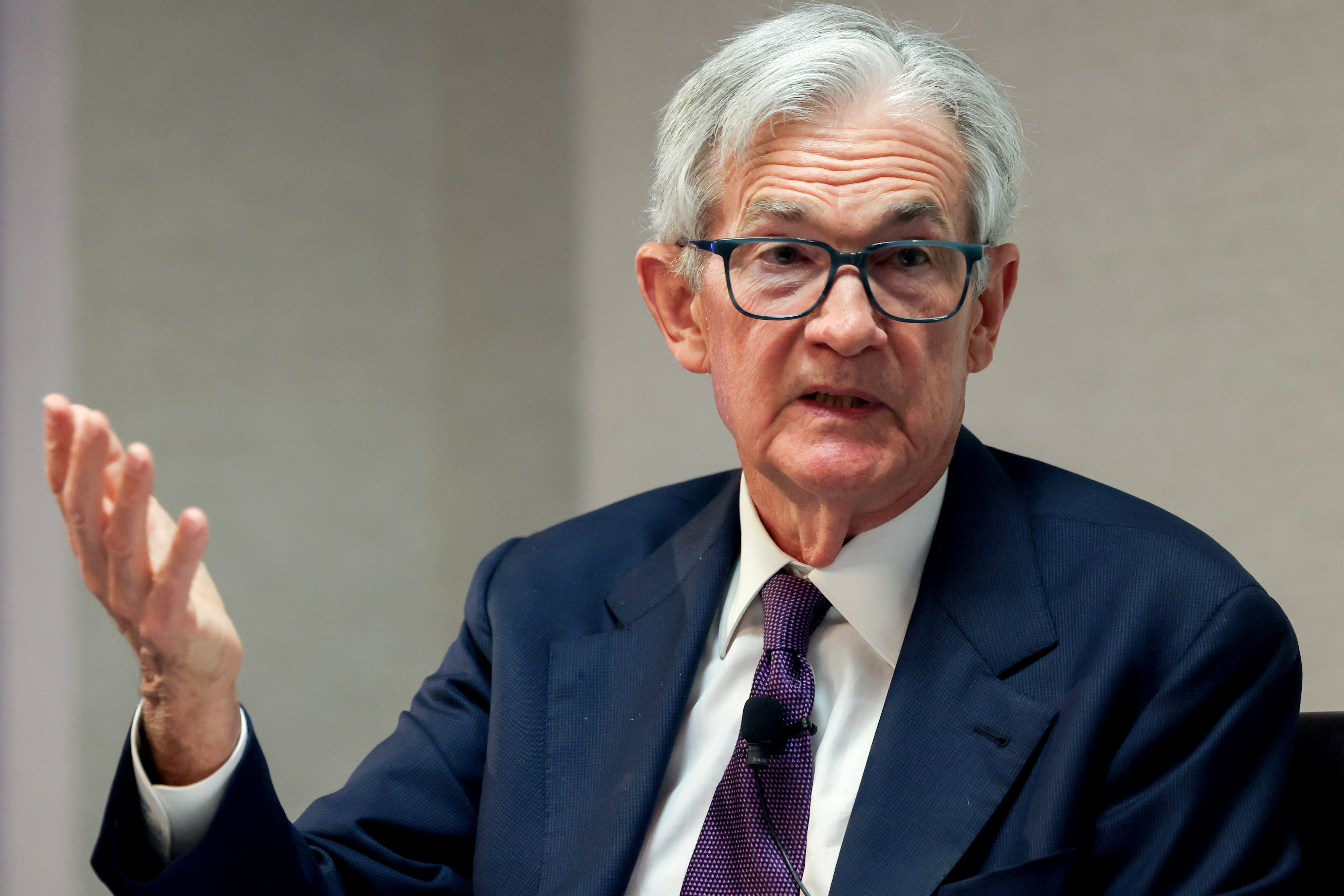
Federal Reserve Chair Jerome Powell again stressed the central bank's focus on preventing potential tariff-driven price hikes from triggering a more persistent rise in inflation.
“Our obligation is to keep longer-term inflation expectations well anchored and to make certain that a one-time increase in the price level does not become an ongoing inflation problem,” Powell said Wednesday in the text of a speech prepared for the Economic Club of Chicago.
Powell said policymakers would balance their dual responsibilities of fostering maximum employment and stable prices, “keeping in mind that, without price stability, we cannot achieve the long periods of strong labor market conditions that benefit all Americans.”
The remarks reinforce a message Powell has repeatedly emphasized, including most recently on April 4: Fed officials are in no hurry to change the central bank's benchmark policy rate.
As they seek greater certainty about how President Donald Trump's economic policies, especially on trade, will affect the US economy, Powell and other Fed policymakers have expressed support for holding rates steady.
“For the time being, we are well positioned to wait for greater clarity before considering any adjustments to our policy stance,” Powell said.
Conflicted Mandate
The Fed chair acknowledged that a weakening economy and elevated inflation could eventually bring the central bank's two goals into conflict.
“We may find ourselves in the challenging scenario in which our dual-mandate goals are in tension,” he said. “If that were to occur, we would consider how far the economy is from each goal, and the potentially different time horizons over which those respective gaps would be anticipated to close.”
Trump continues to dramatically shift his plans for imposing new tariffs, leaving businesses, consumers and global financial markets on edge.
He backtracked on so-called reciprocal tariffs announced on April 2, after the plans sent markets into turmoil. He pressed forward with a baseline 10% global tariff and duties in excess of 100% on China, then sent mixed signals on creating exemptions for smartphones and other technology products. He's also imposed tariffs on auto, steel and aluminum imports, and signaled pharmaceuticals and semiconductors may be next.
Many analysts estimate the tariffs will boost inflation and slow economic growth, a view Powell shares. Inflation, as measured by the Fed's preferred gauge, was 2.5% in the year through February, well down from its post-Covid peak but still stubbornly above the Fed's 2% target. In the speech, Powell said estimates suggest that measure will come in at 2.3% in March.
Inflation Expectations
Powell repeated Wednesday that the level of the tariff increases announced so far is significantly larger than anticipated. He added that the duties are highly likely to generate at least a temporary rise in inflation, but that the inflationary effects could also be more persistent.
“Avoiding that outcome will depend on the size of the effects, on how long it takes for them to pass through fully to prices and, ultimately, on keeping longer-term inflation expectations well anchored,” he said.
Fed officials cut interest rates three consecutive times at the end of 2024, but started 2025 signaling they would take a more patient approach in the face of sticky inflation. Many officials have doubled down on that thinking, emphasizing the need to minimize the risk that tariffs lead to a persistent rise in inflation and Americans' long-term expectations for price growth.
Meanwhile, layoffs and unemployment, at 4.2% in March, remain low. US employers added 228,000 jobs last month, exceeding forecasts.

-
Midterm Rally Lasted A Day. The Hard Reality Of A Divided US May Last Two Years | Opinion

Between a contested AI boom, a debt ceiling that arrives in 2027 and a president with every incentive to act alone, the next two years may prove more volatile than the first day's rally suggests.
-
Blue Wave Will Derail the AI Trade but Won't Dismantle the AI Era | Unhedged Position
The Democrats' sweep of the US Congress will see politics collide with economic forces both over the long and short term.
-
It's Time To Take The GST Council's Bet On Trust Global
Payment records can prove India's services exports, and clear, proportionate rules can bring foreign digital sellers into the tax net.
-
Opinion | India at 38: From Innovation Overperformer to Innovation Powerhouse
India now has 453 VC-backed deep science startups, 18 of them late-stage, after 117 percent growth since 2020. Laurus Labs, at USD 9.3 billion, is the most valuable deep science company in any middle-income economy outside China.
-
Navigating Energy Crossroads: S Jaishankar's Call For Diversified Supply Chains At G20 Ministerial Meeting
As geopolitical fault lines continue to test maritime trade routes and commodity flows, Jaishankar's message remains pertinent: true economic resilience requires open markets, protected transit lines, and a genuine commitment to multilateral cooperation rather than coercion.
-
Indians Are Travelling, But Not Every Journey Is A Holiday | The Week In Whys
Pilgrims, patients and working women are the real travellers, and the system hasn't quite caught up with them.
-
Getting To Work Costs Women More | The Reason Why
It is not just about women paying more than men. It is about women paying much more in cities than in villages.
-
AI Bias In Investing Cannot Be Eliminated, But It Can Be Governed
Framing is a particularly important example as identical financial information presented in terms of gains rather than losses can lead an LLM to reach a different assessment.
-
Joining The Dots | Dark Skies, Steady Diya: Why Hope Holds This Diwali
With war, a weak rupee and foreign outflows weighing on sentiment, policymakers at the NDTV World Summit and market veterans at NDTV Profit Ignite: Diwali Edition offered the same advice: stay invested and filter out the noise.









