F-35s To Nuclear Energy: Inside The New $1 Trillion US–Saudi Agreements Announced By Trump
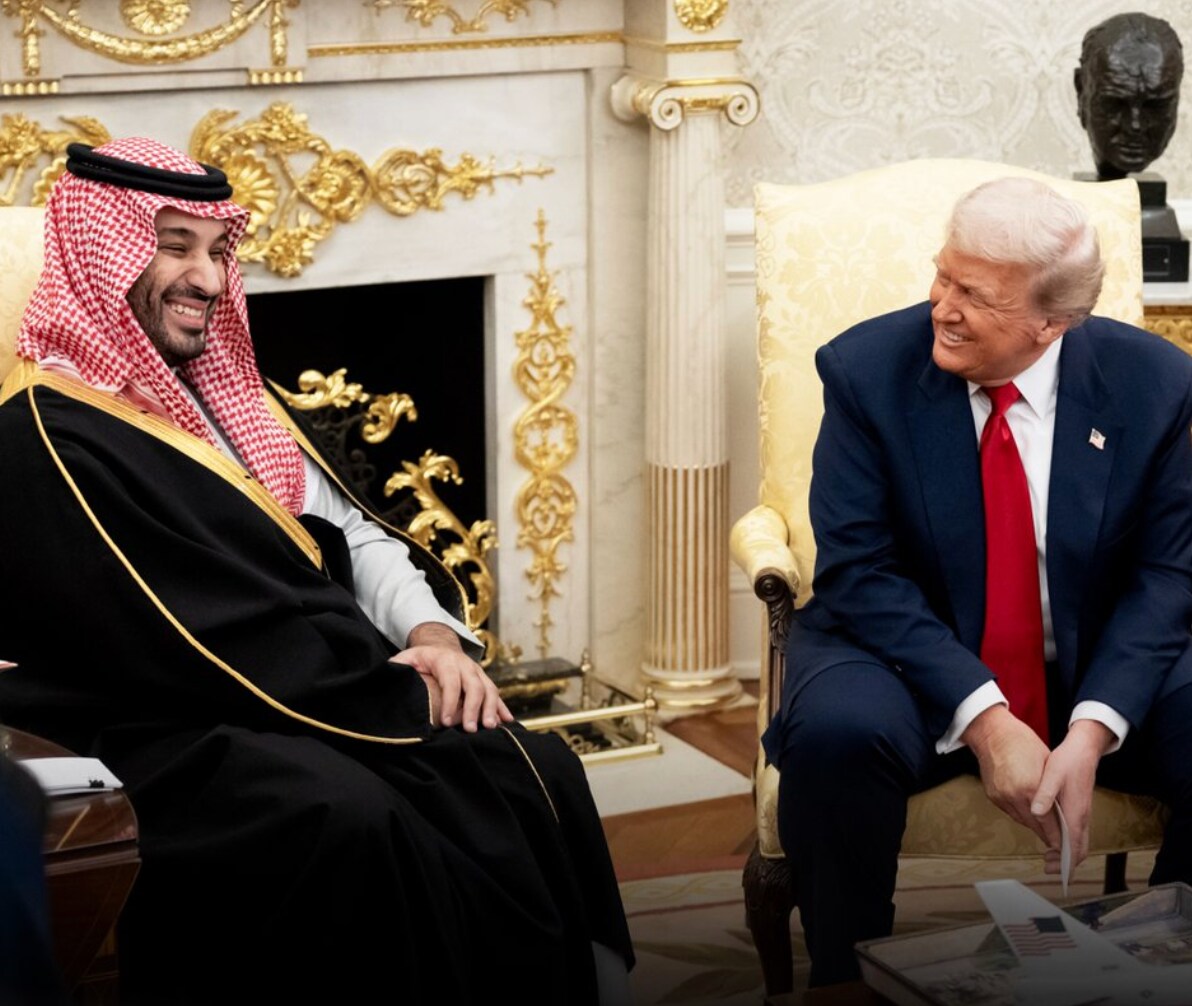
United States President Donald Trump and Crown Prince Mohammed bin Salman on Tuesday signed new agreements to expand the US–Saudi strategic partnership. The agreements follow Trump's visit to Riyadh in May. At that time, Saudi Arabia committed $600 billion in US investments. It will now raise its planned investments to nearly $1 trillion, according to a statement released by the White House.
The deals aim to support American jobs, while seeking to strengthen supply chains and promote regional stability.
“Key achievements include the Civil Nuclear Cooperation Agreement, advancements in critical minerals cooperation, and an AI Memorandum of Understanding—all of which underscore the United States' commitment to securing deals that directly benefit the American people,” the White House said.
Key Agreements:
1. Both nations signed a declaration for civil nuclear cooperation, supporting a long-term partnership, prioritising American companies and requiring strict non-proliferation standards for all nuclear projects.
“The United States and Saudi Arabia signed a Joint Declaration on the Completion of Negotiations on Civil Nuclear Energy Cooperation, which builds the legal foundation for a decades-long, multi-billion-dollar nuclear energy partnership with the Kingdom,” the White House statement mentioned.
2. The United States and Saudi Arabia signed a Critical Minerals Framework, which the US hopes will help it in diversifying its critical mineral supply chains.
3. The United States and Saudi Arabia signed a ‘AI Memorandum of Understanding' that expands the Kingdom's access to top US systems while safeguarding American technology.
4. Both nations also signed the US–Saudi Strategic Defense Agreement, strengthening an 80-year partnership. “The SDA is a win for the America First agenda, making it easier for US defence firms to operate in Saudi Arabia, securing new burden-sharing funds from Saudi Arabia to defray US costs.”
5. As part of the deal, President Trump has also approved a major defence sale of future F-35 deliveries. Saudi Arabia also agreed to buy nearly 300 US tanks, expanding its defence capacity.
According to the White House, the nearly $1 trillion in Saudi commitments will support US infrastructure, technology, and industry, delivering “massive returns for American workers and families for decades to come.”

-
Love, Sex Aur Dhokha: The Audacious Plot To Spy On Jensen Huang

A Taipei dinner, a Singapore chip buyer and a suspected Chinese asset: inside the alleged spy operation that got close to NVIDIA's Jensen Huang.
-
Ten Things I Learnt This Samvat
Patience can be a trap. Cheap stocks can stay cheap. Leverage can wipe you out. What did Samvat 2082 teach us? Niraj Shah writes on 10 lessons from the year gone by.
-
Talking Points This Week: Tech Nerves, FII Buying, And A Faraway Banking Shock
The global markets are not shining this Diwali. The exception in the large markets is, India.
-
Midterm Rally Lasted A Day. The Hard Reality Of A Divided US May Last Two Years | Opinion
Between a contested AI boom, a debt ceiling that arrives in 2027 and a president with every incentive to act alone, the next two years may prove more volatile than the first day's rally suggests.
-
Blue Wave Will Derail the AI Trade but Won't Dismantle the AI Era | Unhedged Position
The Democrats' sweep of the US Congress will see politics collide with economic forces both over the long and short term.
-
It's Time To Take The GST Council's Bet On Trust Global
Payment records can prove India's services exports, and clear, proportionate rules can bring foreign digital sellers into the tax net.
-
Opinion | India at 38: From Innovation Overperformer to Innovation Powerhouse
India now has 453 VC-backed deep science startups, 18 of them late-stage, after 117 percent growth since 2020. Laurus Labs, at USD 9.3 billion, is the most valuable deep science company in any middle-income economy outside China.
-
Navigating Energy Crossroads: S Jaishankar's Call For Diversified Supply Chains At G20 Ministerial Meeting
As geopolitical fault lines continue to test maritime trade routes and commodity flows, Jaishankar's message remains pertinent: true economic resilience requires open markets, protected transit lines, and a genuine commitment to multilateral cooperation rather than coercion.
-
Indians Are Travelling, But Not Every Journey Is A Holiday | The Week In Whys
Pilgrims, patients and working women are the real travellers, and the system hasn't quite caught up with them.









