European Gas Rises Following Loss of Russian Flows Via Ukraine
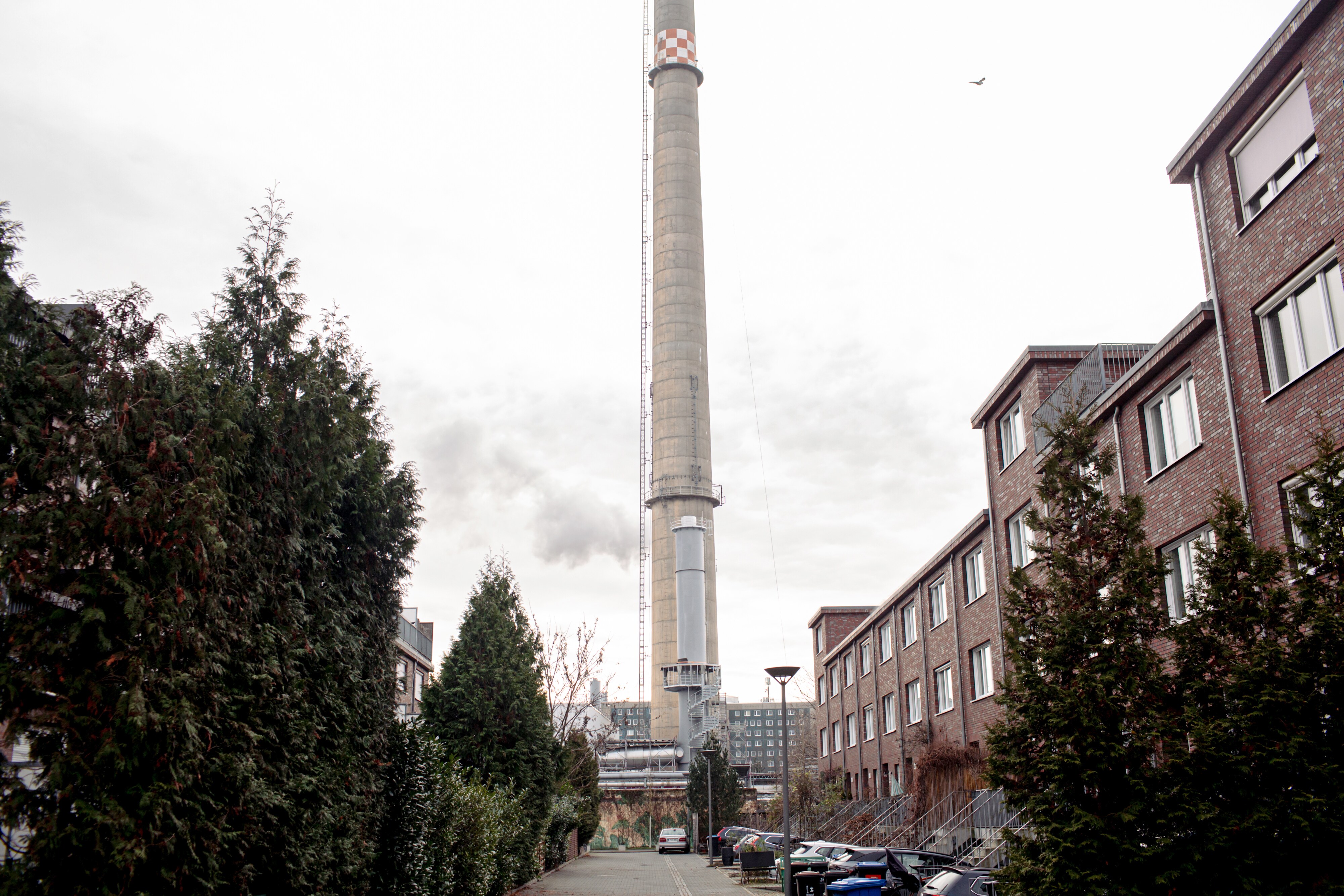
European gas prices advanced on the first trading day of the year as the region braced for freezing winter temperatures without a key source of supply.
Benchmark front-month prices rose as much as 4.3% to €51 a megawatt-hour, the highest since October 2023. Russian gas deliveries across Ukraine halted on New Year's Day after a transit contract between the two warring nations expired, with no alternative in place.
Traders are watching to see whether the loss of Russian flows — an important source of supply for several central European nations — will trigger faster withdrawals from storage. Inventories across the continent are already falling at the fastest pace since 2021, when the gas crisis was just starting to brew.

The halt coincides with forecasts for sub-zero temperatures in some countries, which will drive up heating demand. In Slovakia, one of the nations worst-hit by the cutoff, the mercury may sink as low as minus 7C (19F) by mid-January.

While Europe is unlikely to run out of gas this winter, thanks to inventories and deliveries from other suppliers, traders may find it harder to refill storage for the next heating season. Gas prices for next summer recently surged above those for winter 2025-26, which will make it more costly to restock.
“There is an increasing risk that the EU will exit the winter with low gas storage levels, making it expensive to replenish them,” said Arne Lohmann Rasmussen, chief analyst at Global Risk Management in Copenhagen.

Russian piped flows to Europe now only have one route — a conduit crossing Turkey that sends the fuel to Hungary. Deliveries on that link will be closely watched.
With the loss of flows via Ukraine, Europe will also deepen its reliance on liquefied natural gas, including from Russia. The country shipped record volumes of LNG to the region last year, making it the largest supplier after the US, which has recently started up two new export plants.
Still, for landlocked nations in central and eastern Europe, the cost of seaborne delivery to Germany, Poland or Greece, subsequent regasification and onward transit makes LNG an expensive option. Slovakia has estimated that gas imports from the west would result in additional costs of €177 million ($183 million).
“Gas markets in Europe are in no way short,” but transporting the fuel from west to east is “somewhat constrained, so that this will result in a markup for the region,” said Walter Boltz, a former Austrian regulator who's now a senior energy adviser at Baker & Mckenzie LLP.
Europe as a whole will need to compete harder for LNG this year, especially in the summer when energy demand for air conditioning soars in Asia. While several new LNG plants are under construction worldwide, meaningful capacity additions won't be ready for another couple of years.
Benchmark gas for February delivery in the Netherlands rose 3.1% to €50.39 a megawatt-hour by 8:10 a.m. in Amsterdam. Futures also topped €50 on Dec. 31 in anticipation of the halt in flows.

-
Navigating Friction And Energy Realities: An Analysis Of Marco Rubio's October Visit To India

Occurring at a critical juncture marked by stalled trade negotiations and escalating geopolitical pressures over global energy supplies, the visit offers a profound window into modern US-India relations.
-
India Exports Capital. Why Not Export Trusteeship?
The big question, then, is whether India can build an institution that global borrowers, investors, banks, and lawyers can trust, even without an Indian connection.
-
France's Economy & Politics Are In Crisis | The Reason Why
Let's look at how the French economy and politics evolved under Nicolas Sarkozy, Franois Hollande and Emmanuel Macron.
-
You May Inherit The Business. You Must Earn Its Credibility.
Succession tests the founder's ability to share authority as much as it tests the next generation's readiness to assume it.
-
Signing Deals Is One Thing; Making Them Work Is Another | The Week In Whys
Sometimes, things don't turn out as planned. Indian companies have lost some bids to rivals, some projects won't produce until 2030.
-
FOMC Wall, PERM Suspension, Hospital Stocks | Talking Points This Week
A PERM suspension would directly affect green-card sponsorship rather than H-1B visas, so the near-term earnings impact could remain relatively limited. The key question is whether this marks a new phase in US scrutiny of Indian IT.
-
Everything, Everywhere, All At Once: Dalal Street's Week To Forget | Joining The Dots
Visa curbs, a Starlink spat and cancer drug caps: what connects this week's shocks for Indian markets
-
India Is Going Abroad For Critical Minerals. But It May Take Years To Pay Off | The Reason Why
Although India's steps are in the right direction, they remain modest compared with India's growing dependence.
-
When Everyone Has AI, What Gives You An Edge?
India's young workforce is entering an uncertain world of work where powerful AI tools are becoming widely accessible. The advantage will belong to those who combine deep expertise with digital fluency, and the distinctly human capabilities that technology cannot manufacture.
-
Wrong Labels, High Pesticide Residues Holding Back Agri Exports | The Reason Why
India needs stronger domestic food-safety and labelling standards, with best practices becoming part of everyday business for farmers, traders and food companies.