ECB Set To Slow Hike Pace After Core Prices Ease: Decision Guide
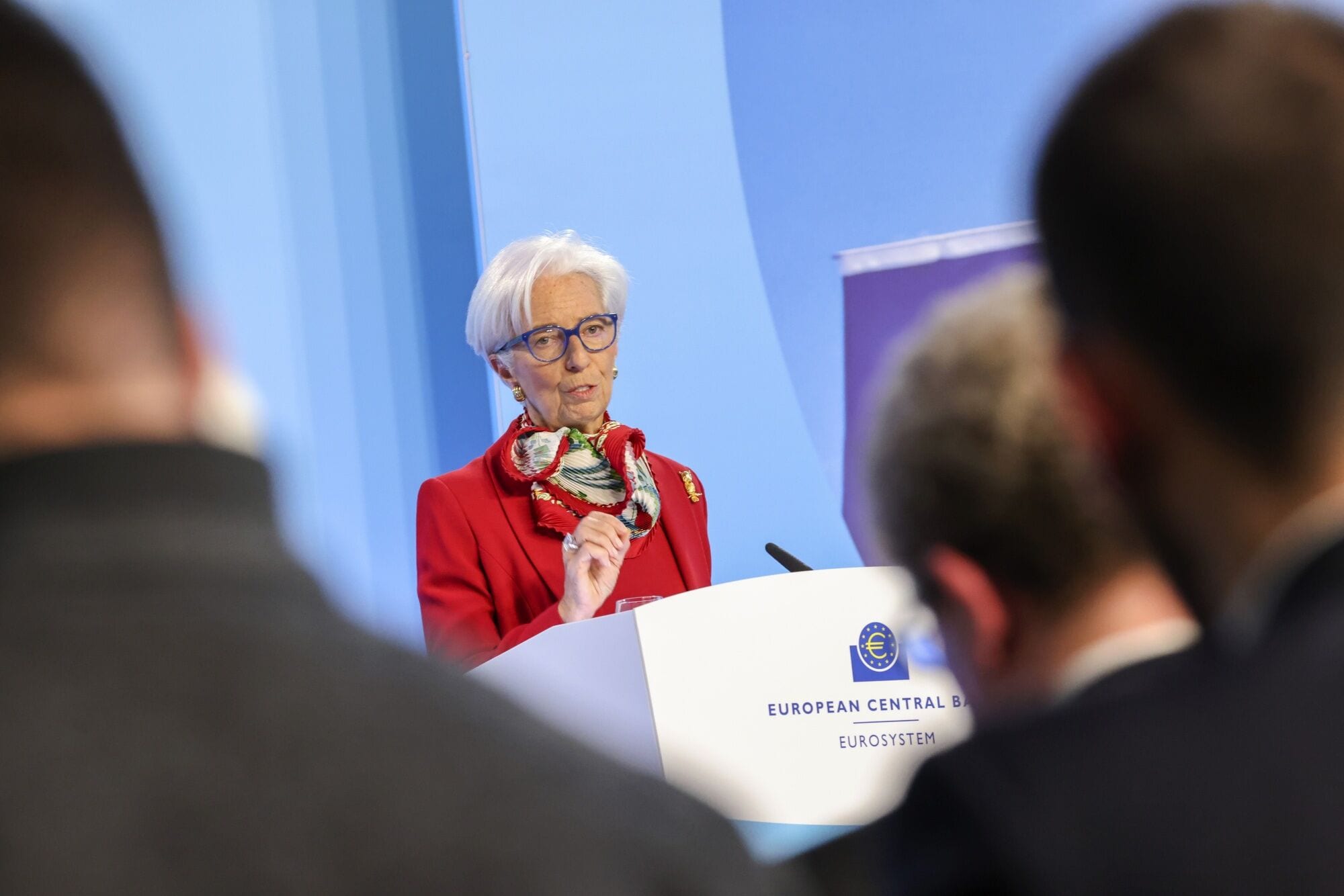
(Bloomberg) -- The European Central Bank is poised to slow the pace of interest-rate increases after its preferred inflation measure eased for the first time in 10 months.
With tighter lending conditions also weighing on the economy, officials will raise the deposit rate by a quarter-point to 3.25% on Thursday, according to money-market investors and most economists in a Bloomberg survey.
A bigger move can't be ruled out, however: A minority that includes JPMorgan Chase & Co. and Bank of America reckons officials will opt for a 50 basis-point step as underlying price gains still far exceed the 2% target and wage growth is picking up.
Goldman Sachs said the quarter-point it predicts isn't a “foregone conclusion.”

Officials are increasingly flagging that the most aggressive bout of monetary tightening in ECB history is approaching its conclusion, with markets and analysts foreseeing two more hikes beyond this week before rates settle at 3.75%.
A downshift today would match the quarter-point increase that the Federal Reserve delivered on Wednesday.
What Bloomberg Economics Says...
“The ECB will probably announce a 25 basis-point increase. Recent comments indicate support for a larger move has a narrow base. A stabilization in underlying inflation and signs that credit conditions are tightening have probably convinced policymakers that the time for a downshift from 50 basis-point hikes has finally arrived.”
— David Powell, senior euro-area economist. Read the full note here
The ECB will make its announcement at 2:15 p.m. in Frankfurt, with President Christine Lagarde to face the press half an hour later.
- Follow the ECB TLIV blog here
Interest Rates
Hawkish members of the Governing Council may yet maintain their focus on core inflation, which strips out food and energy prices and, at 5.6%, remains near a record high.
A compromise over a smaller rate increase could include a signal that borrowing costs must still rise further — even if the ECB has only recently begun to heed its own mantra of taking decisions “meeting by meeting.”

JPMorgan economist Greg Fuzesi expects any guidance to be “relatively loose,” in line with the ECB's greater adherence to incoming data, and be more hawkish if a smaller increase materializes.
There could also be a push to offload more quickly the stack of bonds the ECB bought in the past as stimulus.
Economic Outlook
Officials will debate a trove of economic reports that have landed in the past week and been left without public comment due to the quiet period preceding ECB decisions.
On the one hand, the dip in core inflation alongside weaker-than expected output in the 20-nation euro area at the start of 2023 support the view that the price shock is fading. That's backed up by indications that lenders are curbing credit as rate rises work their way through the system and in the wake of the recent unrest in the financial sector.

On the other hand, however, surveys of purchasing managers point to robust activity in the services sector. Wages are also picking up more strongly, raising concerns that inflation will be harder to beat back than initially feared.
The question is whether any of the data have shifted the ECB's assessment of the economy and, subsequently, how much higher it still needs to push rates.
Quantitative Tightening
The ECB started shrinking its roughly €5 trillion ($5.5 trillion) pile of bonds by €15 billion a month in March. That hasn't caused ruptures in financial markets, raising expectations that reductions will quicken after June, when the existing rolloff pace is reviewed.
Executive Board member Isabel Schnabel said last month that the goal is to completely phase out reinvestments under the Asset Purchase Program, with precise timing to be decided “soon.”
Officials may also debate ongoing repayments of long-term loans offered to banks at attractive conditions, a €477 billion tranche of which falls due in June. No alternative measures have been flagged so far, but recent banking stress means the ECB will be monitoring the situation closely to see if any tensions emerge in the system.
More stories like this are available on bloomberg.com
©2023 Bloomberg L.P.

-
Ten Things I Learnt This Samvat

Patience can be a trap. Cheap stocks can stay cheap. Leverage can wipe you out. What did Samvat 2082 teach us? Niraj Shah writes on 10 lessons from the year gone by.
-
Talking Points This Week: Tech Nerves, FII Buying, And A Faraway Banking Shock
The global markets are not shining this Diwali. The exception in the large markets is, India.
-
Midterm Rally Lasted A Day. The Hard Reality Of A Divided US May Last Two Years | Opinion
Between a contested AI boom, a debt ceiling that arrives in 2027 and a president with every incentive to act alone, the next two years may prove more volatile than the first day's rally suggests.
-
Blue Wave Will Derail the AI Trade but Won't Dismantle the AI Era | Unhedged Position
The Democrats' sweep of the US Congress will see politics collide with economic forces both over the long and short term.
-
It's Time To Take The GST Council's Bet On Trust Global
Payment records can prove India's services exports, and clear, proportionate rules can bring foreign digital sellers into the tax net.
-
Opinion | India at 38: From Innovation Overperformer to Innovation Powerhouse
India now has 453 VC-backed deep science startups, 18 of them late-stage, after 117 percent growth since 2020. Laurus Labs, at USD 9.3 billion, is the most valuable deep science company in any middle-income economy outside China.
-
Navigating Energy Crossroads: S Jaishankar's Call For Diversified Supply Chains At G20 Ministerial Meeting
As geopolitical fault lines continue to test maritime trade routes and commodity flows, Jaishankar's message remains pertinent: true economic resilience requires open markets, protected transit lines, and a genuine commitment to multilateral cooperation rather than coercion.
-
Indians Are Travelling, But Not Every Journey Is A Holiday | The Week In Whys
Pilgrims, patients and working women are the real travellers, and the system hasn't quite caught up with them.
-
Getting To Work Costs Women More | The Reason Why
It is not just about women paying more than men. It is about women paying much more in cities than in villages.









